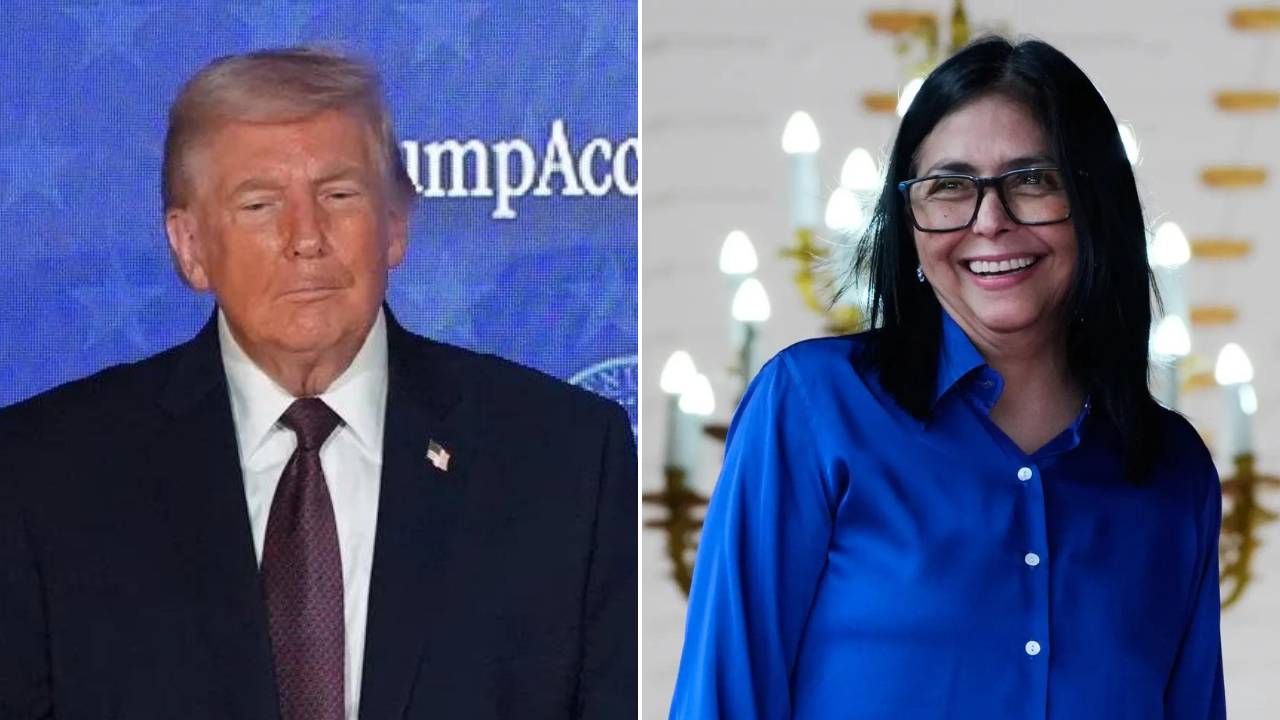
The removal of Nicolás Maduro from Caracas in early January 2026 fundamentally altered the structural equilibrium of the Venezuelan petrostate. Rather than triggering an immediate democratic transition or systemic collapse of the reigning United Socialist Party apparatus, the intervention created an operational vacuum filled by the interim administration of Delcy Rodríguez. The upcoming diplomatic engagement between Washington and Caracas under Rodríguez tests a high-stakes transaction: the rehabilitation of Venezuela's dilapidated oil infrastructure in exchange for sovereign debt restructuring, sanctions relief, and long-term supply integration.
The Structural Mechanics of the Post-Maduro Transition
To understand the current diplomatic friction, one must examine the institutional continuity governing Venezuela. The removal of the head of state did not purge the underlying patronage networks, military command tiers, or bureaucratic machinery. Rodríguez stepped into the presidency as an internal continuity candidate of the existing power bloc, preserving state coherence while signaling pragmatism to external actors.
This creates a structural dualism:
- Political Preservation: The Chavista apparatus maintains domestic security structures and legislative control through the National Assembly.
- External Compliance: The interim executive requires foreign capital injection, Western market access, and debt relief to prevent absolute economic stagnation.
Washington approaches this dynamic through transactional leverage. By utilizing the threat of ongoing secondary sanctions and control over frozen or generated resource revenues, the United States seeks to extract concessions regarding privatization, hydrocarbon access, and future electoral calendars.
The Hydrocarbon Equation and Capital Expenditure Constraints
The central driver of this bilateral realignment is the state of Venezuela's energy sector. Decades of underinvestment, brain drain, mismanagement, and punitive international sanctions reduced crude production to a fraction of its historical peak. Rebuilding the upstream and midstream assets requires massive capital expenditure that domestic entities cannot finance.
[Foreign Capital Injection] ➔ [Infrastructure Rehabilitation] ➔ [Production Volumetric Expansion] ➔ [Revenue Generation & Debt Servicing]
The economic variables governing this mechanism present severe bottlenecks:
- Asset Depletion: Decades-old extraction facilities, corroded pipelines, and degraded refining capacity demand multi-billion-dollar outlays before throughput can normalize.
- Risk Premium: International energy conglomerates operate under strict regulatory and legal scrutiny, demanding sovereign guarantees before committing long-term capital to a jurisdiction recovering from forced regime alteration.
- Geographic Diversification: Heavy Venezuelan crude requires specific upgrading facilities. Reorienting these supply chains toward U.S. Gulf Coast refineries alters regional trade deficits and shifts strategic energy dependencies away from Eastern Hemisphere suppliers.
Diplomatic Friction Points and Domestic Opposition
The presence of the interim government complicates domestic democratization efforts. Prominent opposition figures, such as María Corina Machado, navigate a narrow political window following periods of forced exile or clandestine organizing. While domestic opposition networks advocate for rapid, unconstrained elections, the interim administration operates to insulate itself from immediate electoral displacement.
The dialogue between Washington and Caracas therefore forces a strategic trade-off:
- Prioritizing immediate energy security and economic stabilization through engagement with incumbent administrators.
- Insisting on rapid structural democratization that risks destabilizing the transitional authority required to sign and enforce resource concessions.
External observers note that international legal frameworks governing state immunity, foreign interventions, and extraterritorial enforcement remain deeply contested. However, operational reality on the ground supersedes abstract legal debate. The executive branch in Caracas functions under the pragmatism of survival, while Washington evaluates success through volumetric oil output, debt recovery milestones, and geopolitical realignment in the Western Hemisphere.
Execute bilateral negotiations by conditioning incremental sanctions relief strictly on verified infrastructural transparency audits and binding timelines for verifiable electoral access, ensuring capital deployment correlates directly with institutional reform.