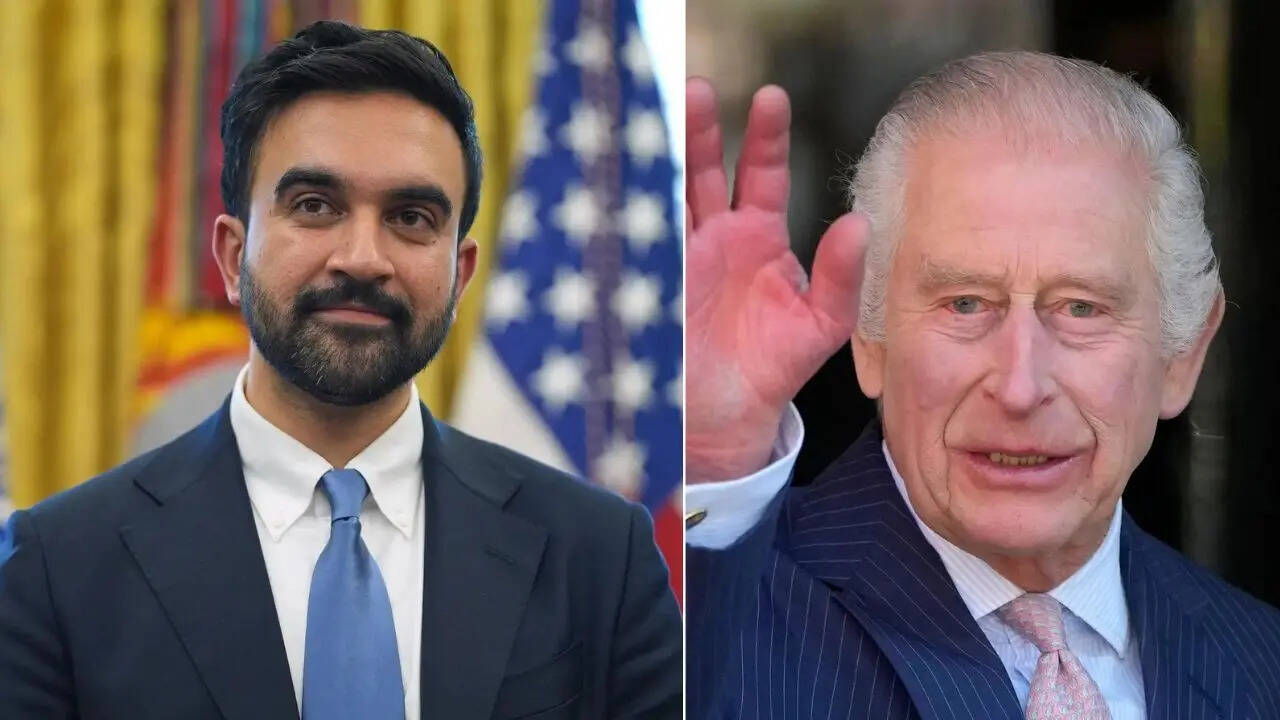
The recent public demand by New York State Assemblyman Zohran Mamdani for the return of the Koh-i-Noor diamond during King Charles III’s visit to New York represents more than a localized political quip; it is a manifestation of the Repatriation Pressure Cycle. This cycle occurs when symbolic capital—assets held by a former colonial power—undergoes a sudden revaluation due to shifts in geopolitical leverage and the rising domestic political utility of post-colonial narratives. The Koh-i-Noor is not merely a 105-carat gemstone; it is a non-performing asset on the British diplomatic balance sheet that generates significant recurring reputational liability while providing diminishing soft-power returns.
The Tri-Node Framework of Ownership Contestation
To analyze the Koh-i-Noor dispute, one must move beyond the emotional rhetoric of "theft" versus "gift" and examine the Triple Sovereignty Conflict. The diamond’s provenance is not a linear chain of custody but a decentralized map of historical claims that creates a multi-lateral stalemate.
- The Origin Node (India): The claim is rooted in the 1849 Treaty of Lahore. Under the Doctrine of Duress, an agreement signed by a minor sovereign (Maharaja Duleep Singh) under military occupation is viewed as legally void in modern international norms, though it remains enforceable under 19th-century Westphalian precedent.
- The Successor Nodes (Pakistan and Afghanistan): Because the diamond spent significant time in the Durrani Empire (modern Afghanistan) and the Sikh Empire's capital was in Lahore (modern Pakistan), the legal definition of "rightful owner" is fractured. Any unilateral return to India triggers a secondary diplomatic crisis with Islamabad and Kabul.
- The Custodial Node (The United Kingdom): The British position relies on the Statute of Repose logic—the idea that after a certain period of historical possession, the title is "cleansed" by the passage of time and the absence of a contemporary legal forum with the jurisdiction to overturn 19th-century treaties.
The Valuation of Symbolic Capital in the 21st Century
The British Monarchy operates on a Legacy Continuity Model. The presence of the Koh-i-Noor in the Queen Mother’s Crown functions as a visual anchor for the Commonwealth’s historical reach. However, the utility of this symbol is currently undergoing a Negative Yield Phase.
The cost of holding the diamond includes:
- Diplomatic Friction Surcharge: Every state visit to South Asia is preemptively devalued by the inevitable "Return the Stone" discourse, which obscures the primary economic or security objectives of the mission.
- Commonwealth Churn: Younger leaders within the Commonwealth of Nations view the crown jewels as "active evidence" of extraction rather than "shared history." This accelerates the transition of Commonwealth realms to republics (e.g., Barbados, Jamaica).
- Security and Insurance Overheads: The physical and reputational cost of protecting an asset that a significant portion of the global population views as stolen property creates a permanent high-risk profile for the Royal Collection.
The Mechanism of Political Quips as Policy Catalysts
When Zohran Mamdani utilizes a public appearance to demand the diamond's return, he is engaging in Asymmetric Narrative Warfare. This tactic uses a high-visibility, low-cost rhetorical device to force a high-cost defensive response from a state actor.
The British response mechanism is historically rigid, relying on the "no comment" or "legal possession" scripts. This creates a Responsiveness Gap. In a digital information environment, a silence or a technical legalistic rebuttal is interpreted by the public as an admission of moral insolvency. Mamdani’s quip leverages this gap to build domestic political capital among South Asian diaspora constituents while simultaneously weakening the British "Global Britain" brand.
The Legal Bottleneck: The British Museum Act and Precedent Risk
A primary structural barrier to the diamond’s return is not just monarchical sentiment, but the Legislative Lock-in of the British Museum Act of 1963 (and similar statutes governing the Royal Collection). These laws strictly prohibit national institutions from de-accessioning items unless they are "unfit to be retained" or "useless."
If the British government were to bypass these laws to return the Koh-i-Noor, they would trigger the Precedent Cascade.
- The Elgin Marbles (Greece): Immediate legal vulnerability for the Parthenon Sculptures.
- The Benin Bronzes (Nigeria): Total erosion of the "Universal Museum" defense.
- The Rosetta Stone (Egypt): A collapse of the British Museum’s core curation strategy.
The UK government views the Koh-i-Noor as the "Keystone Asset." Removing it would likely cause the structural integrity of the entire British cultural repository to fail, as it would admit that 19th-century acquisition methods are fundamentally incompatible with 21st-century property rights.
The Economic Alternative: Digital Repatriation and Shared Custody
Since physical return creates a zero-sum outcome—where one party loses all access and the other gains it—strategic consultants have proposed Non-Zero-Sum Models.
One such model is Temporal Sovereignty, where the diamond is physically rotated between London, Delhi, Islamabad, and Kabul. The logistical risks of this are high, but the diplomatic dividends are significant. Another is Digital Restitutionalism, involving the creation of high-fidelity, atom-perfect physical replicas and blockchain-verified digital ownership tokens for claimant nations, while the original remains in a "neutral" international zone.
However, these models fail to address the Ontological Need for the physical object. In post-colonial theory, the object itself is a surrogate for the dignity of the state. Therefore, a "digital copy" is often perceived as a secondary insult rather than a solution.
The Structural Fragility of the Crown Jewels
The decision not to use the Koh-i-Noor in Queen Camilla’s coronation was a Tactical Retreat intended to lower the temperature of the debate. From a strategy perspective, this was a "Mothballing Strategy"—removing the asset from the public eye to reduce its salience.
This strategy is flawed because it ignores the Streisand Effect. By hiding the diamond, the Monarchy inadvertently signaled that the claim against it has merit. If the title were truly secure, the stone would be displayed without apology. The act of concealment confirms the asset's status as "toxic."
Geopolitical Implications of the New York Quip
Mamdani’s intervention in New York highlights the Internationalization of Domestic Grievance. By bringing a South Asian colonial dispute into the American political theater, he forces the US—a key UK ally—to navigate a sensitive cultural minefield.
For the UK, the New York visit was intended to reinforce the "Special Relationship" and promote British trade. The intrusion of the Koh-i-Noor narrative shifts the media ROI (Return on Investment) from "Trade and Partnership" to "Colonial Accountability." This represents a failure of British PR risk management to anticipate how local politicians in diverse urban centers like New York will use the Monarchy as a foil for their own brand-building.
Strategic Recommendation for the British State Apparatus
The current policy of Static Defense is unsustainable. The UK must pivot to a Proactive Asset Reclassification.
- Shift from "Owner" to "Trustee": Rebrand the Royal Collection’s possession of contested items as a "Global Trust" rather than "British Property." This requires legislative amendments that allow for long-term loans to countries of origin without technically transferring permanent title.
- Establish a Reparations Fund for Cultural Heritage: Instead of returning a single stone, the UK could fund the construction of world-class museum infrastructures in claimant nations. This creates a "Service-for-Asset" trade-off that fulfills the moral obligation without triggering the Precedent Cascade.
- Bilateral Commissions: Move the conversation from the streets and social media into formal, closed-door commissions with India and Pakistan. This de-escalates the public spectacle and allows for a "Face-Saving Exit" for all parties.
The Koh-i-Noor is no longer a jewel; it is a geopolitical anchor dragging on the UK’s ability to project a modern, forward-looking identity. Until the "Legacy Debt" represented by the stone is restructured or settled, every Royal interaction with the former colonies will be sub-optimal, defined by the extraction of the past rather than the partnerships of the future. The move to a Republic in various Commonwealth nations is not just a constitutional choice; it is an exit strategy from a brand that refuses to settle its historical accounts.