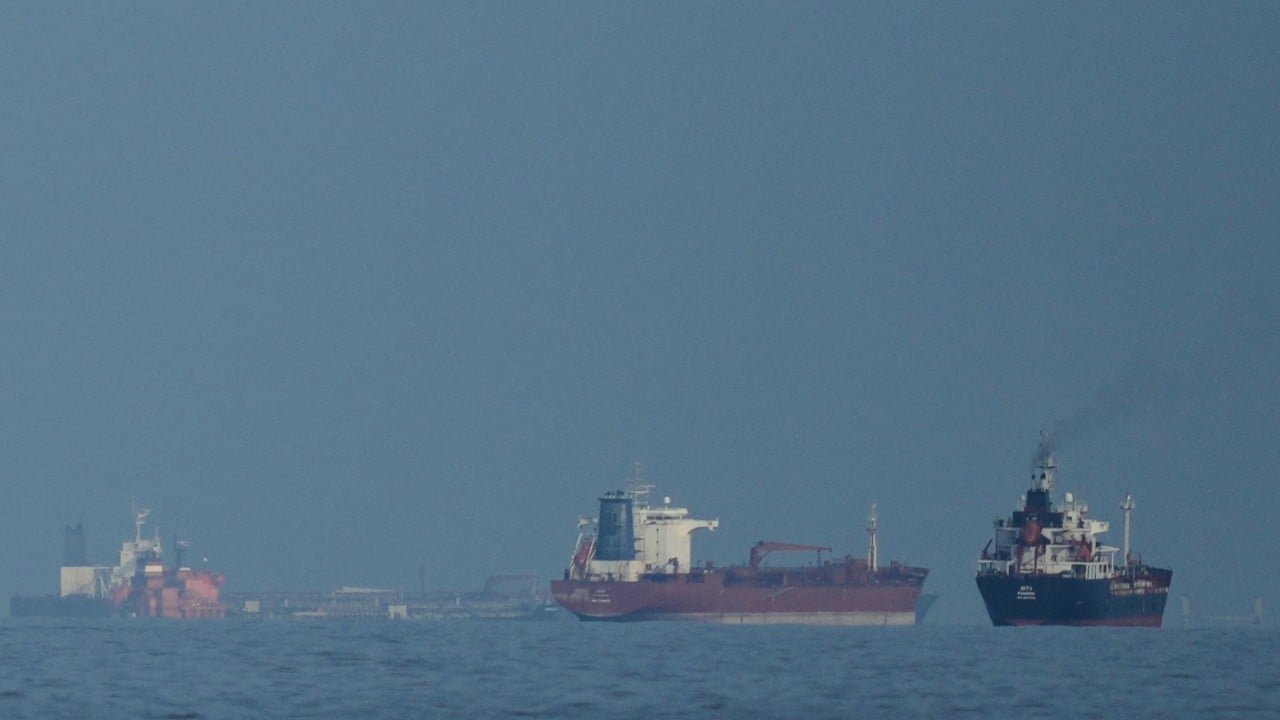
The Strait of Hormuz functions as the carotid artery of the global energy market, facilitating the transit of approximately 21 million barrels of oil per day. When Iranian and United States officials converge on the narrative that the waterway remains "fully open," they are not describing a state of peace, but rather a precarious equilibrium between kinetic threat and economic necessity. This openness is a calculation of risk, not a removal of it.
The Triad of Maritime Stability
The operational status of the Strait depends on three distinct pillars of stability. If any one pillar fractures, the cost of transit shifts from manageable insurance premiums to prohibitive war-risk surcharges.
- Freedom of Navigation (FoN) Enforcement: The United States maintains a persistent naval presence to ensure the legal right of innocent passage under the United Nations Convention on the Law of the Sea (UNCLOS). While Iran is not a party to UNCLOS, it generally adheres to these norms to avoid total international isolation.
- Iranian Deterrence Logic: Iran views the Strait as its primary geostrategic lever. Complete closure is an act of "last resort" because it would simultaneously decouple Iran from its own export revenues and invite a massive military response.
- Insurance Market Liquidity: Commercial shipping relies on the Lloyd’s Market Association’s Joint War Committee (JWC). The JWC designates the Persian Gulf and Gulf of Oman as high-risk areas. "Open" status implies that while risks exist, they are quantifiable and insurable.
The Cost Function of Transit
Shipping in the Strait is governed by an invisible cost function that reacts to rhetoric before it reacts to steel. The price of a barrel of Brent Crude includes a "Strait Premium" that fluctuates based on two primary variables:
- The Probability of Interdiction: This measures the likelihood of a vessel being seized or harassed by the Islamic Revolutionary Guard Corps Navy (IRGCN).
- The Escort Requirement: When the risk of interdiction rises, commercial entities demand naval escorts. The logistical overhead of organizing convoys reduces the "Effective Throughput" of the Strait, creating a bottleneck even if the physical path remains clear.
The current "fully open" declaration serves as a cooling mechanism for the global tanker market. By signaling cooperation, both nations prevent a spike in Hull and Machinery (H&M) insurance rates, which can increase by 500% in a 48-hour window during active hostilities.
Strategic Bottlenecks and Chokepoint Physics
The Strait is physically narrow, with shipping lanes only two miles wide in each direction, separated by a two-mile buffer zone. This geography creates a natural "Force Multiplier" for any entity seeking to disrupt traffic.
The Asymmetric Advantage
Iran utilizes "Swarm Tactics"—employing hundreds of fast-attack craft (FAC) and fast inshore attack craft (FIAC). This creates a target saturation problem for traditional blue-water navies. In a narrow corridor, a billion-dollar destroyer faces a mathematical disadvantage against fifty low-cost, missile-equipped boats.
The Mine Warfare Constraint
The depth of the Strait allows for the deployment of both bottom and moored mines. Clearing a minefield in a high-traffic chokepoint is a slow, methodical process that requires specialized vessels. The threat of a single unlocated mine is often sufficient to halt commercial traffic, as no captain will risk a $150 million Suezmax tanker without a clear "Safe to Transit" certification from naval authorities.
The Economic Paradox of Closure
The assertion that the Strait is open masks an underlying economic reality: Iran is the nation most physically capable of closing the Strait, yet it is also the nation most economically vulnerable to its closure.
The "Irrational Actor" myth suggests Iran might close the Strait to spite the West. However, structural data contradicts this. Iran’s economy is heavily dependent on the export of crude and condensates. Since alternative pipelines through the Jask terminal have limited capacity, a closed Strait is a self-imposed embargo.
The current diplomatic stance of "full openness" indicates that the Iranian leadership currently values revenue over tactical disruption. The United States, conversely, seeks to keep the Strait open to maintain global price stability and prevent an inflationary shock that would destabilize domestic markets.
Counter-Cyclical Escalation Risks
While both parties currently agree on the status of the Strait, the risk of "Accidental Escalation" remains high. In a high-tension maritime environment, tactical decisions by low-level commanders can trigger strategic consequences.
- The Recognition Error: A commercial vessel misidentifying a naval patrol or failing to respond to a hail.
- The Miscalculation of Intent: A naval maneuver intended as a deterrent being interpreted as a precursor to a strike.
- Proxy Interference: Third-party actors (e.g., non-state groups) deploying loitering munitions or sea-borne IEDs to disrupt the status quo without a direct "fingerprint" from a sovereign state.
The "Fully Open" status is therefore a dynamic state of active management rather than a passive condition of the environment.
The Diversification Lag
The global energy market’s reliance on the Strait of Hormuz persists because bypass infrastructure remains insufficient. The East-West Pipeline in Saudi Arabia and the Abu Dhabi Crude Oil Pipeline (ADCOP) can divert a combined 6.5 to 7 million barrels per day—less than 35% of the Strait’s total volume.
The persistence of the Strait's importance creates a "Geopolitical Lock-in." Until the capacity of bypass pipelines exceeds 50% of the daily transit volume, the rhetoric surrounding the Strait's status will continue to hold more weight than the actual physical movement of ships.
Tactical Recommendations for Global Stakeholders
For entities operating within this corridor, the declaration of "openness" should be treated as a baseline, not a guarantee.
- Vessel Hardening: Implementing Best Management Practices (BMP5), including the use of private maritime security teams (PMST) and physical barriers to prevent boarding.
- Dynamic Route Optimization: Utilizing AIS data and naval intelligence to adjust transit timing to coincide with high-visibility windows provided by international task forces like the International Maritime Security Construct (IMSC).
- Contractual Hedging: Incorporating "Force Majeure" clauses specifically tailored to the unique legalities of the Strait, distinguishing between physical closure and "unreasonable risk" as defined by the JWC.
The stability of the Strait of Hormuz is currently maintained by a mutual recognition of the catastrophic costs of its failure. As long as the economic penalty for closure exceeds the political gain for either the US or Iran, the waterway will remain "fully open"—though the tension beneath the surface will continue to dictate the price of every gallon of fuel on the global market.



