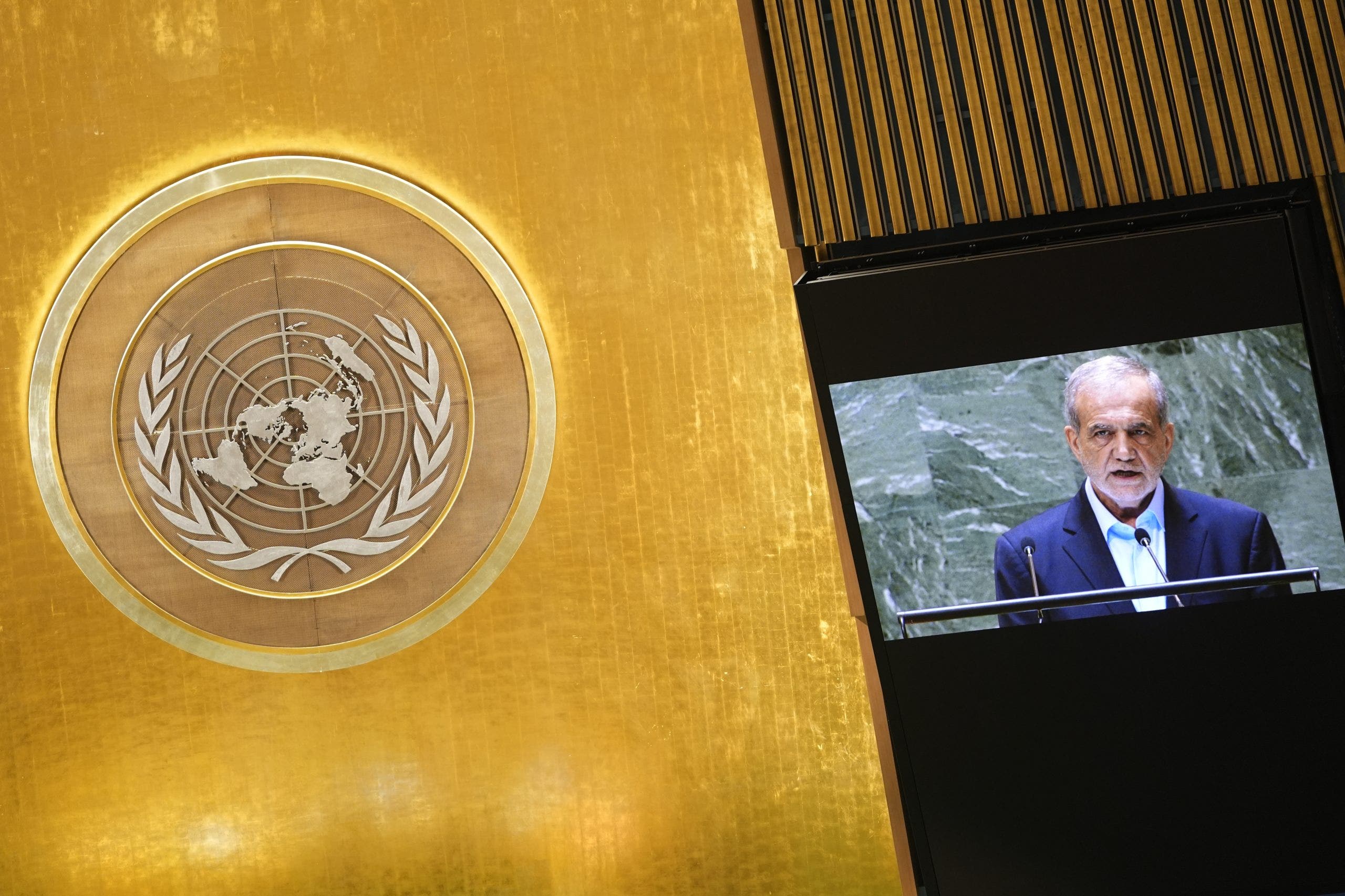
When Vice President Mohammad Reza Aref stood before the press to dismiss American rhetoric as a "Stone Age" relic, he wasn’t just defending national pride. He was executing a calculated maneuver in a high-stakes diplomatic chess game. The core of the current tension lies in a fundamental clash between Washington’s "maximum pressure" doctrine and Tehran’s "strategic patience" policy. While the West often views these exchanges as mere political theater, they actually signal a deeper shift in how Middle Eastern powers intend to navigate a multi-polar world where American economic sanctions no longer carry the absolute weight they once did.
The Architecture of the Stone Age Insult
Aref’s choice of words was deliberate. By labeling Western threats as primitive, the Iranian leadership is attempting to flip the script on technical and cultural superiority. They want to project the image of a modern, resilient state that has successfully decoupled its survival from the whims of the US Treasury. This isn't just about hurt feelings. It is a signal to domestic audiences and regional allies that the government believes it has found a way to bypass the traditional global financial system.
To understand the weight of this stance, one must look at the data regarding Iran's oil exports. Despite years of crushing sanctions, trade volumes have not hit zero. Instead, a "shadow fleet" of tankers and a complex web of front companies in East Asia have kept the hard currency flowing. This economic lifeline provides the literal fuel for Aref’s rhetorical fire. When a leader says they cannot be bombed back to the Stone Age, they are actually saying they have built a basement that the bombs cannot reach.
The Failure of Maximum Pressure
The strategy of isolation assumes that a cornered opponent will eventually sue for peace. However, the last decade suggests the opposite. Sanctions have certainly hollowed out the Iranian middle class and triggered inflation, but they have failed to change the fundamental behavior of the state’s security apparatus. In fact, the pressure has empowered the most hardline elements within the Revolutionary Guard, who use the "economic war" as a justification for tightening their grip on the internal economy.
We are seeing a phenomenon where external pressure creates an "autarky trap." The more a country is cut off, the more it invests in domestic alternatives and unconventional trade routes. This makes them less susceptible to future diplomatic carrots because the infrastructure of their isolation is already profitable for the ruling elite. Washington is currently playing a hand that worked in the 1990s, but the board has changed. The rise of alternative payment systems and the growing appetite for discounted energy in China have created a floor that prevents the Iranian economy from truly bottoming out.
Regional Ripple Effects and the Nuclear Question
Every time a senior official in Tehran scoffs at Western warnings, the cost of regional stability goes up. The neighbors—Saudi Arabia, the UAE, and Qatar—are watching this friction with increasing anxiety. They are no longer content to simply sit under the American security umbrella. We are seeing a flurry of "hedging" where these Gulf states improve their own ties with Tehran while simultaneously signing defense pacts with the US.
The most dangerous variable remains the nuclear program. Aref’s defiance serves as a smoke screen for the technical reality on the ground. By framing the conflict as one of "civilization versus barbarism," the Iranian administration shifts the focus away from centrifuge counts and enrichment levels. It creates a narrative where any concession on the nuclear front would be a surrender of national identity, rather than a technical trade-off for sanctions relief.
The Digital Battlefield and Information Warfare
Beyond the oil and the uranium, there is a war of perception. Tehran has invested heavily in a domestic internet infrastructure that allows it to control the narrative within its borders while projecting defiance abroad. Aref’s "Stone Age" comment was designed to go viral in the Global South, where resentment toward Western interventionism remains high. It paints Iran not as a rogue state, but as a victim of "technological colonialism."
This strategy relies on a specific type of historical revisionism. By claiming that "Iran is history itself," the Vice President is invoking a 2,500-year-old legacy to dwarf the 250-year-old history of the United States. It is a psychological play intended to make current sanctions look like a temporary blip in a grand civilizational timeline. For an analyst, the takeaway is clear: the Iranian leadership is no longer interested in a "grand bargain." They are looking for a "grand endurance."
Internal Fragility vs External Bravado
Despite the tough talk, the cracks in the facade are visible to anyone looking at the rial’s exchange rate. The "Stone Age" rhetoric is, in many ways, a luxury that the Iranian people can ill afford. There is a massive disconnect between the defiant speeches of the elite and the daily struggle of the citizen trying to buy imported medicine or basic electronics.
The government is betting that it can keep the lid on internal dissent through a combination of subsidies and security crackdowns long enough for the geopolitical winds to shift. They are waiting for a moment when the US is too distracted by conflicts in Europe or the Pacific to maintain its focus on the Persian Gulf. This is a high-stakes gamble on American exhaustion.
The New Reality of Sanctions Resistance
The world has entered an era where "rogue" states are no longer isolated; they are networked. Iran, Russia, and North Korea have formed what some analysts call a "Sanctions-Bust Network." They share tactics on moving money, acquiring dual-use technology, and managing domestic unrest. Aref’s confidence stems from the knowledge that Tehran is a senior partner in this new club.
When the US threatens to "isolate" a country today, it doesn't mean what it did twenty years ago. You cannot isolate a country that sits on the world's second-largest gas reserves and shares a border with fifteen different nations. The logistics of enforcement have become a nightmare.
Moving Toward a Post-Diplomatic Era
The traditional tools of statecraft—treaties, summits, and monitored agreements—are losing their luster. In their place is a grinding, permanent state of "gray zone" conflict. This involves cyberattacks, proxy skirmishes, and rhetorical broadsides like the one delivered by Aref. There is no longer a clear "end state" in mind for either side. The goal is simply to outlast the opponent.
Investors and businesses operating in the region must realize that the volatility is the feature, not the bug. The rhetoric will continue to escalate because it serves the political needs of both sides. For the US administration, being "tough on Iran" is a domestic necessity. For the Iranian leadership, "defying the Great Satan" is the cornerstone of their legitimacy.
The danger of this cycle is that it leaves no room for off-ramps. When you characterize your opponent’s worldview as belonging to the Stone Age, you aren't just disagreeing with their policy; you are dehumanizing their intellect. That makes it nearly impossible to sit down at a negotiating table without looking like a hypocrite to your own people. We are witnessing the death of nuance in Middle Eastern diplomacy, replaced by a rigid, ideological standoff that rewards the loudest voice in the room while the actual mechanisms of peace are left to rust.
The true test will come when the next economic shock hits. If Tehran can survive another round of tightened restrictions without a total collapse of its currency, the "Stone Age" argument will have proven its point to the Iranian hardliners. They will have demonstrated that the West's most powerful non-military weapon—the global dollar system—is no longer the deterrent it once was. That realization would fundamentally rewrite the rules of global power for the next fifty years.
The rhetoric of Vice President Aref isn't a scream into the void; it is the opening salvo of a decade that will be defined by the limits of Western leverage. The era of the "unipolar moment" is dead, and the defiant shouts from Tehran are the sound of the dirt being thrown on the coffin.



