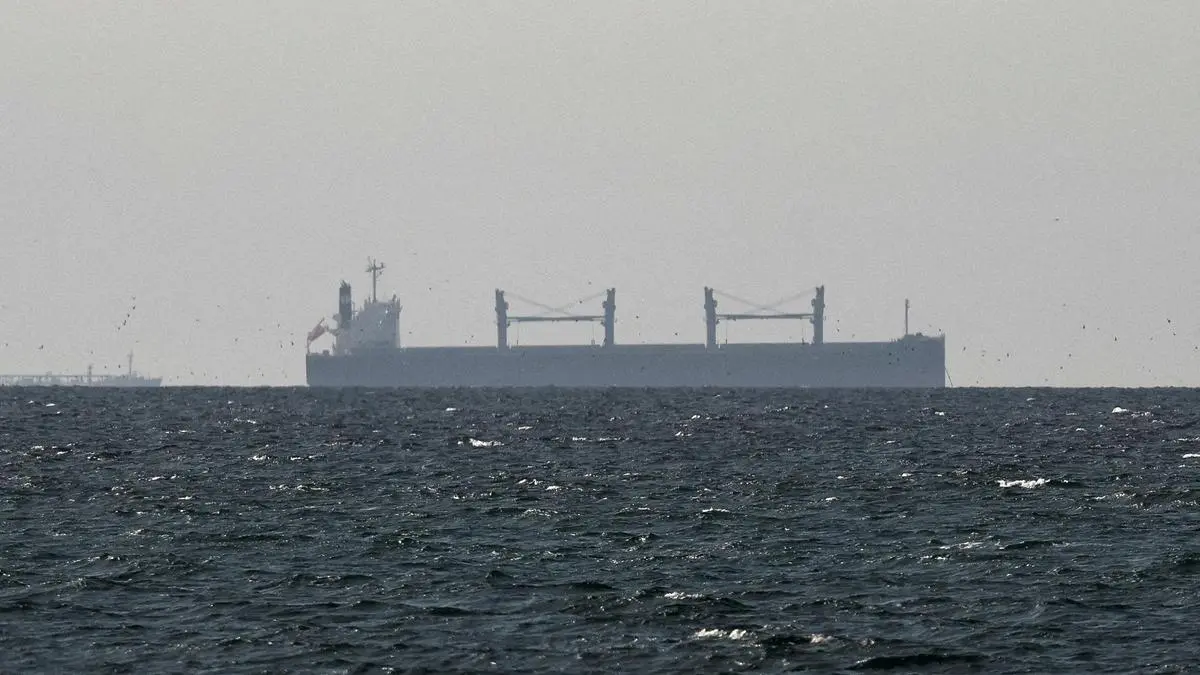
The initiation of a naval blockade represents a transition from diplomatic friction to kinetic economic warfare. When the United States Navy enforces maritime restrictions against Iran—verified by the United Kingdom Maritime Trade Operations (UKMTO)—the strategic objective is not merely the presence of hulls in the water; it is the absolute severing of the adversary’s financial and logistical circulatory system. This operation functions on a binary logic: the total control of narrow chokepoints to induce domestic collapse or forced behavioral shifts through resource starvation.
The Triad of Maritime Interdiction Force
A naval blockade is rarely a monolithic wall of ships. It functions through three distinct operational layers that determine its success or failure. Expanding on this idea, you can also read: Why Pakistan is Betting Everything on a US Iran Peace Deal.
- Kinetic Containment: The physical deployment of Carrier Strike Groups (CSGs) and Surface Action Groups (SAGS) to establish a "Kill Web" over specific geographic coordinates. In the Persian Gulf and the Strait of Hormuz, this involves the integration of Aegis Combat Systems to create a multi-tier defense against anti-ship cruise missiles (ASCMs) and fast-attack craft.
- Regulatory Suffocation: The utilization of UKMTO and the International Maritime Security Construct (IMSC) to issue "Notice to Mariners" (NOTAMs) that effectively void commercial insurance policies. Once a region is declared a restricted maritime zone, the cost of War Risk Insurance becomes prohibitive, forcing commercial vessels to divert regardless of physical interception.
- Sensor Dominance: The use of persistent Wide Area Maritime Surveillance (WAMS). This involves a combination of MQ-4C Triton UAVs and satellite synthetic aperture radar (SAR) to identify "dark targets"—vessels that have disabled their Automatic Identification System (AIS) transponders to evade detection.
The Geometry of the Strait of Hormuz
The Strait of Hormuz is the world’s most significant energy chokepoint. The geography dictates the strategy. At its narrowest, the shipping lanes consist of two-mile-wide channels for inbound and outbound traffic, separated by a two-mile buffer zone.
The US strategy utilizes the "Bottle-Neck Effect." By positioning assets at the mouth of the Gulf of Oman, the Navy can filter traffic before it reaches the shallow, high-risk waters of the Persian Gulf. This reduces the vulnerability of high-value assets like aircraft carriers to Iran’s "swarm" tactics and shore-based battery fire. The operational math is simple: control the 21-mile width of the Strait, and you control the transit of approximately 20% of the world’s petroleum liquids. Analysts at TIME have shared their thoughts on this situation.
Quantifying the Economic Attrition Model
A blockade is an exercise in applied macroeconomics. The goal is to maximize the adversary's Cost of Defiance until it exceeds the Value of Strategic Objectives.
- Export Revenue Evaporation: For an economy heavily dependent on hydrocarbon exports, a 90% reduction in tanker throughput leads to an immediate hard currency shortage. This triggers hyperinflation within the domestic market as the central bank loses the ability to defend the local currency.
- The Smuggling Premium: No blockade is 100% porous-free. However, the requirement to use smaller, "dark" vessels and complex ship-to-ship (STS) transfers increases the operational cost per barrel. This "smuggling tax" eats into the net profit of the Iranian state, ensuring that even successful exports provide diminishing returns to the treasury.
- Supply Chain Decoupling: Beyond oil, a blockade halts the import of dual-use technologies and refined industrial chemicals. This creates a cascading failure in the manufacturing sector, leading to industrial stagnation.
Tactical Asymmetry and the Counter-Blockade Risk
The enforcement of maritime restrictions creates a high-stakes environment where the weaker power—in this case, Iran—utilizes asymmetric variables to degrade the blockade's effectiveness.
The Mine Warfare Variable
The deployment of bottom-dwelling, acoustic, or magnetic mines remains the most cost-effective way to disrupt a US blockade. Mines do not need to sink a ship to be successful; they only need to exist. The mere suspicion of a minefield forces the US Navy into slow-speed mine-countermeasure (MCM) operations, making those assets vulnerable to shore-based ballistic missiles.
The Proxy Lever
A naval blockade at the source (the Persian Gulf) often triggers a response at the destination or along the transit route. The use of Houthi forces in the Bab el-Mandeb or militias in Iraq provides Iran with "out-of-theater" strike capabilities. This forces the US to dilute its naval concentration to protect shipping in the Red Sea, effectively thinning the blockade line.
Technical Limitations of Modern Blockades
Standard analysis assumes that a blockade is a static event. In reality, it is a dynamic race between detection technology and deception tactics.
The primary bottleneck for the US Navy is Rules of Engagement (ROE). In a "blind" blockade, every vessel must be identified. This requires Visit, Board, Search, and Seizure (VBSS) teams. The logistical burden of boarding dozens of massive tankers daily is immense. Each boarding operation slows down the rhythm of the blockade and puts personnel at risk of "hot" confrontations. If the ROE are too restrictive, "dark" ships slip through. If they are too aggressive, the risk of an unintended international incident with third-party flag states (like China or India) increases exponentially.
Strategic Calculation of Third-Party Compliance
The effectiveness of a US-led blockade is tied to the compliance of regional and global powers.
- The China Factor: As the primary buyer of Iranian crude, China’s willingness to utilize its own naval escorts or "grey zone" shipping fleets determines the blockade's leakage rate. If the US intercepts a Chinese-flagged vessel, the blockade shifts from a regional containment effort to a global great-power confrontation.
- Regional Basing: The blockade relies on "unsinkable aircraft carriers"—the shore-based facilities in Bahrain, Qatar, and the UAE. If Iran can diplomatically or kinetically pressure these nations to limit US access, the operational range of the blockade assets is halved, requiring more frequent and vulnerable at-sea refueling.
The Physics of the Response Curve
In the initial 72 hours of a blockade, market volatility is the dominant force. Brent Crude prices typically spike on the "Fear Premium." However, the long-term success of the blockade is measured by the stability of the Oil-to-Compliance Ratio.
If the US can maintain the blockade while the Strategic Petroleum Reserve (SPR) and increased production from non-OPEC+ sources stabilize global prices, the blockade becomes sustainable. If global prices remain high for more than 90 days, the political pressure from domestic US populations and European allies begins to degrade the "Will to Enforce."
The maritime restriction confirmed by UKMTO is the first move in a high-velocity game of resource exhaustion. The US is betting that the Iranian economy will fracture before the global energy market or the US political resolve breaks. This is a race against time, where the winner is the entity with the most diverse supply chain and the highest tolerance for sustained economic pain.
Execution Framework for Sustained Maritime Dominance
To move from an initial restriction to a permanent strategic denial, the naval command must prioritize:
- Automated Target Recognition (ATR): Integrating AI-driven sensor fusion to categorize vessels based on wake patterns and heat signatures, reducing the reliance on manual VBSS.
- Saturation Defense: Deploying unmanned surface vessels (USVs) as a picket line to provide early warning and intercept fast-attack craft, preserving the munitions of the larger destroyers.
- Diplomatic De-risking: Providing "Green Lanes" for pre-vetted neutral cargo to prevent the blockade from being characterized as a total humanitarian siege, which preserves the legal and ethical standing required for long-term international support.
The success of this operation hinges on the transition from "patrolling" to "systemic denial." The maritime environment is now a quantified battlespace where data-link speed is as vital as missile velocity. Control of the information flow—knowing exactly which ship is where and what it is carrying—is the only way to enforce a blockade in the age of globalized trade. Regardless of the kinetic outcome, the structural shift in maritime security ensures that the Persian Gulf will remain a high-friction zone for the foreseeable future, requiring a permanent re-tasking of global naval architecture.
The strategic play is to force the adversary into a "Sovereignty Trap": they must either accept the economic collapse of the blockade or initiate a direct military strike against a superior force, either of which results in the neutralization of their current geopolitical standing.