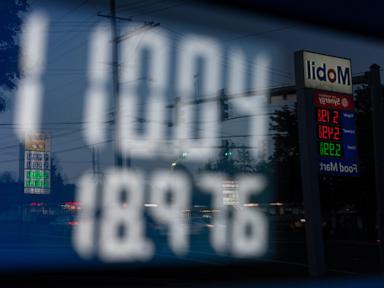
The headline runs on a loop every time a missile clears a Middle Eastern horizon. Crude spikes two dollars. Cable news anchors furrow their brows about Strait of Hormuz bottlenecks. Retail investors panic-buy shares of major exploration and production firms, convinced that a US-Iran standoff is a golden ticket to windfall earnings.
It is a lazy narrative built by analysts who have never traded a physical barrel of crude or managed a corporate balance sheet through a margin call.
The consensus is that geopolitical friction in the Persian Gulf automatically prints money for integrated energy majors. The reality is far uglier for shareholders and infinitely more complex than a simple supply shock equation. When crude prices surge on fear rather than structural demand, the underlying economics for oil companies often deteriorate rather than improve.
I have watched portfolio managers blow millions chasing war-risk premiums right into a wall of capital destruction. It is time to dismantle the myth that conflict in Iran equals a blank check for Big Oil.
The Margin Compression Trap Nobody Talks About
To understand why a US-Iran flare-up does not automatically enrich oil producers, you must look at how modern energy balance sheets actually function.
When a geopolitical shock hits, the front-month futures contract goes vertical. Amateurs look at Brent or WTI touching ninety dollars a barrel and assume every barrel pumped yields an extra twenty dollars of pure profit. They forget about backwardation, hedging books, and soaring input costs.
Refining margins, or cracks, often get crushed during a Middle Eastern crisis. Crude spikes faster than refined products can reprice at the pump, squeezing independent and integrated refiners caught in the middle. Furthermore, high crude prices trigger immediate demand destruction. Consumers drive less, airlines cut capacity, and industrial chemical plants curb operations.
When the market experiences price-induced demand destruction, physical volumes drop. A producer selling fewer barrels at a high, volatile price frequently makes less operating cash flow than one selling stable volumes at a moderate price.
Add in the cost of hedging. Major producers rarely leave their production unhedged. They lock in prices months in advance using complex derivatives. When a sudden geopolitical spike occurs, those hedge books can incur massive margin calls, forcing companies to drain liquidity just to manage paper losses on contracts designed to protect them against a downturn.
The Myth of the Infinite Bottleneck
People point to the Strait of Hormuz as the ultimate choke point, assuming that any disruption to the roughly twenty million barrels of oil passing through daily guarantees perpetual high prices.
This view ignores the adaptive capacity of global logistics and strategic reserves.
Imagine a scenario where traffic through the strait is severely restricted for thirty days. The initial shock sends shockwaves through spot markets. But within weeks, the arbitrage machinery of global trading houses kicks into gear. Differentials adjust. Permian Basin production ramps up to capture the margin. Strategic Petroleum Releases flood the market from consuming nations determined to curb inflation.
Physical markets hate sustained volatility. They route around blockages. Pipelines expand. Floating storage is drawn down. OPEC+ spare capacity—often sitting idle in Saudi Arabia and the United Arab Emirates—gets unlocked to offset the loss of sanctioned Iranian barrels that were already leaking onto the black market anyway.
Iran does not possess the naval staying power to maintain a permanent closure of the strait against the combined might of global maritime security. What looks like a structural supply apocalypse on television usually resolves into a temporary liquidity spike followed by a protracted hangover.
Why Wall Street Loves a Good War Story
Financial institutions love selling the narrative of war-induced energy profits because it moves product. It drives trading volume, options volatility, and retail capital into sector exchange-traded funds.
Investment banks publish breathless reports about supply deficits, knowing full well that high oil prices are the absolute best cure for high oil prices. Every dollar crude climbs above historical norms accelerates capital expenditure into alternative technologies, accelerates electric vehicle adoption in Europe and Asia, and incentivizes non-OPEC shale drillers to drill past their maintenance capital limits.
Smart executives in the boardroom do not celebrate a war in the Gulf. They dread it. They know that extreme volatility attracts regulatory scrutiny, windfall profit taxes, and frantic calls from Washington to cap domestic fuel prices.
During periods of sustained geopolitical tension, governments are quick to threaten excess revenue levies on energy companies. The political cost of reporting record profits while working-class consumers struggle to fill their tanks outweighs the temporary financial gain of a spiked commodity price.
The Uncomfortable Truth About Iranian Supply
Let us look at the actual data regarding Iranian exports. For years, Iran has been under heavy sanctions. How do they move their product? They rely on a ghost fleet of aging tankers, dark ship-to-ship transfers off the coast of Malaysia and Singapore, and deep discounts to independent refiners in China, known pejoratively as teapot refineries.
When tensions rise between Washington and Tehran, the volume of sanctioned Iranian crude does not suddenly drop to zero. Instead, the discount widens. Chinese buyers demand a steeper markdown to compensate for the elevated legal and operational risk of moving the oil.
Iran keeps pumping because their economy depends entirely on it, and buyers keep purchasing because cheap oil is impossible to resist. The net effect on global physical balances is often negligible. The market has already priced in the shadow trade of Iranian barrels.
What You Should Do With Your Money Instead
If you are allocating capital based on the assumption that a US-Iran conflict is a reliable way to generate alpha, you are playing a game rigged by macroeconomic gravity.
Stop treating energy stocks as leveraged plays on Middle Eastern headlines. Instead, look for companies with low break-even costs, pristine balance sheets with minimal debt, and management teams focused on organic return of capital through dividends and disciplined share buybacks rather than aggressive M&A fueled by temporary price spikes.
The real winners in an energy crisis are not the companies caught in the crosshairs of geopolitical risk. They are the logistics providers, the infrastructure owners with fixed-fee tollbooth models, and the low-cost producers who can survive a crash just as easily as they can cash in on a spike.
Geopolitical panic is a distraction. Ignore the noise on the screen. Focus on the cost curve.