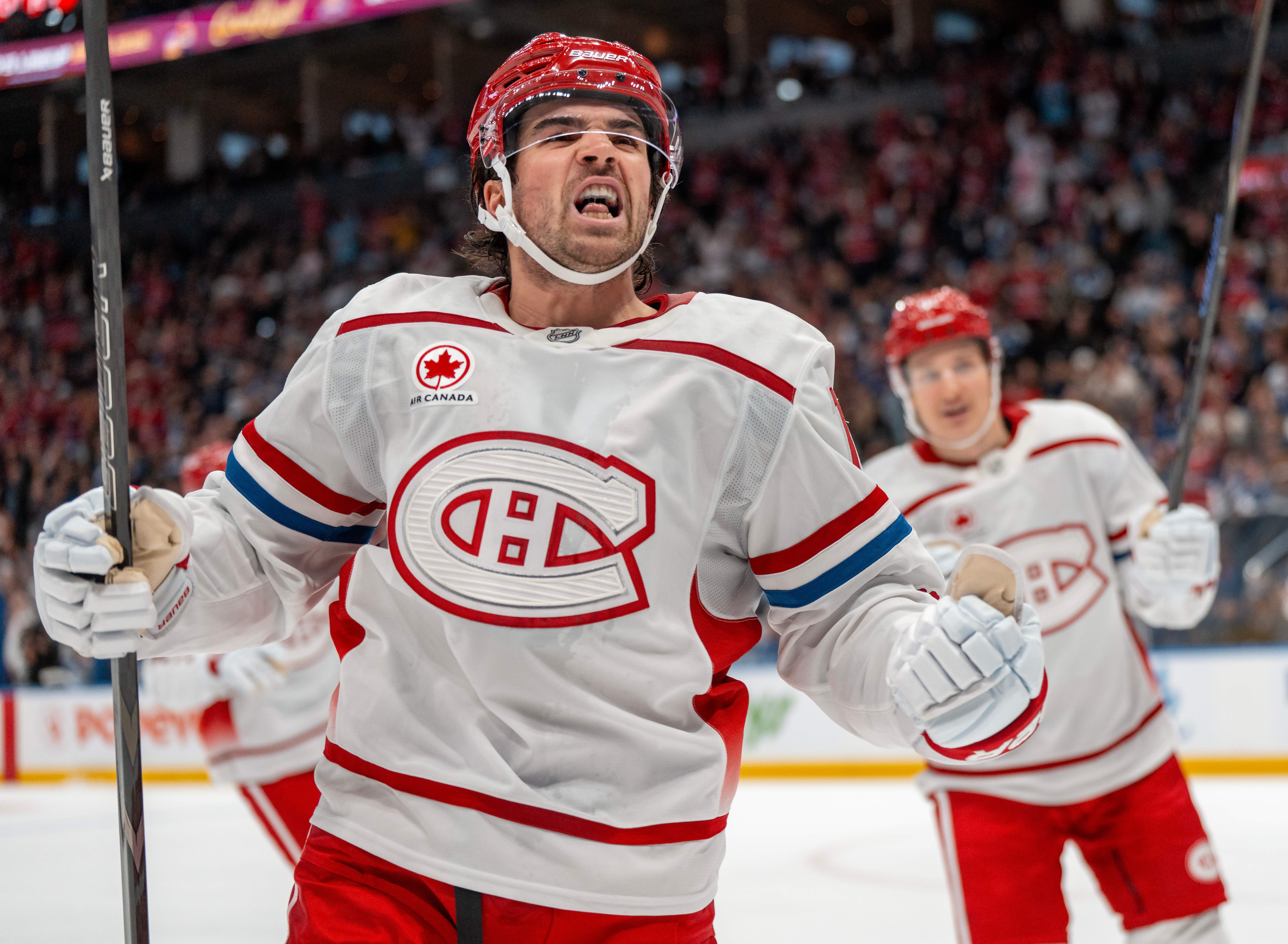
The cold in Montreal does not merely chill the skin. It settles into the marrow of the city, pressing against the stone facades of Rue Sainte-Catherine until the concrete itself seems to hum with a low, expectant vibration. On nights when the Toronto Maple Leafs come to town, that vibration turns electric.
You can feel it before you even step off the Metro at Lucien-L’Allier. It is in the way an old man in a faded Jean Béliveau sweater grips his paper cup of coffee, his knuckles white against the cardboard, and in the sharp, nervous laughter of twenty-somethings spilling out of the bars on Crescent Street. For years, that nervous energy has carried a bitter aftertaste. When you cheer for a franchise burdened by twenty-four Stanley Cup banners hanging from the rafters like silent, judging ancestors, losing does not just sting. It haunts.
And yet, something strange has been happening in the dark corners of the Bell Centre lately. The Montreal Canadiens are rolling. They are not merely surviving against the heavyweights of the Atlantic Division; they are dictating the terms of engagement, culminating in a statement victory over their oldest, most arrogant rival, the Toronto Maple Leafs.
To look at the box score is to miss the point entirely. A sports recap will tell you about shot attempts, power-play percentages, and third-period defensive shells. It will recite the cold arithmetic of a regular-season win. But if you have ever sat in the upper bowl of an Original Six arena when the momentum shifts—when twenty-one thousand people suddenly realize that the rebuild is no longer a theoretical promise scribbled on a general manager’s whiteboard—you know that hockey is rarely decided by spreadsheets. It is decided by belief.
The Weight of Twenty-Four Ghosts
Consider a hypothetical fan—let us call him Marc—who has spent the last decade watching hockey from the same sticky-floored tavern in Verdun. Marc is thirty-four. He was barely out of diapers the last time the Canadiens hoisted the Cup in 1993. His entire adult relationship with his hometown team has been a masterclass in lowered expectations, punctuated by miraculous, unsustainable Cinderella runs that always ended in heartbreak.
For fans like Marc, watching Toronto walk into Montreal has felt like watching a wealthy cousin pull up to a family reunion in a sports car while you are still trying to jump-start a rusted sedan. The Maple Leafs arrived with their constellation of superstar talent, their effortless offensive swagger, and the suffocating certainty of a team built to contend right now. Meanwhile, Montreal has spent the last few seasons tearing its roster down to the studs, asking its notoriously impatient fanbase to endure the misery of draft lotteries and growing pains.
There is a specific kind of exhaustion that comes with patience in a hockey-mad market. You start to doubt the blueprint. You watch young defensemen blow coverage in the slot. You watch high-draft picks struggle to adapt to the blinding speed of the NHL. You wonder if the culture of losing is quietly calcifying inside the locker room, turning potential into permanent mediocrity.
That is the invisible stake every time the puck drops between these two cities. It is never just two points in the standings. It is a referendum on whether the pain was worth it.
Anatomy of an Upset
When the Canadiens took the ice against Toronto, the script seemed pre-written. The Maple Leafs possess the kind of top-end firepower that can turn a half-second of hesitation into a red light behind the net. In modern hockey, elite teams do not beat you by outworking you for sixty minutes; they beat you by waiting for you to blink, and then executing with surgical cruelty.
Early on, you could see the tension in Montreal’s sticks. Passes skipped over blades. Clearances rimmed halfway up the boards before getting picked off at the blue line. In the stands, that familiar, collective intake of breath echoed through the bowl—the sound of a city bracing for impact.
Then, the geometry of the game began to bend.
Think of a hockey game like a tug-of-war played on a sheet of glass. Most teams try to win by pulling harder, muscling their way toward the center line. What Montreal did against Toronto was subtler, and infinitely more frustrating for a star-studded roster. They took away the ice.
Led by a young core that has suddenly stopped playing like kids asking for permission to be in the league, the Canadiens clogged the neutral zone with relentless, layered pressure. Every time a Toronto forward wound up through the middle with speed, he met a wall of red sweaters. Not a passive trap designed to bore the crowd to sleep, but an aggressive, swarming hive that turned broken plays into instant counterattacks.
Watch how Nick Suzuki operates when the game tightens. He does not possess the blinding, highlight-reel velocity of Toronto’s top centers. Instead, he plays with the unhurried precision of a chess master who has already seen four moves ahead. He absorbs contact along the half-wall, shields the puck with his hips, and buys that crucial extra heartbeat for a teammate to slip into soft ice. Against the Leafs, that composure acted like an anchor. Whenever Toronto threatened to tilt the ice, Suzuki’s line stepped over the boards and restored order.
The Myth of the Easy Rebuild
If you ask ten hockey analysts how to build a contender, nine of them will draw you a neat, linear graph. You draft high, you develop prospects in the minors, you sign veteran mentors, and three years later, you emerge as a powerhouse.
Anyone who has actually lived through a rebuild—whether on the ice or in the front office—knows that graph is a lie.
Development is chaotic. It is two steps forward in November followed by a humiliating six-game losing streak in January. Young players do not grow in unison; they surge and stall at wildly different rates. One night, a twenty-year-old blueliner looks like a future Norris Trophy finalist; the next night, he throws a blind backhand pass directly onto the tape of an opposing sniper.
What makes Montreal’s current surge so compelling is not that they have suddenly become a finished product. They haven’t. They still bleed high-danger chances when their defensive structure fractures. They still rely heavily on goaltending that has to stand on its head during second-period surges.
The difference is in their response to adversity.
Earlier in the season, a bad bounce or a blown assignment against a powerhouse like Toronto would have triggered a collapse. You could practically see the shoulders slump on the bench. The game would unravel in a matter of minutes, turning a competitive one-goal contest into a 5-1 rout before the Zamboni could even hit the ice for the second intermission.
Against the Leafs this time, Toronto pushed back hard. They generated sustained pressure in the offensive zone, cycling the puck until Montreal’s defenders were exhausted, their shifts stretching past the ninety-second mark. In years past, that was the breaking point.
Instead, Montreal bent without snapping. Shot blocks piled up—players throwing their bodies in front of ninety-mile-an-hour slap shots with the kind of reckless abandon you usually only see in April and May. When the goaltender swallowed a rebound through a maze of legs, the ensuing scrum in the crease wasn’t a panic; it was a declaration. Nobody was getting pushed out of the blue paint.
Why This Rivalry Refuses to Die
People outside of Canada often struggle to understand the sheer emotional voltage of a Canadiens-Maple Leafs matchup. To an outsider, it looks like nostalgia—two legacy brands trading on glories that occurred before color television became standard.
They are wrong.
The rivalry endures because it represents two fundamentally opposing philosophies of Canadian identity, played out at thirty miles an hour on blades of steel. Toronto is the corporate capital, slick and expectant, perpetually convinced that its sheer size and resources entitle it to the crown. Montreal is the rebellious, artistic soul, proud of its distinctness, fiercely protective of its flair, and convinced that heart and history can still topple sheer financial might.
When Montreal beats Toronto, it validates the romantic notion that sports cannot be reduced to analytics and payrolls. It proves that chemistry, timing, and sheer collective stubbornness still carry weight.
You could see it on the faces of the players as the final seconds ticked off the clock. When the empty-netter slid across the goal line to seal the victory, the roar inside the Bell Centre didn’t sound like a normal regular-season celebration. It sounded like a release valve blowing off after years of mounting pressure.
The Danger of Falling in Love Too Early
Of course, hockey is a cruel sport that punishes premature celebration. One hot streak does not erase the structural flaws of a young roster, nor does a single victory over a division rival guarantee a spring filled with playoff hockey.
If you are Marc, sitting in that tavern in Verdun, nursing the last warm sip of your beer as the post-game highlights roll across the muted television screen, you know better than to start planning a parade route down Boulevard René-Lévesque. You have been burned too many times by false dawns. You know that tomorrow night, or next week, this same young team could fly into a sleepy Tuesday night matchup against a bottom-feeder and look completely lost.
Consistency is the final, hardest lesson for any rising team to learn. Anyone can get up for the Maple Leafs on a Saturday night under the bright lights of national television. The real test happens on a freezing Wednesday in February against an opponent nobody cares about, when your legs are heavy and the adrenaline is gone.
Yet, as you walk out of the arena into the biting Montreal night, pulling your collar up against the wind, the mood has undeniably shifted. The ghosts in the rafters don't feel quite so heavy anymore. For the first time in a long time, the kids on the ice aren't running away from the history hanging above their heads. They are finally starting to look like they belong underneath it.