Look at a river long enough and it stops looking like water. It starts looking like a pulse.
If you have ever stood on the bank of the Sacramento River just north of Redding in the late afternoon, you know the exact shade of green it turns when the canyon shadows stretch across the current. It is cold. It is fast. It smells faintly of wet granite, pine pitch, and snowmelt straight off the flanks of Mount Shasta. For millions of Californians—from rice farmers in the Central Valley to families turning on kitchen faucets three hundred miles south—this river is not scenery. It is survival.
Now, picture a rainbow on the surface of that water. Not the kind arched across the sky after a winter storm, but a flat, greasy, iridescent smear clinging to the reeds along the shoreline.
In 2019, that rainbow appeared.
There was no explosion. No ruptured pipeline spraying black crude into the air for television cameras to capture from helicopters. No tanker ran aground on jagged rocks. Instead, the disaster arrived the way most genuine environmental nightmares do in the American West—quietly, invisibly, seeping through gravel and clay like a memory the ground could no longer hold.
The First Drop
Imagine—purely as a composite of the inspectors, anglers, and hydrologists who first noticed something was wrong—a river guide named Ray pushing his drift boat off a gravel bar below the Dunsmuir railyard on a cool morning in 2019. Let’s be clear: Ray is a fictional stand-in, a human lens through which to see what data points alone cannot show. His boots are scuffed. His hands smell like salmon roe and coffee. He knows every eddy in this stretch of the upper Sacramento the way you know the floorboards that creak in your own house.
He dips his oar, looks down at the slack water near the bank, and freezes.
A thin, metallic sheen blooms around the blade, fracturing the morning light into violets and sickly golds. He touches the water with two fingers and rubs them together. The slick does not evaporate. It leaves behind the unmistakable, heavy ghost of diesel and bunker oil.
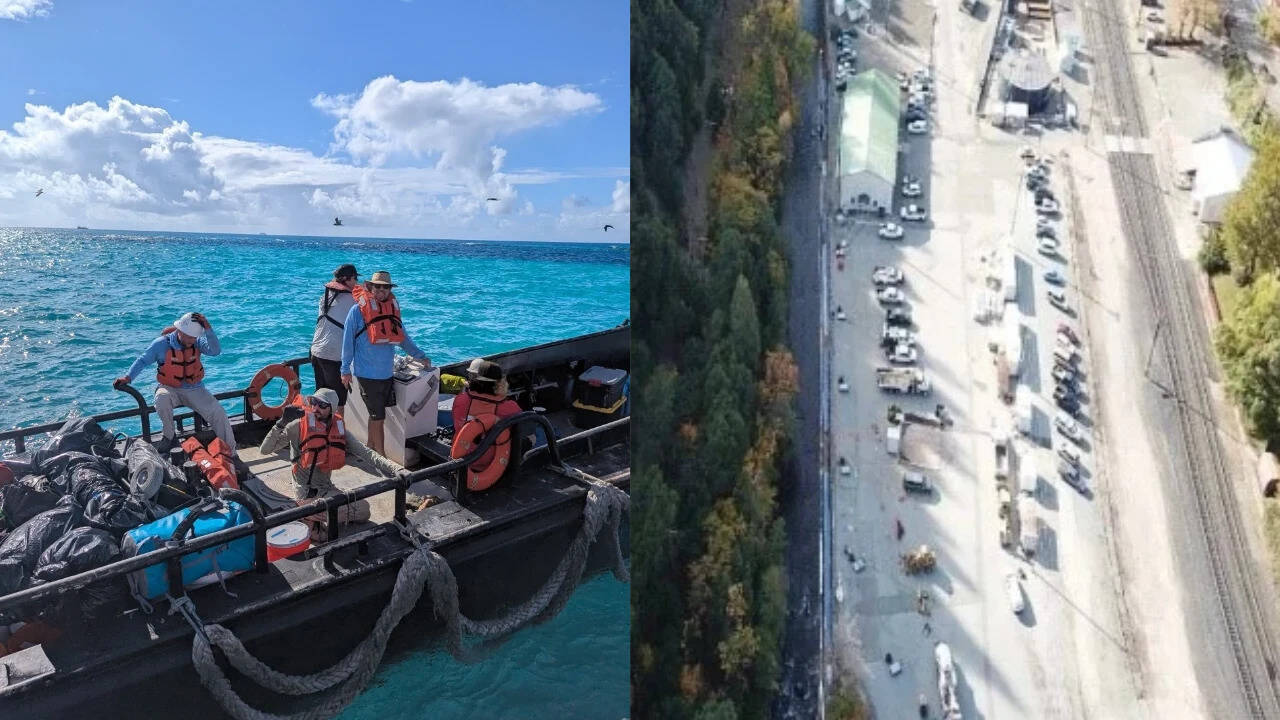
Above the steep bank, perched on a narrow shelf carved into the canyon walls, sit the steel rails of a historic California railyard. Trains have rolled through this corridor for more than a century, hauling timber, freight, and heavy industry through the rugged Siskiyou mountains. For decades, before modern environmental laws existed, before double-walled tanks and impermeable containment liners were standard practice, locomotives were refueled, oiled, and repaired right above the riverbank.
Nobody back then thought of the earth beneath the ties as a sponge. They thought of it as a floor.
By the time regulators traced that 2019 sheen back to its source, they realized they were not dealing with a fresh spill. They were looking at an underground ghost. Decades of historical drips, leaks, and industrial runoff had soaked into the fractured bedrock and alluvial soil beneath the railyard, pooling invisibly above the water table. Then, pushed by shifting groundwater and winter rains, that trapped petroleum finally found an exit route through the riverbank.
Why Slow Leaks Are Worse Than Explosions
When a disaster happens all at once, human beings know how to react. Sirens wail. Containment booms snap across harbors. Everyone watches the same crisis on the evening news, and outrage fuels immediate action.
Slow-motion contamination works differently. It breeds doubt.
When news of the Sacramento River seepage broke in 2019, people living downstream asked the exact questions anyone would ask while standing over their kitchen sink with a glass of tap water in hand. How much oil is actually down there? Is my drinking water safe? Why didn't anyone catch this thirty years ago?
To understand why those answers were so unsettling, you have to understand how oil behaves underground. Think of the soil beneath an old industrial site like a giant, stacked layer cake made of gravel, sand, clay, and cracked stone. When petroleum enters that cake from above, gravity pulls it downward until it hits the groundwater table. Because most oil is lighter than water, it floats right on top of that underground water surface, spreading sideways into thin, irregular plumes that follow the hidden contours of the rock.
You cannot see it from the surface. You cannot smell it while walking past the tracks. Unless you drill dozens of monitoring wells into the earth like straws into a milkshake, you have no idea how wide the plume has spread or how fast it is moving toward the nearest river.
And here is the terrifying part that keeps environmental engineers awake at night: you can clean the surface water every single morning, skim off every last drop of visible sheen, and tomorrow morning it will be back. As long as the saturated soil beneath the railyard acts like an oil-soaked sponge pressed against a porous riverbank, every rainstorm and every seasonal rise in the water table squeezes another dose of hydrocarbons straight into the current.
For a river like the Sacramento, that slow drip is poison on an installment plan.
This stretch of water is prime habitat for wild rainbow trout and critical spawning territory for endangered Chinook salmon. Petroleum hydrocarbons do not just coat feathers and gills; they dissolve into the water column at microscopic levels, attacking the nervous systems of aquatic insects, suffocating fish eggs buried in gravel redds, and disrupting the biological compass salmon rely on to navigate home from the Pacific Ocean. Even trace concentrations can turn a thriving cold-water nursery into an ecological dead zone.
I have walked industrial remediation sites where the air tastes faintly of sulfur and old motor oil even on a breezy day. Once you have stood beside an open excavation trench and watched black, tar-thick sludge ooze out of what looked like ordinary mountain dirt ten minutes earlier, you never look at an old rail corridor or factory lot the same way again. You realize how thin the crust of our modern safety standards really is—and how deep the legacy of the past runs beneath our feet.
Six Years in the Dirt
When Union Pacific and state environmental agencies confronted the reality beneath the railyard, it became clear that absorbent booms and surface skimmers would never be enough. Stopping the seep meant performing open-heart surgery on the riverbank while a major freight artery kept running overhead and one of California’s most vital rivers rushed past just yards away.
Six years. That is how long it took to wrestle that hidden plume out of the earth.
Consider what six years of continuous environmental remediation actually looks like on the ground. It is not glamorous work. There are no ribbon-cutting ceremonies when you haul away another dump truck full of greasy mud.
First, crews had to seal the wound so the river could breathe again. They drove interlocking steel sheet piles deep into the earth along the shoreline, building an underground barrier wall designed to stop oil from migrating laterally into the Sacramento. Behind that wall, engineers installed networks of extraction wells, vacuum systems, and underground collection trenches—essentially inserting giant mechanical kidneys into the canyon floor to pump out contaminated groundwater and separate the free-floating oil before clean water could be returned.
Then came the digging.
If you want to eliminate the source, you cannot just pump the liquid; you have to remove the sponge itself. Over six grueling years of seasonal windows—working around winter floods, summer fire danger, and strict protections for spawning fish—heavy excavators clawed into the tainted earth beneath the railyard.
By the time the dust settled six years after that first 2019 sheen was spotted, crews had recovered 75,000 gallons of oil and excavated 100,000 tons of contaminated soil.
Pause for a second and let those two numbers sit next to each other.
Seventy-five thousand gallons of oil. That is roughly equivalent to two and a half full railroad tank cars of pure petroleum—not spilled in a single afternoon wreck, but gathered drop by agonizing drop from beneath the gravel and bedrock of a single railyard.
And 100,000 tons of contaminated soil. Picture a line of heavy-duty dump trucks, bumper to bumper, stretching for miles down Interstate 5, every single bed loaded with toxic dirt that had to be dug out, tested, manifested, hauled to licensed hazardous-waste facilities, and replaced with clean, engineered fill.
What the Numbers Hide
It is easy to read a headline stating that 75,000 gallons of oil and 100,000 tons of soil were removed and feel a neat, tidy sense of closure. Problem found. Problem solved. Move on to the next story.
But anyone who has ever watched an environmental cleanup unfold knows that the truth is messier and far more human than a press release allows.
Think about the people who lived alongside that six-year grind. Think about the small canyon towns like Dunsmuir, where the river is the town's front porch, its economic lifeline, and its identity rolled into one. For six years, residents lived with the hum of treatment pumps, the rumble of haul trucks, the orange construction fencing along the riverbanks, and the nagging, persistent worry in the back of their minds every time heavy rain fell on the mountains: Did they get all of it?
To be completely honest, environmental science rarely offers absolute certainty. Even after removing 100,000 tons of soil, hydrogeologists cannot X-ray every fissure in volcanic canyon rock. That is why groundwater monitoring wells remain in the ground long after the bulldozers leave, sampling the water month after month, year after year, watching for the slightest spike in hydrocarbons. Trust in these cleanups is not built on promises; it is built on relentless, transparent verification.
At the same time, look at what would have happened if that 2019 sheen had been ignored, minimized, or treated with half-measures.
Had those 75,000 gallons remained trapped in the bank, winter storms over the next decade would have steadily bled that petroleum into the upper Sacramento River. It would have poisoned prime trout waters, threatened downstream municipal water intakes serving cities across the Sacramento Valley, and degraded one of the West’s irreplaceable freshwater corridors.
There is a quiet, stubborn heroism in spending six years digging out dirt so that a river stays clear. Nobody writes ballads about vacuum extraction trenches or sheet-pile containment walls. Yet those unglamorous feats of engineering are often the only thing standing between a thriving watershed and an irreversible ecological collapse.
The Reckoning Under Our Feet
The story of the Sacramento River railyard cleanup is not an isolated fluke. Across North America, thousands of aging industrial corridors, historic rail yards, abandoned refineries, and legacy manufacturing sites sit directly beside rivers, lakes, and coastal bays. A hundred years ago, builders placed industry next to water because rivers were highways and dumping grounds rolled into one.
Today, those same rivers are our drinking fountains, our farms, and our last wild refuges.
Every time a heavy rainstorm saturates an old industrial bank, or a shifting water table unlocks a pocket of twentieth-century waste, the past comes knocking on the present's door. The cleanup along the Sacramento proves two uncomfortable truths at once: first, that the earth remembers everything we spill into it, long after the people who spilled it are gone; and second, that fixing our inheritance requires staggering amounts of money, sweat, patience, and dirt.
Go back to the riverbank north of Redding on a crisp autumn evening today.
The steel sheet piles are buried out of sight. Clean rock and native riparian willows have begun reclaiming the shoreline where yellow excavators once swung their buckets through oil-blackened mud. Out in the main channel, the current runs cold, fast, and clear over clean gravel, catching the last amber light off Mount Shasta as wild trout rise to snap at evening mayflies—and beneath the water, the river keeps its pulse.


