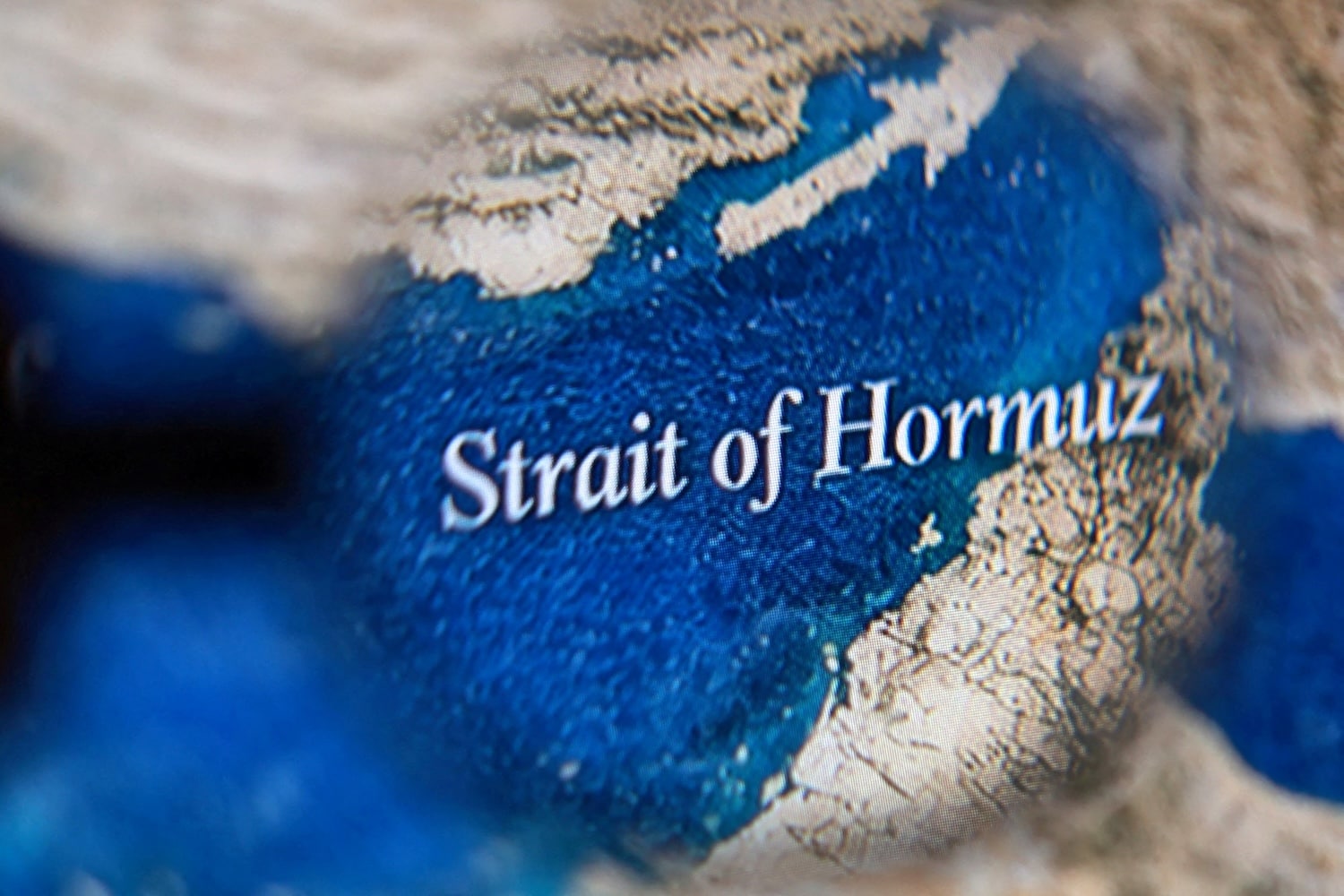
The coffee in your hand is slightly more expensive than it was last month, but you probably haven't noticed. You certainly didn't think about the Strait of Hormuz when you tapped your card at the counter. Why would you? It is a narrow strip of water thousands of miles away, a jagged choke point where the jagged mountains of Oman stare across at the Iranian coast. Yet, for the last few weeks, that tiny stretch of blue has been the invisible hand reaching into your wallet.
Oil markets do not run on math. They run on fear.
When tension spikes in the Middle East, a "risk premium" is instantly baked into every barrel of crude. It is a tax on anxiety. Traders sit in glass towers in London and Singapore, staring at flickering green numbers, trying to calculate the odds of a missile hitting a tanker or a mine being dropped into a shipping lane. For a while, the world was convinced the spark had finally caught the tinder. Prices climbed. The risk was real, or at least, it felt real enough to pay for.
Then, the silence began.
The Invisible Anchor
Imagine a man named Elias. He is a captain on a Very Large Crude Carrier (VLCC). His ship is a steel island, three football fields long, carrying two million barrels of oil. As he approaches the Strait, he isn't looking at the horizon for beauty. He is looking for the wake of a fast-attack craft. He is checking the radar for drones. His insurance premiums have quintupled. His crew is on edge. Every hour spent in those waters is a gamble with a billion-dollar stake.
When experts say the "Hormuz risk premium is fading," what they really mean is that Elias is starting to breathe again.
The market has realized that despite the fiery rhetoric, the tankers are still moving. The flow of energy—the lifeblood that keeps the lights on in your office and the trucks moving on the interstate—has not stopped. The predicted catastrophe didn't arrive. Consequently, the speculators are folding their hands. They are selling off their "disruption" bets. Oil prices are sliding not because the world has too much energy, but because we have realized we aren't at war.
Yet.
The slide is aggressive. West Texas Intermediate and Brent crude are shedding value because the geopolitical bogeyman didn't jump out of the closet. But this drop reveals a deeper, colder truth about the global economy: once you strip away the fear of war, the underlying reality is remarkably shaky.
The Weight of Normalcy
If shipping normalizes completely, we face a different kind of monster. It isn't a missile; it’s a surplus.
When the fear subsides, the market is forced to look at the spreadsheets it has been ignoring. China’s industrial appetite is slowing down. Electric vehicle adoption is no longer a niche hobby but a structural shift in demand. The United States is pumping more oil than any nation in human history. We are drowning in supply, and the only thing that was keeping the price buoyed was the terrifying possibility that the Strait of Hormuz might close.
Think of it like a theater where someone whispered "fire." Everyone rushed for the exits, and the price of a ticket to get out spiked. Now, people are looking around and realizing there is no smoke. They are sitting back down. But as they do, they notice the play is actually quite boring, and the theater is half-empty.
The "downside" the experts talk about is the return to this boring, difficult reality. If the ships move freely, the price of oil has nowhere to go but down. This sounds like a win for the consumer at the pump, but for the global economy, it’s a signal of a cooling engine.
The Fragility of the Flow
We live in a world of "Just-in-Time" everything. The oil being pulled out of the ground in the Permian Basin or the Arabian desert today is often destined for a refinery that needs it in exactly twenty-one days to meet a specific contract. There is very little slack in the line.
The Strait of Hormuz handles about 20% of the world’s total petroleum consumption. It is a jugular vein. If it narrows by even a fraction, the heartbeat of global commerce skips.
Consider the logistical nightmare of a "normal" day. Thousands of ships must coordinate movements through narrow channels. When you add the threat of regional conflict, the math becomes impossible. Shipping companies start rerouting. They go around the Cape of Good Hope, adding weeks to a journey and burning thousands of tons of extra fuel just to avoid a potential fight. This creates a "shadow" cost that lingers even after the headlines fade.
The current slide in prices is a sigh of relief. It is the market admitting it overreacted to the immediate threat of a total shutdown. But there is a haunting quality to this relief. It is based on the assumption that "normal" is a stable state.
It isn't.
The Human Cost of a Number
Behind every decimal point drop in the price of crude is a series of human consequences. In North Dakota, a rig worker sees the price dip and wonders if his shift will be cut next month. In Riyadh, a government minister looks at the budget for a new carbon-neutral city and realizes the funding just got tighter. In your neighborhood, the price of a plastic gallon of milk—which requires oil for the container, oil for the tractor, and oil for the truck—stays stubbornly high because "downward pressure" takes months to reach the shelf.
We are addicted to the volatility. We watch the oil charts like we watch the weather, hoping for a calm day but always keeping an eye on the clouds.
The experts tell us that further downside is possible. They use that word like it’s a bad thing. For a hedge fund manager, "downside" is a loss on a spreadsheet. For a family trying to heat a home in a cold climate, "downside" is a godsend. This tension is the core of the energy story. One person's crisis is another person's survival.
The risk hasn't actually vanished. It has just become background noise again. We have a remarkable ability to get used to the end of the world. We see a drone strike on the news, check the oil price, see it hasn't moved, and go back to our dinner. We have priced in the chaos. We have normalized the threat.
The Empty Horizon
What happens if shipping truly normalizes? What if the tankers move with the boring regularity of a suburban bus route?
The price of oil would likely find its "true" floor, uninflated by the ego of dictators or the anxiety of traders. That floor is lower than many people are prepared for. We are looking at a world where the transition to new energy sources is colliding with a massive oversupply of the old ones. It is a pincer movement that could redefine the wealth of nations.
The ghost of Hormuz still haunts the water. Even when the risk premium fades, the memory of the fear remains. It sits in the back of every trader's mind, a reminder that the entire global system is balanced on a knife's edge in a distant sea.
We watch the numbers tick down. We see the "expert" analysis. But the truth is simpler and more visceral. We are all passengers on those tankers, whether we like it or not. We are all tied to the rhythm of a narrow strait where the mountains watch the water, waiting for the next time the world holds its breath. For now, the world is exhaling. The price is falling. The ships are moving.
But the silence in the Strait is never permanent. It is just the space between the screams.

