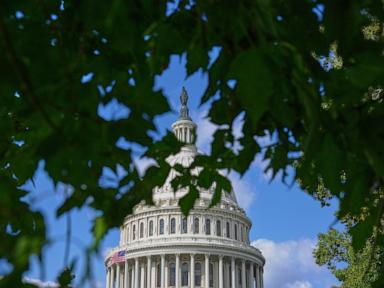
Ink dries slowly in Washington. But sometimes, it stains.
In the wood-paneled corridors of Capitol Hill, where the air always smells faintly of old paper and anxiety, names do not merely mark attendance. They become weights. They become anchors dropped into turbulent waters to keep a drifting ship from shattering against the rocks. Right now, the anchor bears the name of a man who spent his final years warning anyone who would listen that the ice was thinning.
Late Senator Lindsey Graham is no longer walking the marble floors. Yet, his shadow hangs heavy over a legislative chamber bracing for a vote that could redraw the economic architecture of international conflict. The house is nearing a decision on a Russia sanctions bill, and while the legislative text is filled with the dry, sterile jargon of export controls and asset freezes, the human reality behind it is raw, messy, and urgent.
Cold statistics rarely bleed. When analysts talk about biting sanctions, SWIFT exclusions, and secondary penalties, they speak in the abstract language of macroeconomics. They talk about percentages of GDP, drops in oil revenue, and frozen sovereign reserves. But behind every percentage point sits a cold apartment in a city without heat, a mother rationing bread, or a factory worker whose livelihood vanished because a distant dictator decided to redraw borders with artillery fire.
Consider what happens on the ground when the gavel falls in Washington.
Imagine a small business owner in Kyiv or a logistics coordinator in Warsaw watching the live stream of the House floor. To them, the upcoming vote is not a political maneuver or a partisan chess piece. It is oxygen. It is the difference between a protracted war of attrition that grinds generations into dust and a sudden, suffocating financial pressure that forces an aggressor back to the negotiating table. When lawmakers debate the nuances of extraterritorial enforcement, they are deciding whether a family gets to wake up to sirens or silence.
We often forget that global politics is deeply personal. We treat geopolitics like a board game played by giants in suits, moving pieces across a map while the rest of us watch from the sidelines. But history is made by human choices, and its consequences are borne by human flesh.
The proposed legislation did not materialize out of a vacuum. It is the product of years of institutional memory, bitter lessons learned from half-measures, and the hard-earned realization that appeasement is not a strategy; it is an invitation. For years, the international community tried the diplomatic equivalent of turning down the thermostat while the house was already fully engulfed in flames. Sanctions were applied timidly, exemptions were carved out for convenience, and the global financial system remained porous enough for oligarchs to slip through the cracks.
The ghost of the late senator whispers through the current draft. His persistent warning was simple: weakness invites aggression. When you leave a door unlocked, do not act surprised when the thief walks in.
Yet, crafting effective sanctions is walking a tightrope over an abyss. Push too hard, too fast, and the shockwaves ripple through global energy markets, spiking inflation for working-class families thousands of miles away from the front lines. Push too softly, and the measures become mere theater, generating angry headlines in the morning news cycle while changing nothing on the ground. Lawmakers are forced to weigh the immediate economic discomfort of global allies against the long-term existential threat of a world where international borders can be erased by tanks.
This is the invisible tension of the modern legislative process. It is a negotiation with the future. Every clause in the bill represents a compromise between what is morally necessary and what is politically and economically sustainable.
We have seen this movie before. In the prelude to previous global conflicts, the warning signs flashed red, ignored by leaders who preferred the comfortable illusion of normalcy. Economists crunched numbers while diplomats drafted strongly worded letters. Meanwhile, the machinery of war kept grinding forward, fueled by hesitation and misplaced optimism.
The members of the House walking toward the chamber today carry that historical weight on their shoulders. They know that the vote they cast will echo far beyond the Beltway. It will be analyzed in Moscow, debated in Brussels, and felt acutely in the trenches where young soldiers shelter from mortar fire.
There is a strange loneliness to being a legislator at a moment of consequence. In the hours before the roll call, the lobbyists quiet down, the television cameras pull back, and the representatives are left alone with their conscience. They must ask themselves a fundamental question: When the history of this era is written, will their names be associated with decisive courage or cowardly delay?
The debate over the sanctions bill is ultimately a test of collective resolve. It asks whether democratic societies still possess the stamina to defend the rules-based international order, or if fatigue has rendered them indifferent to the suffering of others.
When the final tally flashes on the electronic board, the immediate reaction will be procedural. Pundits will dissect the vote margins, political strategists will calculate the electoral fallout, and markets will adjust their positions within milliseconds.
But look past the ticker tape.
Look at the quiet dignity of people who refuse to surrender their sovereignty. Listen to the steady hum of generators in war-torn cities. Remember that every legislative comma, every revised definition, and every targeted institution in that bill is a weapon forged in the defense of human dignity.
The vote is coming. The arguments have been made, the amendments drafted, and the lines drawn. Now comes the hard part. Now comes the accountability.
History is watching from the shadows, pen in hand, waiting to see what we choose to do with our power.