The air in the control room smells like stale coffee and ozone. It is four in the morning in a port city where the cranes stand against the gray horizon like rusted skeletons. On a wall-mounted monitor, a green ship icon drifts across a digital map of the Arabian Gulf, carrying two million barrels of crude oil. Millions of dollars of liquid sunshine.
Down on the docks, though, a fisherman named Tariq looks at his small diesel-powered trawler and spits into the dark water. He cannot afford the fuel to leave the harbor today. The price has jumped again. Not because the earth ran out of black gold. No. The crude is there. It is pumping out of the earth at a furious clip, filling supertankers that slip quietly past the horizon.
The disconnect is invisible to most. Crude oil flows like a swollen river, yet refined diesel—the lifeblood of tractors, delivery trucks, cargo ships, and emergency generators—trickles like sand through an hourglass.
We have plenty of oil. We do not have enough fuel. And that simple, terrifying mismatch is quietly rewriting the cost of everything you touch.
The Bottleneck of Fire
To understand why the world feels like it is tightening its belt in the middle of abundance, you have to look inside a refinery.
Crude oil is useless sludge straight out of the ground. It is a chemical stew of hydrocarbons, thick as warm tar, smelling fiercely of sulfur. To make it burn in the combustion engine of a combine harvester in Iowa or a container ship crossing the Mediterranean, you have to cook it. You have to boil it in massive, tower-like distillation units, separating the heavy asphalt from the lighter gasoline and the prized, heavy-duty distillate we call diesel.
For decades, the global energy map made a brutal kind of sense. Western nations built massive refineries near their population centers. The Middle East pumped the raw product.
Then came the great migration of heavy industry.
Over the last fifteen years, nations in the Gulf region—Saudi Arabia, the United Arab Emirates, Kuwait—looked at their vast oceans of crude and asked a simple, transformative question: Why sell the raw wood when we can sell the polished mahogany?
They poured billions of dollars into colossal, hyper-modern refining complexes. Places like Al-Zour in Kuwait or Jazan in Saudi Arabia. Cities of steel and pipe designed to process hundreds of thousands of barrels a day. The plan was brilliant. It promised to reshape global trade, shifting the power of energy not just to those who own the dirt, but to those who hold the fire.
Yet, building a refinery is a monumental engineering feat. Running it smoothly is another universe entirely.
Consider a hypothetical scenario, based on the real-world operational headaches haunting engineers from Rotterdam to Ras Tanura. Imagine a complex hydrocracker—the high-pressure vessel where hydrogen is forced into heavy oil fractions at punishing temperatures to strip out sulfur and create clean diesel. A single valve seal fails due to microscopic metal fatigue. The plant must be depressurized. It takes a week just to cool the steel down enough for a human hand—or a robotic arm—to touch it. Then comes the repair. Then the slow, agonizing restart.
Multiply that single valve across dozens of massive, complex processing units, and you begin to see why Gulf refined fuel exports lag behind their crude shipments. Crude oil is easy. You pump it into a hull and turn the key. Refining is chemistry, precision, and relentless mechanical vulnerability. When a massive export-oriented refinery stumbles, millions of gallons of expected diesel simply vanish from the global ledger.
The Weight of the Invisible Engine
Walk down the aisle of any supermarket in the world and pick up an apple. It doesn't matter if you are in London, Tokyo, or Chicago.
That apple has a diesel footprint.
It was planted by a tractor burning diesel. It was sprayed with fertilizers hauled by a semi-truck burning diesel. It was cooled in a warehouse running on diesel generators, shipped across an ocean on a container vessel burning heavy marine diesel, and delivered to your corner store by a van that idles at the curb.
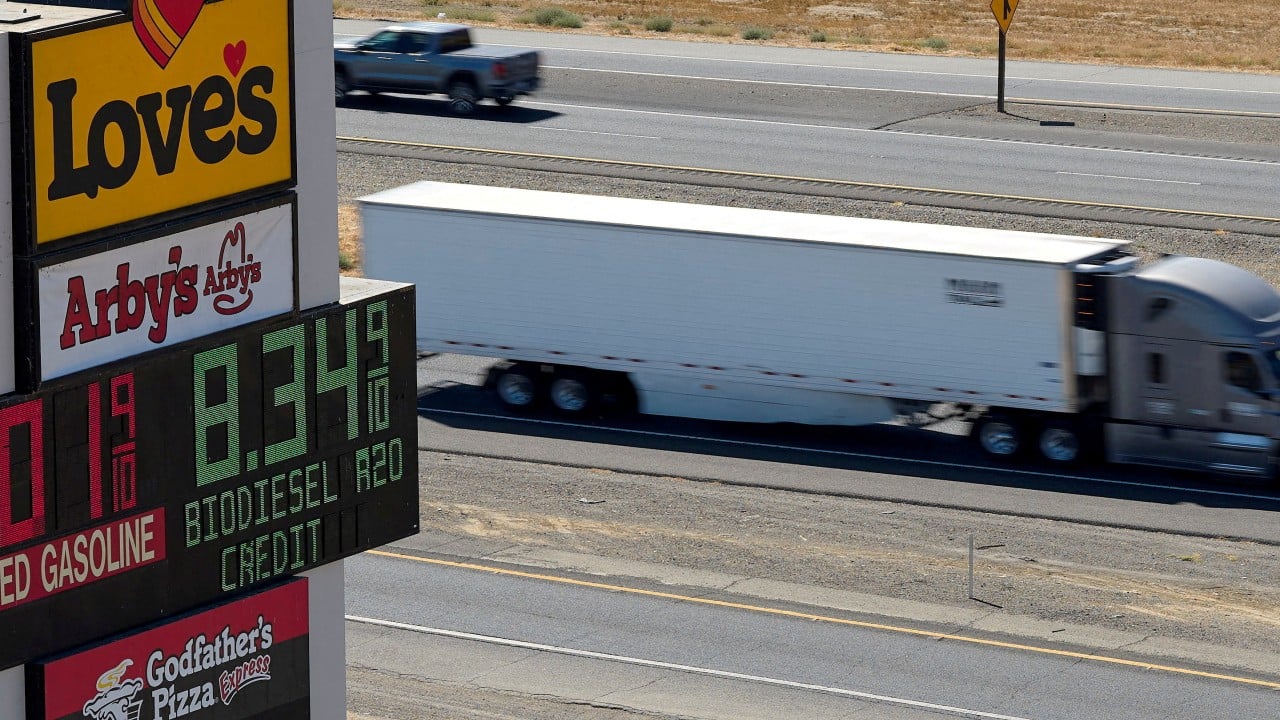
Diesel is not a luxury fuel. It is the muscle of human civilization. When gasoline prices spike, commuters complain and politicians panic. When diesel prices spike, the cost of eating, building, moving, and surviving quietly spirals upward.
For years, Europe relied heavily on Russian diesel to keep its manufacturing hubs humming and its heating systems operational. When geopolitics severed those pipelines, Europe turned desperately to the global market. They looked south, toward the glittering new export terminals of the Middle East and Asia.
They expected a flood. They found a steady, stubborn drizzle.
Why? Because domestic demand inside the Gulf and developing Asian economies surged in tandem. As temperatures soared and populations grew, nations needed power. They burned diesel in domestic power plants to keep air conditioners humming through blistering summers. They consumed their own medicine.
Furthermore, the global shipping industry was slapped with stricter environmental regulations, forcing cargo vessels to shift toward cleaner marine gas oils—further draining the pool of available middle distillates.
The math became a cage. The crude shipments kept leaving the ports, but the refined fuel needed to drive the global supply chain was held back by technical friction, domestic consumption, and the sheer physical limits of how fast human beings can build and maintain industrial cathedrals.
The Human Cost at the Margins
Back in Tariq's harbor, the sun is finally burning off the morning mist.
He sits on an overturned plastic crate, mending a tear in his nylon net with swift, calloused fingers. His grandfather fished this same coast with oars and cotton sails. Tariq loves the sea with a quiet, stubborn devotion, but love does not buy marine gas oil.
When the price of refined fuel decouples from the price of crude, it is the people at the edges of the economy who feel the blade first. The large multinational shipping conglomerates can absorb a twenty-percent hike in bunker fuel by adjusting container fees. The massive agricultural cartels can pass the cost of tractor fuel down to the box of cereal on your shelf.
The small operator cannot. The independent trucker, the local fisherman, the village baker running a backup generator during rolling grid failures—they absorb the blow in silence.
This is the hidden tax of our modern logistics network. We have built an extraordinarily fragile, hyper-efficient machine that relies on a continuous, unbroken chain of chemical transformation. When one link in that chain—the refining capacity of exporting nations—stretches thin, the tension travels all the way down the line until it snaps in the hands of the person least able to afford it.
The supertankers will keep moving. The green icons will continue their slow, majestic drift across the digital maps in the control rooms of Zurich and Singapore. The crude will flow from the earth in rivers of dark gold.
But out here, in the salt air and the grease, the world waits for the fire to catch up with the fuel. And until it does, every mile we travel, and every bite of food we take, will carry the quiet, escalating weight of the gap between what we pump and what we burn.