The air inside a supermarket is engineered to feel like a promise. It is the scent of floor wax and over-ripe citrus, the hum of refrigeration units that sound like progress, and the bright, artificial sun of fluorescent tubes reflecting off shrink-wrapped steak. But lately, for the millions of Australians pushing metal carts through those aisles, that promise has begun to feel like a provocation.
While the data analysts in glass towers celebrate a 2% uptick in food sales, a grandmother in a western Sydney suburb is standing in front of the dairy case, performing a silent, desperate calculus. She is comparing the price of a liter of milk to the cost of the bus fare she needs to get home. This is the reality of Woolworths’ latest quarterly report. On paper, it is a story of resilience and "volume growth." In the kitchen, it is a story of subtraction.
The Ledger of the Living
The numbers released by the retail giant tell us that people are buying more. The analysts say this is a victory over the inflationary beast that has been clawing at the Australian economy for years. They point to the "Big Night In"—the trend where families stop going to restaurants and instead buy "premium" pasta sauce to eat in front of the television—as proof of a robust business model.
But volume is not the same as vitality.
When a family stops eating at the local bistro because they can no longer afford the $30 steak and instead buys a $12 tray of mince from Woolworths, the "volume" of supermarket sales goes up. The corporate ledger records this as a win. The human reality, however, is a narrowing of life. It is the closing of a door. We are seeing a nation retreating into its living rooms, trading the social fabric of the community for the solitary efficiency of the grocery aisle.
The "inflation warning" mentioned in the briefings isn't just about the Consumer Price Index. It is a warning about the thinning of the Australian dream. When the cost of basic sustenance becomes a strategic maneuver, the joy of the meal evaporates. We are becoming a country of expert accountants, budget-tracking our way through the very things that are supposed to be the rewards of our labor.
The Silence at the Heart of the Inquiry
While the checkout scanners beep in a rhythmic, capitalist heartbeat, another kind of accounting is taking place in the halls of power.
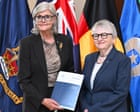
The Interim Report of the Bondi Royal Commission has been handed to the Governor-General. It is a document born of blood and sudden, inexplicable terror. On a Saturday afternoon that should have been defined by the mundane—buying a new pair of shoes, meeting a friend for coffee—the world fractured at Westfield Bondi Junction.
We often talk about these events in the cold language of "security protocols" and "mental health frameworks." We look for systemic failures like we’re debugging a piece of software. But the interim report is, at its core, an admission of the fragility of our shared spaces.
Imagine the Governor-General’s office. It is quiet. There is the smell of old paper and the muffled sound of Canberra’s wind outside. The report sits on the desk, a collection of testimonies from people who went to the mall and never came home, and from those who did come home but found they had left a piece of their peace behind.
The report focuses on the "what" and the "how," but the "why" remains a ghost. We are a society that builds cathedrals of commerce—massive, glittering complexes where we are told we can have everything we want. Yet, we struggle to protect the people inside them from the very real, very human tragedies that occur when the social safety net snaps.
The Intersecting Shadows
At first glance, the success of a supermarket chain and the findings of a Royal Commission into a mass tragedy have nothing to do with one another. One is about the price of bread; the other is about the price of life.
But look closer.
Both stories are about the erosion of the "middle."
In our economy, the middle class is being squeezed into the "value" aisles, forced to hunt for discounts just to maintain a semblance of their old lives. In our social spaces, the "middle ground"—the sense of safety and predictable communal harmony—is being tested by an increasing sense of volatility.
We are living in an era of heightened stakes. Everything feels heavier. The bag of groceries feels heavier because of what it represents in lost hours of work. The walk through a crowded shopping center feels heavier because of the memory of what happened in Bondi.
Consider a young father. Let’s call him Elias.
Elias is at the shops on a Tuesday evening. He is there because Woolworths sent him a notification about a "Member Price" on nappies. He is moving quickly because he’s tired, but his eyes are constantly scanning. He isn’t just looking for the best deal on detergent; he’s looking for the exits. He’s listening to the tone of the crowd. He is a man living in the intersection of these two news cycles. He is financially strained and emotionally vigilant.
He is us.
The Myth of the "Soft Landing"
Economists love the phrase "soft landing." It suggests a pilot skillfully bringing a plane down to the runway after a turbulent flight, the wheels touching the tarmac with a gentle chirp.
For the person watching their grocery bill climb while their wages remain static, there is no soft landing. There is only a slow, grinding descent. The "inflation warning" from retail executives isn't a forecast; it’s a description of the current weather. They tell us that prices might stabilize, but they rarely mention that they won't go back to where they were.
The new "normal" is a permanent state of compromise.
We are told to be grateful for the "specials." We are told to find comfort in the fact that the "volume" of our consumption is still high. But this ignores the psychological toll of the hustle. When every purchase requires a strategy, we lose the capacity for spontaneity. When the place where we buy our food becomes a site of financial stress, and the place where we socialize becomes a site of potential trauma, the very foundations of "lifestyle" begin to crack.
The Invisible Stakes
What is the cost of a society that is always on edge?
The Bondi report will likely recommend more guards, better cameras, and more robust communication systems. These are necessary. They are the armor we put on to face a world that feels increasingly unpredictable.
But armor is heavy.
Similarly, the corporate response to inflation is to offer "loyalty programs" and "budget ranges." These are the band-aids we apply to an economy that is bleeding the average citizen dry.
The real story isn't in the interim report or the quarterly profit statement. The real story is in the way we look at each other in the aisles. It’s the way we’ve stopped making eye contact because we’re too busy checking the price tags or scanning the room for threats.
We are a nation of 26 million people currently navigating a very narrow bridge. On one side is the pressure of a cost-of-living crisis that feels like it has no ceiling. On the other is a sense of public safety that feels like it has no floor.
The Governor-General will read the report. The Woolworths shareholders will vote on the dividends. The news cycle will move on to the next tragedy or the next interest rate hike.
But for Elias, and for the grandmother in Sydney, and for you, the reality remains. We are still standing in that aisle, holding a basket that costs more than it did yesterday, in a world that feels slightly less certain than it did this morning.
We are waiting for a sign that the people at the top understand that "volume growth" isn't a substitute for a life well-lived, and that a "security report" isn't a substitute for a society that feels whole.
Until then, we keep walking. We keep counting. We keep looking for the light at the end of the aisle, hoping it’s the exit and not just another fluorescent bulb flickering before it dies.