Sarah sits on a velvet sofa that has seen better days, the blue light of a 65-inch screen reflecting in her glasses. It is 11:14 PM. She is tired. Her thumb moves in a rhythmic, mechanical twitch, scrolling through a horizontal row of rectangular tiles. She passes a gritty crime drama, a baking competition, a documentary about a cult, and a colorful cartoon about a talking horse. None of them register. She is looking for "the thing." She doesn't know what the thing is, but she knows she hasn't found it yet.
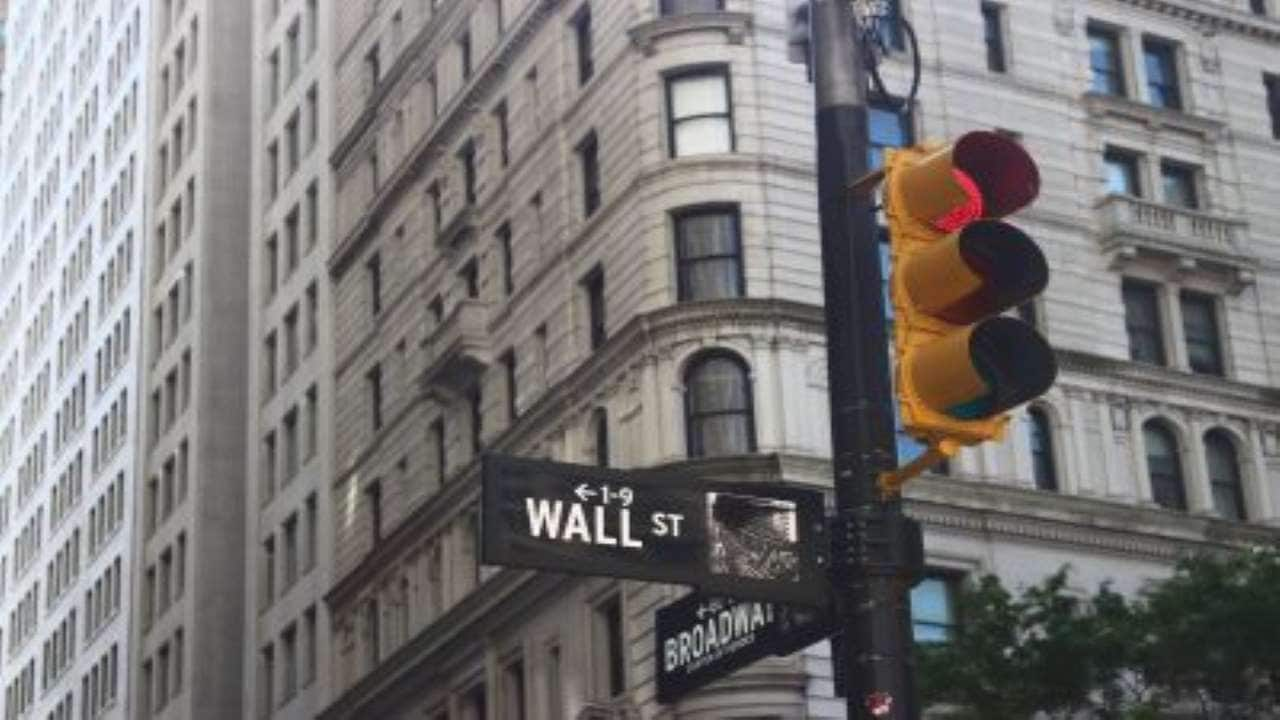
Behind Sarah, invisible and towering, stands the collective might of Wall Street. Analysts in glass towers in Lower Manhattan are looking at the same screen Sarah is, but they aren't looking at the horse or the cult. They are looking at Sarah’s thumb. They are counting the milliseconds between her clicks. They are obsessed with her "churn risk." To them, Sarah is a data point in a grand experiment to see if the world’s most expensive buffet can finally start turning a profit. Recently making waves in this space: Safety Culture Is Killing the People It Claims to Protect.
For years, the narrative was simple. Growth was the only god. If Netflix or Disney or Warner Bros. could just capture more eyeballs, the math would eventually fix itself. The markets fell in love with the promise of recurring revenue—those quiet, monthly extractions from millions of bank accounts that feel like nothing to the consumer but look like a fortress to an investor. But the fortress is showing cracks. The love affair is getting complicated.
The Cost of a Ghost Town
Consider the math of the "Content Spend." In 2023 alone, the major players poured over $100 billion into making stuff. $100 billion. That is enough money to buy every NFL team twice. We are living through the most expensive era of storytelling in human history, yet the average viewer feels a strange sense of poverty. Further details regarding the matter are covered by CNBC.
The problem is the shelf life. In the old days of linear television, a show like Seinfeld or The Office was an asset that paid dividends for decades. It lived on a schedule. You had to be there. Now, a $200 million cinematic limited series drops on a Friday, gets "binged" by Sunday, and vanishes from the cultural conversation by the following Tuesday. It becomes digital wallpaper.
Wall Street is starting to realize that they aren't funding a library; they are funding a furnace. To keep Sarah subscribed, the streamers have to keep throwing high-quality wood into the fire. If the fire dims for even a month, Sarah notices. She looks at her credit card statement, sees the $19.99, and remembers she hasn't clicked on a tile in three weeks.
Click. Cancel.
This is the "churn" that keeps CEOs awake at 3:00 AM. In the traditional cable model, canceling was a bureaucratic nightmare involving hold music and aggressive retention specialists. In the streaming world, it is a single button. The power has shifted entirely to Sarah’s thumb, and Sarah is fickle. She is overwhelmed. She is starting to miss the days when someone else picked what was on at 8:00 PM.
The Great Bundle Rebirth
We are witnessing a peculiar historical irony. After a decade of "cutting the cord" to escape the bloated, expensive cable packages of the 1990s, the industry is frantically trying to glue the cord back together.
Investors are now cheering for "bundling." They want Disney+, Hulu, and Max to hold hands. They want the very thing we ran away from. Why? Because the data shows that when people have more stuff in one bucket, they are less likely to leave. It’s harder to walk away from a library than a single book.
But this creates a new tension. When you bundle, you split the check. The revenue per user—a metric analysts track with religious fervor—starts to shrink. To compensate, the streamers have invited an old ghost back into the room: the commercial break.
The "ad-supported tier" is the industry’s confession. It turns out that charging $20 a month isn't enough to pay for dragons, space battles, and A-list movie stars. The "Aha!" moment for Wall Street was realizing that Sarah is willing to watch a thirty-second clip for a brand of detergent if it knocks five dollars off her bill. We have circled back to 1974, just with better resolution and more targeted surveillance.
The Ghost in the Machine
The stakes aren't just financial. There is a human cost to the way these platforms are built. To satisfy the demands of the market, these services are designed to be "sticky." They use auto-play features that rob you of the choice to stop. They use algorithms that steer you toward "more of the same," narrowing your world until you are trapped in a loop of your own existing tastes.
Imagine a bookstore where, the moment you pick up a mystery novel, the walls shift and hide every history book, biography, and poem in the building. That is the streaming experience. It is efficient, but it is hollow.
Wall Street loves this efficiency. They love the idea of a "content engine" that can predict what will work. But art is notoriously unpredictable. The biggest hits of the last decade—shows like Squid Game or The Bear—didn't come from an algorithm. They came from humans taking big, messy risks.
Investors are currently rewarding "discipline." They want the streamers to spend less, cancel the niche shows, and focus on "franchise IP." They want more Batman, more Star Wars, more spinoffs of spinoffs. They want certainty in an industry built on the most uncertain thing in the world: human emotion.
The Infinite Scroll Fatigue
Back on the sofa, Sarah finally gives up. She exits the app and opens TikTok on her phone.
This is the ultimate threat that Wall Street often underestimates. The competition isn't just Netflix vs. HBO. The competition is "Screen Time."
While the giants are fighting over who gets to spend $20 million an episode on a period drama, a teenager in a bedroom is creating a three-minute video that will get more views than the drama’s season finale. And that teenager’s production budget was zero.
The efficiency of short-form, user-generated content is the shadow hanging over every earnings call. If Sarah spends two hours on social media, she has zero hours for the $100 billion buffet. The value of the streaming "affection" starts to look less like a smart investment and more like a desperate attempt to catch a falling knife.
The industry is currently in a "show me" phase. The honeymoon of 2020, when we were all trapped at home with nothing to do but subscribe to things, is over. Now, the market wants to see profits. Actual, cold, hard cash.
To get it, the streamers are going to have to become less like Silicon Valley and more like the old Hollywood studios they tried to disrupt. They are raising prices. They are cracking down on password sharing—turning "friends and family" into "unpaid accounts." They are license-selling their original content to their rivals just to get some quick cash, a move that would have been seen as heresy three years ago.
The Final Frame
The blue light finally fades as Sarah hits the power button. The room goes dark.
She didn't watch anything. She spent forty minutes looking for something to watch and then decided she was too tired to commit. The "Infinite Buffet" failed her tonight, not because there wasn't enough food, but because there was too much of it, and none of it felt essential.
Wall Street continues to bet on the streamers because, in the end, where else are we going to go? We aren't going back to physical discs, and we aren't going back to the antenna. We are locked in. But being locked in is not the same as being in love.
The companies that survive the next five years won't be the ones with the biggest libraries or the most complex algorithms. They will be the ones that remember that a "subscriber" is just a person looking for a story that makes them feel something. If you lose the story, all you're left with is a very expensive, very quiet ghost town of digital tiles.
The screen stays black. The house is silent. Somewhere, a server in a cooling facility hums, waiting for Sarah’s thumb to return, while a thousand miles away, a man in a pinstripe suit checks a spreadsheet and hopes to god she doesn't find something better to do tomorrow night.