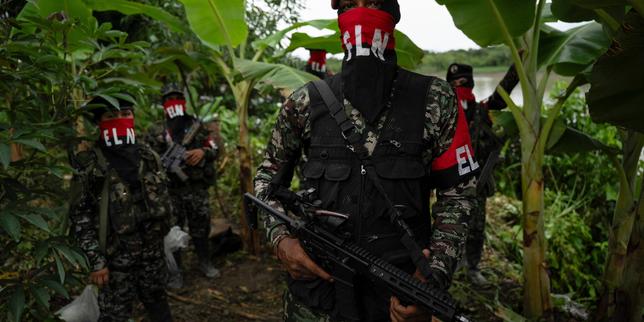
The international press loves a good rescue story. The headlines practically write themselves: "Colombian Army Frees 39 Hostages Held by ELN Guerrillas." It paints a picture of elite commandos slipping through the dense canopies of Chocó or Arauca, executing a high-stakes tactical raid, and bringing captive citizens back to freedom under the triumphant roar of helicopter rotors.
It is a beautiful narrative. It is also a flat-out lie.
If you believe the official communiqués issued by the Colombian military and parroted by global news outlets, you are falling for one of the longest-running public relations operations in South American history. Having spent years tracking security dynamics, military communications, and guerrilla operations across the Colombian territory, I have watched this exact play run dozens of times.
The reality of these "liberations" is far more cynical, politically compromised, and dangerous than the media ever dares to report. The army did not kick down doors to save those 39 people. They walked them out of a room after a deal was already signed, sealed, and delivered by humanitarian intermediaries.
By celebrating these staged events as tactical triumphs, we are actively ignoring the systemic collapse of security in rural Colombia. We are congratulating a fire department for taking a bow in front of a house that burned to the ground hours ago.
The Anatomy of a Phantom Rescue
Let us look at how these operations actually go down in the forgotten corners of Colombia like Catatumbo, Arauca, and the Pacific coast.
True tactical hostage rescues—what the military calls operaciones de rescate—are vanishingly rare. Why? Because they are incredibly risky. When the military launches an armed assault on a guerrilla camp where hostages are held, the captors’ standard operating procedure is not to fight the army; it is to execute the hostages immediately to prevent them from being recovered alive and providing intelligence.
The military knows this. The government knows this. The families of the kidnapped know this.
Instead, the vast majority of these "rescues" are actually negotiated releases. The process follows a strict, unwritten protocol:
- The Intermediary Step: Local ombudsmen (La Defensoría del Pueblo), the Catholic Church, or the International Committee of the Red Cross (ICRC) spend weeks quietly negotiating with local ELN (National Liberation Army) front commanders.
- The Handover Agreement: The guerrilla group agrees to release the captives, often in exchange for a local tactical retreat by the military, the payment of a "tax" (ransom) by families, or as a political gesture to keep ongoing peace negotiations from collapsing.
- The Photo Op: Once the handovers are negotiated, the military moves into the designated perimeter. They secure the area after the guerrillas have already retreated into the jungle. The soldiers hand the dazed captives some water, drape them in national flags, take high-resolution photos for social media, and draft a press release claiming a victorious "military pressure" operation.
This is not defense. It is logistics with a marketing budget.
The Economics of the "Retención"
To understand why this theater persists, you have to understand the vocabulary of the conflict. The ELN does not call kidnapping "kidnapping." They call it retención (detention) or impuesto de paz (peace tax).
To the ELN, kidnapping is a business model and a governing tool. In regions where the state exists only as a flag on a map, the ELN acts as the de facto tax collector, judge, and executioner. If a local merchant, gold miner, or landowner refuses to pay their extortion fee, they are "detained."
When the military announces the "liberation" of dozens of people, they rarely explain who these people are. Many of them are not political prisoners or high-profile targets. They are local Venezuelan migrants, small-scale farmers, or informal miners caught in local territorial disputes or rounded up for failing to pay protection money.
By framing these releases as heroic military rescues, the state avoids the deeply uncomfortable conversation about who actually governs rural Colombia. It allows the government to pretend it has territorial control when, in reality, it is merely acting as the cleanup crew for the ELN's local justice system.
The Total Peace Blindspot
The current administration's hallmark security policy, Paz Total (Total Peace), has only exacerbated this theater. Under the guise of seeking bilateral ceasefires with various armed groups—including the ELN and FARC dissidents—the military’s offensive capabilities have been heavily restricted.
Soldiers on the ground are caught in a bureaucratic nightmare. If they engage the guerrillas, they risk violating a fragile ceasefire and face discipline from their own commanders. If they do nothing, the guerrillas expand their territory.
This operational paralysis leaves the military with only one way to justify its massive budget and maintain public morale: spin.
When you cannot launch offensives, you rebrand humanitarian handovers as military victories. You take the 39 people handed over by the ELN to the Red Cross and claim that "intense military pressure" forced the guerrillas to abandon their captives.
It is a comforting story for a public desperate for good news. But it is a story that actively harms the people living under guerrilla rule. It validates a failing security strategy and allows the government to ignore the rapid expansion of ELN territorial control in departments like Chocó, where entire communities remain confined under armed strikes.
The Cost of the Lie
What is the real-world consequence of this PR spin?
First, it erodes the safety of genuine humanitarian organizations. When the military claims credit for releases negotiated by the Red Cross or local priests, it compromises the neutrality of those organizations. If the ELN believes the ICRC is acting as a proxy for military propaganda, they will stop allowing them into their territories. Without those neutral channels, hostages will simply die in the jungle.
Second, it incentivizes more kidnappings. If the ELN knows they can kidnap dozens of citizens, extort their families, use them as political leverage in peace talks, and then hand them back to the state in exchange for local concessions—all while the military politely waits to take photos—there is zero cost to their operations. Kidnapping remains a highly profitable, low-risk venture.
We must stop accepting these military press releases at face value. The next time you see a headline celebrating the "liberation" of hostages in Colombia, do not look at the smiling soldiers in clean fatigues posing for the cameras. Look at the territory they are leaving behind. Look at the towns where the state still cannot guarantee the basic right to walk down a road without paying a tax to an armed teenager with an assault rifle.
The 39 people returned to their families are free, and that is a cause for celebration. But let us not mistake their survival for a victory of the state. It was a transaction. And as long as we keep buying the lie, the transaction will keep repeating.