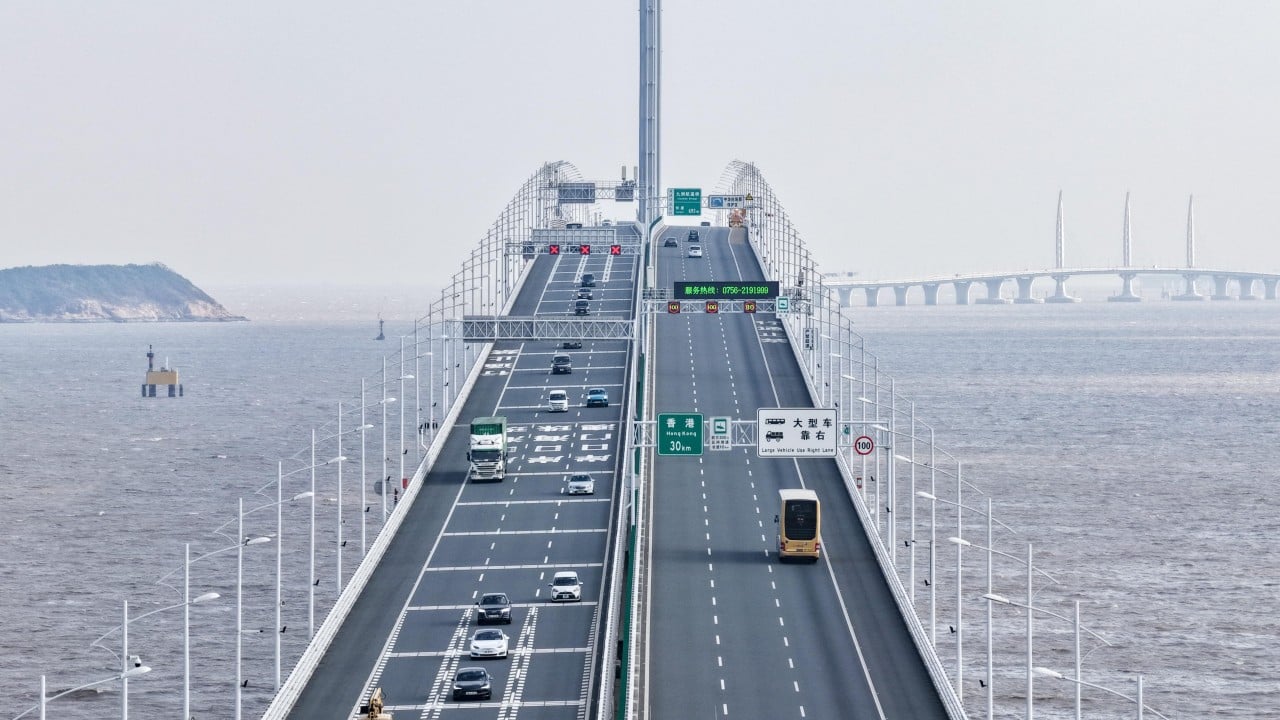
The local headlines are bleeding. Every holiday weekend, the narrative repeats like a scratched record: record-breaking car queues at the Hong Kong-Zhuhai-Macau Bridge (HZMB) are "draining" the city of its wealth. Pundits point at the 20,000-plus private cars crossing the border in a single day as a sign of imminent collapse for the domestic food and beverage sector. They treat the northbound flow of people like a leak in a pressurized cabin.
They are wrong. This isn't a leak. It’s an equalization. Recently making headlines in this space: The Architecture of FIFA Forward Enterprise A Structural Risk Analysis.
For decades, the Hong Kong service industry operated within a protected bubble of geographic convenience and artificial scarcity. If you wanted a decent meal or a weekend getaway, you paid the "Hong Kong Premium"—a tax on your soul that covered sky-high commercial rents and mediocre service. Now that the bridge has lowered the friction of exit, the bubble has popped.
Stop mourning the "holiday pain" of the F&B sector. Start celebrating the fact that the consumer finally has a choice. More information into this topic are detailed by CNBC.
The Myth of the Stolen Customer
The "lazy consensus" argues that if 400,000 people cross into Shenzhen or Zhuhai over a long weekend, Hong Kong loses 400,000 customers. This logic is fundamentally flawed. It assumes that those customers would have spent the same amount of money in Tsim Sha Tsui or Causeway Bay if they had stayed.
They wouldn't have.
The "Northbound" movement is driven by a value gap that has become a canyon. When a consumer realizes they can get a high-end hotpot dinner, a massage, and a hotel stay in Zhuhai for the price of a single bottle of wine in a Mid-Levels bistro, the "loyalty" to the local market evaporates. Hong Kong isn't losing customers; it’s failing to bid for them.
I’ve watched retail groups dump millions into "festive decorations" and "lucky draws" to keep people in the city. It’s a waste of capital. You cannot marketing-spend your way out of a price-to-quality ratio that is fundamentally broken. If your business model relies on the customer being literally trapped by geography, you don’t have a business. You have a hostage situation.
The Rent Trap and the Cowardice of Landlords
If we want to point fingers at why the F&B sector is "feeling the pain," we need to look at the real estate cartel, not the HZMB car quotas.
In any rational market, when demand drops, prices follow. In Hong Kong, commercial rents remain stubbornly detached from the reality of the street. Landlords would rather keep a storefront vacant for eighteen months than lower the base rent and "devalue" the building’s paper valuation.
This creates a toxic cycle:
- Rent stays high.
- Restaurant owners must charge $150 for a bowl of noodles to break even.
- Quality of ingredients and staff wages are slashed to maintain margins.
- The customer gets a terrible experience for a high price.
- The customer drives across the bridge.
The bridge is merely the messenger. It is telling Hong Kong that its cost structure is obsolete. Every time a car sets a new record for crossing the HZMB, it’s a vote of no confidence in the city’s real estate-driven economy.
Why "Spending Locally" is Bad Advice
We see the "Spend in HK" campaigns every time the bridge traffic spikes. They appeal to a sense of "local spirit." This is economically illiterate.
Propping up inefficient, overpriced businesses out of a sense of duty prevents the necessary "creative destruction" that healthy economies need. If a restaurant cannot survive without a captive audience, it should close. Its closure frees up labor—which is in desperately short supply—and eventually forces the landlord to face the music.
By encouraging people to "support local" regardless of value, we are subsidizing the very landlords who are strangling the city. Every dollar spent on a mediocre $800 brunch in Soho is a dollar that tells the market, "Keep the rents high, we’re still paying."
The Quality Gap is Real (And It’s Not Just About Price)
Let’s talk about the "service" in the service sector. There is a persistent delusion that Hong Kong offers a "premium" experience that justifies its prices.
Go to a mid-tier mall in Shenzhen. The staff are attentive. The facilities are modern. The digital integration—from ordering to payment to loyalty—is five years ahead of the clunky, "cash only" or "10% service charge for no service" model that still dominates many Hong Kong districts.
The HZMB hasn’t just opened a path to cheaper beer; it has opened a path to better hospitality. The "pain" felt by the F&B sector isn't an external tragedy. It is the internal consequence of stagnation. While the North was innovating, Hong Kong was resting on its laurels, confident that people would always show up because they had nowhere else to go.
The HZMB is the Ultimate Auditor
People ask: "How can the government stop the outflow?"
The answer is: They shouldn't.
The bridge acts as an auditor. It provides a real-time data stream of how uncompetitive the local market has become. When the car records are broken, it means the auditor has found more discrepancies.
If you want to "fix" the F&B sector, you don't restrict bridge traffic or increase the "Departure Tax" (a desperate idea floated by some). You address the structural rot:
- Decouple the economy from land premiums.
- Force a correction in commercial rents.
- Eliminate the protectionist mindset that shuns regional competition.
The Brutal Path Forward
For the business owners currently complaining about the "holiday pain," here is the hard truth: The bridge is only going to get busier. The car quotas will only increase. The integration of the Greater Bay Area is not a policy slogan; it is a physical reality made of concrete and steel.
If your survival strategy is "wait for the tourists to come back and save us," you are already dead. The tourists who do come are doing the same math as the locals. They are looking at the price of a hotel room in Central versus a luxury suite in Macau and choosing the latter.
To survive, the Hong Kong F&B and retail sectors must undergo a painful, aggressive downsizing.
- The Mid-Tier is Dead: You are either a high-end, world-class destination that offers something truly unique, or you are a hyper-efficient, low-cost provider. Being "pretty good and expensive" is a death sentence in the age of the HZMB.
- Automate or Evaporate: If you are complaining about labor costs while still using paper menus and manual booking, your "pain" is self-inflicted.
- Rethink the Footprint: Smaller spaces, better locations, and a focus on "experience" over "volume."
The record-breaking traffic on the bridge is the best thing to happen to Hong Kong in a generation. It is finally forcing a conversation that the city has avoided since 1997. We are no longer an island. We are part of a massive, hyper-competitive regional market.
Stop crying about the empty tables in Causeway Bay. Those tables are empty because they didn't deserve to be full. The market is finally working. If you can't compete with a city a thirty-minute drive away, you don't deserve to be in business.
The bridge isn't the problem. Your complacency is.