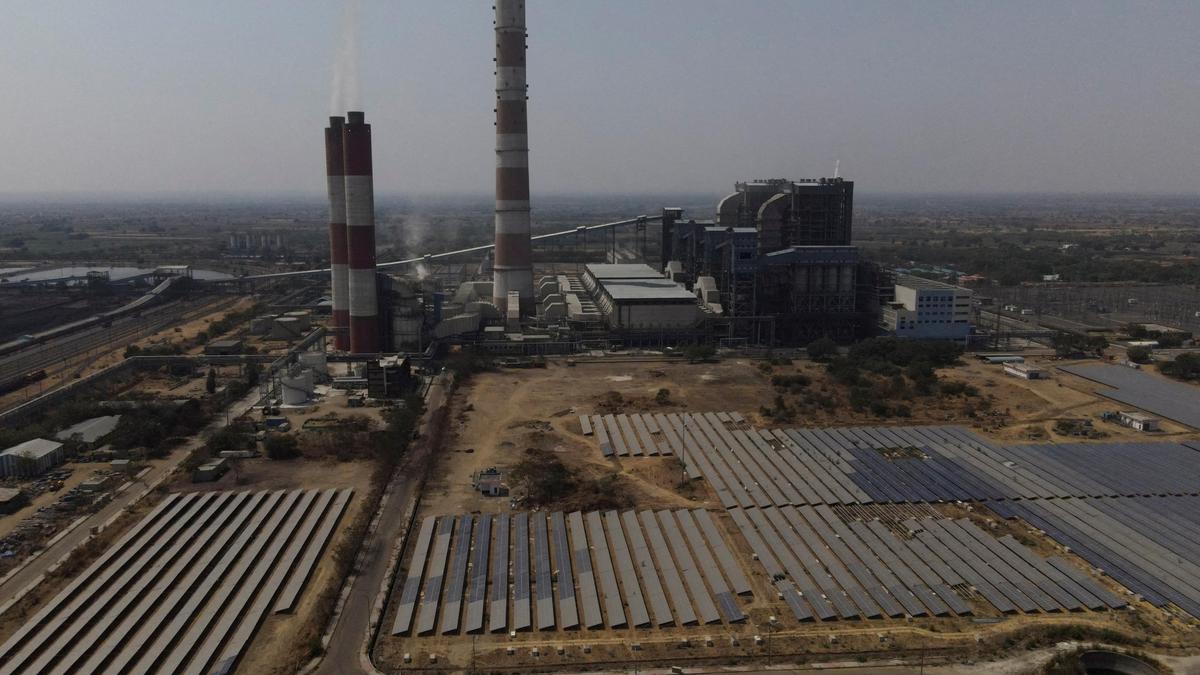
Western analysts are obsessed with "ambition." They pore over India’s updated Nationally Determined Contributions (NDCs) like theologians examining scripture, looking for signs of a "pivot" away from carbon. They want to see aggressive retirement dates for coal plants and a desperate sprint toward solar panels. They are looking at the wrong map.
The updated pledges—cutting emissions intensity by 45% and reaching 50% non-fossil installed capacity by 2030—aren’t environmental goals. They are industrial policy masquerading as virtue. While the global press celebrates India's "leadership" in the fight against a warming planet, the reality is far more cold-blooded. India isn't trying to save the world; it’s trying to build a moat around its energy security while making the West pay for the bricks.
The Emissions Intensity Trap
The most celebrated metric in India's climate arsenal is the reduction of emissions intensity of GDP. To the uninitiated, this sounds like India is polluting less. It isn't. It is simply polluting more efficiently relative to its economic growth.
If your GDP grows at 7% and your emissions grow at 3%, your "intensity" drops. You get a gold star from the UN while your actual carbon output continues to climb. This is the ultimate hedge. It allows India to maintain its "Developing Nation" status, keeping the right to burn coal for base-load power, while claiming the moral high ground.
I have watched policy consultants in Delhi laugh at the idea that these targets are a "sacrifice." They aren’t a burden; they are a byproduct of inevitable modernization. As you shift from a manufacturing-heavy economy to a service-oriented or high-tech manufacturing one, your emissions intensity drops by default. India is effectively promising to do what the laws of economics were going to force it to do anyway.
The Installed Capacity Con
The second pillar of the updated pledge is the 50% non-fossil energy capacity goal. This is where the math gets truly deceptive.
In the energy world, "installed capacity" is a vanity metric. "Generation" is reality. You can install 500 gigawatts of solar, but if the sun isn't shining and the battery storage isn't there—and it isn't—that capacity is a ghost in the machine.
Coal plants have a capacity factor of 60-80%. Solar? Around 15-20%. By focusing on capacity rather than generation, India creates a narrative of a green revolution while keeping its coal-fired heart beating. Even if India hits that 50% capacity target, coal will likely still provide the vast majority of the actual kilowatt-hours used to keep the lights on in Mumbai and Bengaluru.
The Sovereignty of Coal
Stop waiting for India to kill coal. It isn't happening.
The global North views coal as a moral failing. India views coal as the only thing standing between its population and a return to the dark ages. In the wake of the 2022 global energy crisis triggered by the Ukraine conflict, the "consensus" on a rapid coal exit vanished in Delhi. The government saw European nations—the same ones lecturing India—scramble back to coal to keep their homes warm.
The updated NDCs carefully avoid any mention of a peak year for coal. This is deliberate. India has roughly 450 million people who are just entering the middle class. They want air conditioning, refrigerators, and electric scooters. You cannot power that aspirations-based economy on intermittent wind and solar without a massive, stable foundation of thermal power.
The "Net Zero by 2070" target is the ultimate smoke screen. It’s far enough away that no current politician will be alive to be held accountable, yet close enough to keep the foreign investment flowing.
The Real Game: Energy Independence
The shift toward renewables isn't about the ice caps. It’s about the dollar.
India imports over 80% of its crude oil and a significant chunk of its natural gas. This leaves the economy at the mercy of Middle Eastern geopolitics and the fluctuations of the US dollar. Every megawatt of solar power generated in Rajasthan is a megawatt that doesn't require importing expensive LNG or oil.
The green transition is an exercise in fiscal prudence. By branding it as a "climate pledge," India gains access to:
- Lower-cost Green Bonds: Tapping into the trillions of dollars in ESG-mandated capital.
- Technology Transfer: Forcing Western companies to share intellectual property under the guise of "climate justice."
- Diplomatic Leverage: Using its status as a "responsible global citizen" to demand more seats at the table in the G20 and the UN Security Council.
The Myth of Climate Finance
The competitor articles often bemoan the lack of "Climate Finance" from rich nations. This is a tired narrative that ignores how money actually moves.
Rich nations will never write a check for $1 trillion. It’s a political impossibility. However, India knows this. The constant demand for finance isn't a plea for help; it’s a defensive barrier. By making its climate actions conditional on "finance and technology transfer," India creates a permanent "Get Out of Jail Free" card. If they miss a target in 2030, they can simply point at the West and say, "You didn't pay the bill you promised."
The Solar Manufacturing Gamble
The update to the NDCs coincided with a massive push for domestic manufacturing (PLI schemes). India realized that trading a dependence on Middle Eastern oil for a dependence on Chinese solar cells is a strategic disaster.
The real struggle isn't carbon vs. renewables. It’s domestic manufacturing vs. imports. India is using its climate targets to justify protectionist trade barriers against Chinese solar modules. They are building a vertically integrated green industry behind a wall of climate rhetoric. If you want to sell solar in India, you have to make it in India.
The High Cost of the Green Transition
We need to be honest about the trade-offs. The transition to a "cleaner" grid is making electricity more expensive in the short term. The hidden costs of grid stabilization, the massive land acquisition required for solar farms, and the technical debt of aging coal plants are a heavy burden on the Indian taxpayer.
The "nuance" the media misses is that India is effectively taxing its own poor through higher energy costs to build a future-proof industrial base. It’s a gamble of staggering proportions. If the storage technology doesn't get cheaper fast enough, India will find itself with a fractured grid and an uncompetitive manufacturing sector.
The Wrong Questions
People often ask: "Is India doing enough to stop global warming?"
This is a flawed premise. India contributes less than 4% of historical cumulative emissions. Whether India hits its 2030 targets or not will have a negligible impact on the global temperature if the US and China don't radically restructure their entire existence.
The real question is: "Is India using the climate crisis to successfully leapfrog the traditional industrial cycle?"
The answer is a tentative yes, but not for the reasons you think. India is playing a game of geopolitical chess where the environment is the board, not the prize. They are leveraging the West's climate anxiety to fund their own industrial revolution.
Stop looking at the carbon charts. Look at the trade balances. Look at the manufacturing permits. Look at the sovereign wealth movements. The updated NDCs are a blueprint for a self-reliant India that uses green energy as a weapon of economic sovereignty.
The world thinks India is joining the green crusade. India is just building its own empire under a green flag.
Go ahead and praise the "ambition." Just don't be surprised when the coal smoke doesn't clear for another forty years.