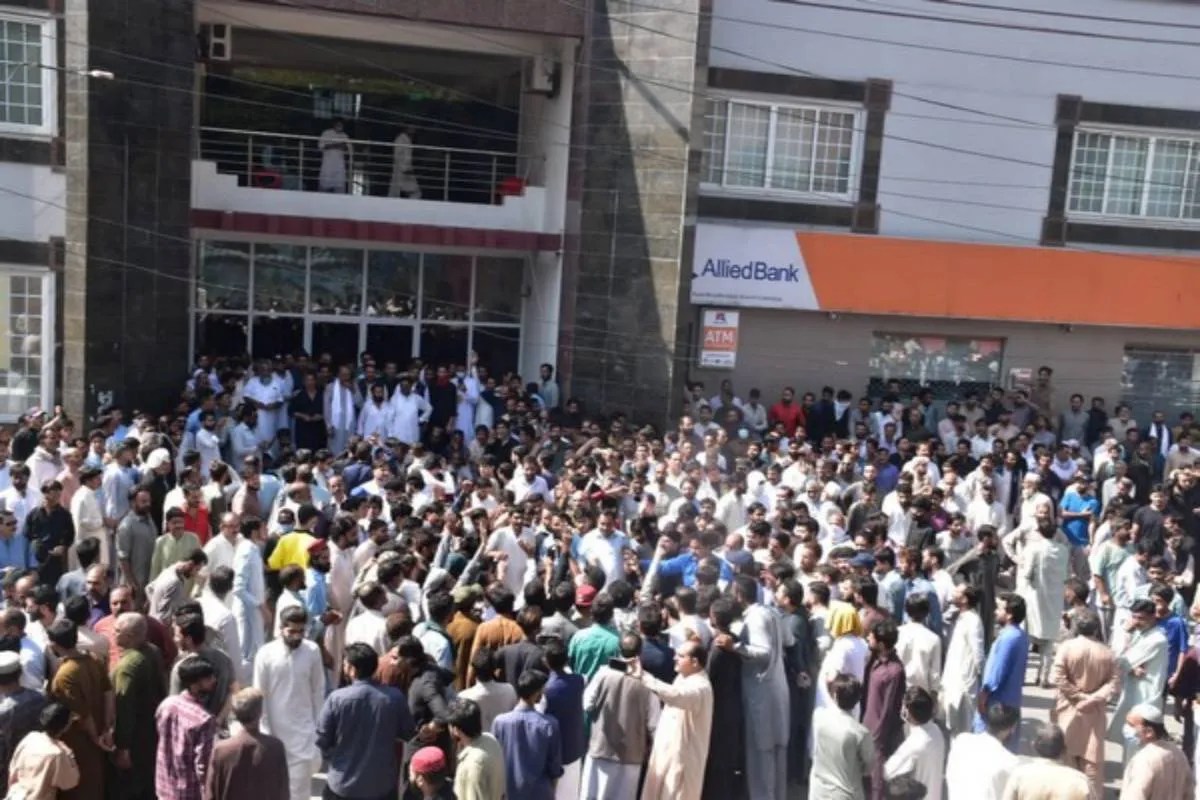
Pakistan-occupied Kashmir is hitting a breaking point. For weeks, the streets of Rawalakot and Muzaffarabad have echoed with angry chants directly targeting Rawalpindi and Islamabad. The local population has had enough. What started as basic economic frustration over soaring inflation, missing flour subsidies, and inflated electricity bills has mutated into a full-blown political rebellion.
Look at what happened at the Line of Control. Demonstrators gathered at Zero Point near the ceasefire line to send an unmistakable message to Pakistan’s establishment: PoK is not your property. Joint Awami Action Committee leader Sardar Amman Khan didn't mince words when addressing thousands of protesters during a continuous sit-in. He openly declared that PoK isn't a part of Pakistan, asserting that Islamabad needs the region far more than the region needs them. Meanwhile, you can read related stories here: The Capital Markets of Confrontation: Why the EU Can Fund Ukraine Indefinitely While Failing at Home.
When a civilian population under heavy military surveillance tells a nuclear-armed state that they don't want its rations and warns that "other trade routes" could be reopened, it's time to realize the old playbook of fear isn't working anymore.
Dictators and Food Blockades
Islamabad’s immediate reaction to the peaceful sit-ins was predictably harsh. Instead of negotiating, authorities tried to starve the movement out by blocking the transport of grain, flour, and daily essentials. This food blockade backfired completely. It didn't break the protesters' spirit; it just proved their point that the state views them as subjects rather than citizens. To see the bigger picture, check out the recent article by Reuters.
The anger on the ground is intensely personal. Protesters are openly calling out Army Chief General Asim Munir. They are labeling him a dictator and shouting down the military establishment. In a region where criticizing the army used to mean disappearing overnight, thousands of people are now standing in public squares waving flags and chanting anti-administration slogans.
The JAAC has put forward a 38-point charter of demands. They want cheaper electricity, subsidized wheat, actual governance reforms, and an end to decades of political discrimination. Instead of answering these demands, Pakistan banned the JAAC under anti-terrorism laws. They cut internet services, dismissed over a hundred government employees for marching, and threatened retired military personnel against joining the crowd.
The Threat to Look East
What makes this specific wave of unrest different is the explicit warning regarding India. For decades, Pakistan used the bogeyman of New Delhi to keep a tight lid on local dissent. That trick is spent. Protesters at the LoC openly warned Islamabad that if the food blockade continues, they will stop looking to Pakistan for survival.
When leaders like Amman Khan mention opening the remaining routes, they're talking about the Line of Control. They're telling Pakistan that if it cuts off their food, they'll open the historical trade roads toward Jammu and Kashmir. They are daring the military establishment to keep pushing them until they completely turn their backs on Islamabad.
The Pakistani army has responded with brutal crackdowns. Reports indicate that dozens of civilians have been killed by live ammunition, hundreds have been wounded, and thousands have been thrown into detentions. Yet, the sit-ins continue. The internet blackouts were designed to keep the world from seeing the state's heavy-handed tactics, but the news leaked out anyway, drawing sharp criticism from New Delhi on global platforms like the United Nations.
What Happens Next
The military establishment in Pakistan is running out of options. They tried a complete communication blackout. They tried a food blockade. They tried anti-terror laws and bullet force. None of it cleared the streets. The situation is spiraling because the fundamental economic reality in Pakistan is broken, and they can no longer afford to subsidize the regions they occupy while keeping their own elite insulated.
If you want to understand where this is heading, keep your eyes on the LoC checkpoints. The protesters have shown they're willing to camp out for weeks under extreme pressure. If Islamabad continues to rely on brute force and legal intimidation instead of restoring basic supplies and autonomy, the calls to reopen the borders with India will transition from rhetorical threats into physical actions. The local population has lost its fear of the uniform, and once that fear disappears, an occupying force has very little leverage left.
Mass Protests Erupt Against Pakistani Military in PoK
This video provides an on-the-ground look at the escalating civilian protests against General Asim Munir's forces and details the heavy civilian casualties resulting from the military crackdown.