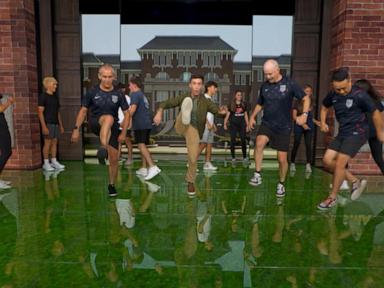
The media wants you to believe that a 1980s counterculture relic is conquering the modern world.
They point to a handful of viral TikTok videos, interview a few middle-aged enthusiasts in a park, and declare a national phenomenon. "The Hacky Sack craze makes a comeback," the headlines shout. It is a neat, comforting narrative. It suggests that a generation glued to screens is suddenly discovering the simple, analog joy of kicking a small leather ball in a circle.
It is also complete nonsense.
What the trend-chasers are misdiagnosing as a grassroots cultural revival is actually something far more cynical: a textbook example of manufactured nostalgia engineered by desperate brand marketers, weaponized by algorithmic echo chambers, and fundamentally incompatible with the mechanics of modern attention.
I have spent fifteen years analyzing consumer behavior and product life cycles. I have watched legacy brands burn through millions of dollars trying to resurrect dead IPs by chasing the ghost of "authenticity." The pattern is always the same. A metric spikes on a social dashboard, a marketing VP mistakes a fleeting moment of ironic engagement for genuine consumer demand, and the press copy-pastes the press release.
Let us look past the hype and dissect the cold, hard mechanics of why the footbag is dead, why it is staying dead, and why the current "craze" is nothing more than a marketing hallucination.
The Illusion of the Viral Metric
The entire premise of the Hacky Sack revival rests on vanity metrics. A video of a street performer doing intricate delays and stalls hits three million views, and suddenly, the lifestyle press panics that they are missing a cultural shift.
This is a fundamental misunderstanding of how modern media consumption works.
Viewing is not participating. In the digital economy, high-skill niche activities function as passive entertainment, not lifestyle invitations. Watching an elite footbag player perform an impossible sequence of tricks is hypnotizing for the same reason watching a master watchmaker assemble a tourbillon is hypnotizing. It satisfies an algorithmic demand for satisfying, micro-dose video content.
It does not mean the viewer is going to buy a kit of watchmaking tools. And it certainly does not mean they are going to buy a sand-filled woven ball and spend three hours a day destroying their ankles in a driveway.
When you look at actual consumer commerce data rather than social media views, the narrative collapses.
- Specialty footbag manufacturers have not seen sustained, hockey-stick revenue growth.
- Sporting goods retailers are not replacing pickleball paddles with Hacky Sack displays.
- Local parks are not suddenly overrun with circles of teenagers dropping their phones to engage in cooperative play.
The "comeback" exists entirely within the glowing borders of your smartphone screen. It is an algorithmic mirage.
Why the Footbag Fails the Modern User Experience
To understand why footbag cannot achieve a genuine mainstream resurgence, we have to look at its core design mechanics. Every successful sport or hobby has a specific friction-to-reward ratio.
Consider pickleball, the actual dominant sports trend of the decade. Pickleball succeeded because it has an incredibly low barrier to entry. A first-time player can pick up a paddle and sustain a respectable volley within ten minutes. The dopamine hit is immediate. The learning curve is gentle.
Footbag is the exact opposite. It possesses a brutal, unforgiving learning curve that runs completely counter to modern psychological expectations.
The Mechanical Reality of Footbag
- The Skill Floor: To achieve even a basic level of competence—where you can consistently keep the ball in the air using your feet, knees, and chest—requires dozens of hours of repetitive, frustrating, solo practice.
- The Physical Toll: The sport requires intense flexibility, core stability, and repetitive lateral strain on the tendons of the ankle and knee. The average sedentary consumer attempting to learn a "clipper delay" or a "mirage" is more likely to end up in physical therapy than a state of flow.
- The Social Friction: Unlike casual throwing sports (like Frisbee), a single weak link in a footbag circle destroys the experience for everyone. It is inherently exclusive, not inclusive. It punishes beginners publicly.
In a culture conditioned for instant gratification and frictionless onboarding, a sport that demands fifty hours of public failure before it becomes fun is structurally dead on arrival.
The Economics of a Non-Monetizable Sport
Here is the dirty secret that corporate sponsors and lifestyle brands refuse to acknowledge: you cannot build a sustainable modern industry around an activity that costs five dollars to join and requires zero recurring purchases.
The original 1970s and 80s boom of the Hacky Sack—trademarked by Wham-O—was a product of a specific economic era. It was cheap to manufacture, highly portable, and rode the wave of the post-counterculture fitness boom. Crucially, it relied on physical spaces for transmission. You saw someone doing it in a college quad, you went to the local store, you bought one, and you kept it for a decade.
Modern venture capital and corporate retail do not operate this way. For a trend to be deemed a successful "comeback" by market standards, it must be monetizable. It needs ecosystem lock-in.
| Feature | Pickleball / Modern Trends | Footbag / Hacky Sack |
|---|---|---|
| Equipment Costs | High ($100+ paddles, specific balls) | Extremely Low ($5 - $15 per bag) |
| Infrastructure | High (Dedicated courts, club fees) | None (Any flat surface) |
| Apparel Integration | High (Branded shoes, skirts, bags) | None (Standard skate or athletic shoes) |
| Sponsorship Model | Robust (Corporate tournaments, TV deals) | Non-existent (Fragmented, niche events) |
Without a mechanism to extract continuous revenue from the participant, the corporate apparatus will quickly lose interest. The paid influencer campaigns will dry up. The sponsored content will vanish. The retail shelf space will be reclaimed by products that actually generate margins.
The lack of corporate exploitability is, ironically, what makes the core footbag community so fiercely loyal. But it is also the exact reason why the sport can never achieve the mainstream scale that the media currently claims it has.
Dismantling the "People Also Ask" Assumptions
Whenever this topic bubbles up in search trends, the same flawed questions dominate the queries. Let us address them with brutal honesty rather than PR fluff.
"Is Hacky Sack a good workout?"
Only if you are already remarkably fit. For the uninitiated, it is an erratic, high-impact activity that places immense stress on the lower back and patellar tendons. The claim that it serves as a holistic fitness alternative for the masses is a myth. It requires a baseline of athletic coordination that the average casual participant simply does not possess.
"Why did Hacky Sack lose popularity in the first place?"
It did not just lose popularity; it was actively replaced by cultural shifts that offered higher social currency for less physical frustration. The rise of skateboarding, video games, and eventually mobile entertainment offered youth culture alternative ways to rebel, socialize, and achieve mastery without the grueling physical barrier that footbag demands.
"Can you play Hacky Sack competitively?"
Yes, competitive footbag (both Net and Freestyle) exists, governed by organizations like the International Footbag Players Association (IFPA). But comparing competitive footbag to the casual "Hacky Sack" circle is like comparing Olympic archery to a backyard game of lawn darts. The competitive scene is a tiny, insular community of hyper-dedicated athletes. It has stayed roughly the same size for thirty years, completely insulated from the macro trends of the sports industry.
The Nostalgia Trap
We are living through a period of profound cultural exhaustion. Hollywood is trapped in an endless loop of sequels, fashion is stuck in a permanent rotation of late-90s and early-2000s revivals, and consumers are desperate for anything that reminds them of a time before the hyper-fragmented, anxious reality of the modern internet.
Marketers know this. They exploit it ruthlessly.
The narrative of the Hacky Sack comeback is not an organic movement; it is a manifestation of this collective longing for an analog past. It is a comforting lie we tell ourselves: Look, the kids are playing with beanbags again, the world is healing.
But buying a piece of retro counterculture merchandise does not buy you the cultural context that made it relevant in the first place. You cannot recreate the low-distraction, community-dense environment of a 1982 college campus simply by purchasing a piece of stitched suede.
The moment the novelty wears off—the moment the buyer realizes that keeping the bag in the air for more than three seconds requires actual, tedious work—the product gets tossed into the back of a closet, right next to the pandemic-era sourdough starter and the abandoned yoga mat.
Stop looking at the curated viral clips. Stop believing the PR-driven trend reports designed to move low-margin inventory off big-box retail shelves.
The circle isn't forming again. The craze isn't back. The world has moved on, and no amount of algorithmic forcing will make a five-dollar sack of plastic pellets save us from our digital reality.