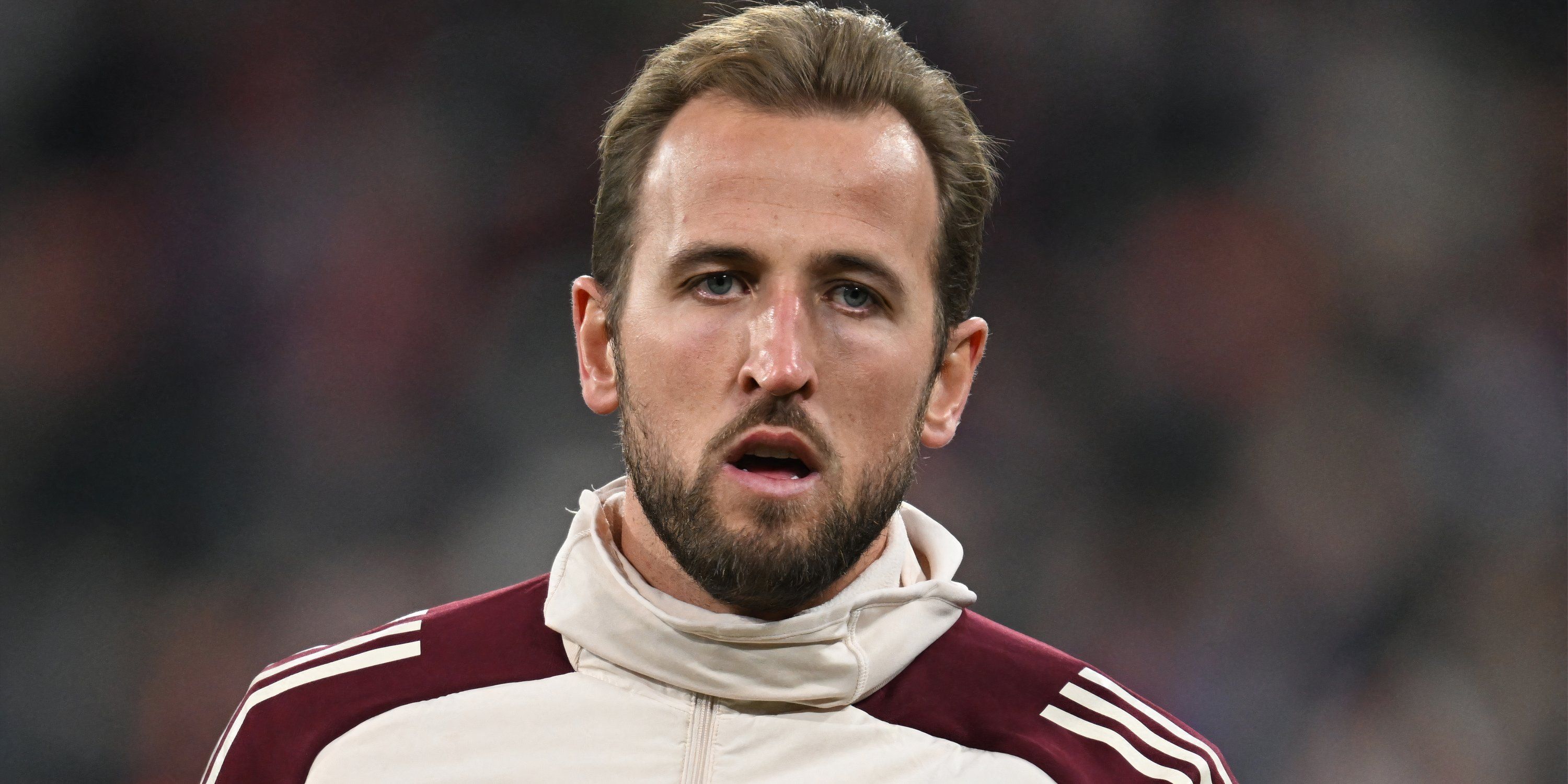
Harry Kane stood over the penalty spot in the 57th minute, a picture of practiced calm amidst the deafening roar of the Allianz Arena. The strike was clinical. It gave Bayern Munich a 2-1 lead over Real Madrid and momentarily silenced the critics who claimed the Englishman couldn't deliver on the grandest European stage. While the headlines will scream about a narrow victory, the reality on the pitch suggested something far more complex. This wasn't just a win; it was a desperate defensive stand by a German giant that is currently grappling with its own identity.
Bayern Munich secured their advantage, but the manner of the victory exposed the structural fractures that have defined their season. Madrid, the masters of the Champions League escape act, looked comfortable even when trailing. They operated with a sense of inevitability that Bayern lacks. This 2-1 result is a fragile bridge to the second leg in Spain, and it masks a deeper tactical crisis within Thomas Tuchel’s squad.
The Kane Dependency and the Tactical Void
For years, Bayern Munich operated as a collective machine. They didn't just beat teams; they suffocated them through high-intensity pressing and numerical superiority in the half-spaces. That machine is currently broken. In its place, the club has installed a Harry Kane-centric system that is as effective as it is dangerous.
Kane is currently producing numbers that defy logic. He has become the primary creator and the primary finisher, a dual role that speaks to his individual brilliance but also highlights a lack of support from the midfield. When Kane drops deep to link play, the box often stays empty. When he stays high, the ball rarely reaches him without a moment of individual magic from Jamal Musiala or Leroy Sané.
Against Madrid, this dependency was on full display. Bayern’s opening goal wasn’t the result of a sustained tactical build-up. It was a flash of brilliance from Sané, a reminder that individual talent can still override tactical flaws. But relying on individual outbursts is a losing strategy against a team like Real Madrid over 180 minutes. Madrid doesn't panic. They wait for the inevitable lapse in concentration, and in the Champions League, Bayern’s concentration has become a flickering light bulb.
The Midfield Battle That Wasn't
The most alarming aspect of the match wasn't the scoreline, but the ease with which Madrid’s midfield trio bypassed Bayern’s central block. Toni Kroos, playing with the relaxed elegance of a man in his own backyard, dictated the tempo at will. He found gaps that shouldn't exist at this level of professional football.
Bayern’s double pivot often looked caught between two minds. They weren't high enough to pressure the ball, nor deep enough to protect the back four. This "no man’s land" is where Madrid thrives. It allowed Jude Bellingham to drift into dangerous pockets and Vinícius Júnior to isolate defenders in one-on-one situations. If Bayern continues to surrender the center of the pitch so easily, the return leg at the Bernabéu will be a grim affair.
Real Madrid and the Art of the Measured Response
There is a psychological weight to playing Real Madrid in this competition. They carry a historical confidence that acts as a 12th man. Even at 2-1 down, there was no sense of urgency from Carlo Ancelotti’s side. They stayed compact, kept their shape, and waited.
Madrid knows that Bayern’s defense is prone to the "Munich Meltdown." We’ve seen it multiple times in the Bundesliga this season—a sudden loss of shape, a mistimed tackle, or a failure to track a runner. The penalty that led to Bayern’s lead was a moment of rashness from Madrid’s defense, a rare gift. Madrid, however, rarely gives gifts twice.
The Defensive Fragility of Thomas Tuchel
Thomas Tuchel was brought in to provide tactical stability, yet his tenure has been marked by defensive inconsistency. The backline looks nervous. Kim Min-jae and Dayot Upamecano have struggled with the weight of expectation, often making high-risk decisions in low-risk areas.
Against a frontline as predatory as Madrid’s, these errors are terminal. Madrid’s away goal—a clinical finish from Vinícius Júnior—stemmed from a failure to track a simple vertical run. It was a basic defensive lapse that highlighted a lack of communication. While Bayern won the battle on the scoreboard tonight, they are losing the war of tactical discipline.
The Financial Stakes of a European Exit
Beyond the pitch, this match carries immense weight for the boardroom. Bayern Munich’s business model is predicated on deep runs in the Champions League. After losing their domestic dominance to Bayer Leverkusen, the European stage is the only thing left to salvage a season that has felt like a slow-motion car crash.
Failure to advance doesn't just mean a trophy-less season. It affects their ability to recruit the next generation of talent. Players like Musiala are watching. They want to be at a club that isn't just competing, but winning. If Bayern can't provide that platform, the "Hollywood FC" drama of the past will look like a rehearsal for the exodus to come.
The acquisition of Harry Kane was supposed to be the final piece of the puzzle. It was a 100-million-euro statement of intent. But one man, no matter how gifted, cannot fix a culture of complacency. Kane is doing his job. He is scoring the goals and leading the line. The question is whether the rest of the institution can rise to meet his standard before the final whistle blows in Madrid.
The Bernabéu Factor
Winning 2-1 at home against Real Madrid is a bit like leading a lion by a thread. You feel like you're in control until you realize the lion is just bored. The second leg will not be played in the friendly confines of Munich. It will be played in a stadium that eats leads for breakfast.
Bayern must find a way to control the game without the ball. They cannot afford to trade blows with Madrid in an open-field track meet. If they try to out-attack Madrid in Spain, they will be picked apart on the counter. The key lies in the midfield. Leon Goretzka and Konrad Laimer need to play the game of their lives to disrupt the rhythm of Kroos and Modrić.
The Psychological Hurdle
There is a palpable sense of dread whenever Bayern faces a major setback lately. The swagger of the Hansi Flick era has been replaced by a cautious, almost fearful approach. To survive the second leg, Tuchel needs to instill a level of grit that has been missing for most of the year.
The players need to stop looking at the sidelines for answers and start taking accountability on the grass. Tactical diagrams mean nothing when a player fails to track back or loses a 50/50 challenge. Madrid wins because they refuse to lose. Bayern needs to rediscover that same arrogance.
A Club at a Crossroads
This result is a mask. It covers the cracks in a squad that is aging in the wrong places and lacking depth in others. While the fans celebrate a narrow victory, the analysts are looking at the underlying numbers. Bayern was outplayed in several key metrics, including expected goals (xG) and progressive passes completed.
The victory feels more like a reprieve than a resurgence. It buys Tuchel time, and it gives Kane another chance to prove his worth. But the underlying issues remain. The lack of a clear playing identity, the defensive fragility, and the over-reliance on individual brilliance are all symptoms of a club that has lost its way.
The second leg is a 90-minute interrogation of Bayern’s soul. If they progress, the narrative shifts to one of resilience and "finding a way." if they fall, it will be seen as the definitive end of an era. The margin for error has completely vanished.
Bayern Munich heads to Spain with a lead, but they do so as the underdogs in their own minds. Harry Kane has done his part, placing the ball in the net and leading from the front. Now, the rest of the team must decide if they are willing to suffer for the result, or if they will simply be another footnote in Real Madrid's storied history of European dominance. The "win" in Munich was the easy part. The real test begins when the lights go up in Madrid and the shadow of the Bernabéu starts to grow.
The scoreboard says 2-1, but the feeling in the tunnel is anything but victorious. Bayern is walking a tightrope over an abyss, and Madrid is the one holding the rope.