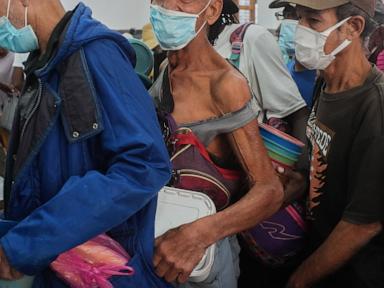
Every wire service reporter who lands at José Martí International Airport writes the exact same story. They find a church basement in Old Havana. They photograph an elderly pensioner holding a plastic container of rice and black bean soup. They quote a tired volunteer talking about inflation, blackouts, and the kindness of strangers.
Then they file the piece, collect their praise for "humanizing the crisis," and fly home.
They missed the real story entirely. Worse, they are peddling a comforting lie.
The mainstream narrative treats the explosion of charity-run kitchens across Havana as a heartwarming triumph of civil society. It is not. It is a structural subsidy for a failed economic model. By applauding soup kitchens as the solution to Cuba's food emergency, international observers are cheering for a mechanism that absorbs social pressure, relieves state accountability, and turns productive citizens into permanent dependents.
If you want to understand why Cuba is starving, stop looking at the ladles and start looking at the ledger.
The Dangerous Comfort of the Soup Line
When a state monopoly collapses, the vacuum has to be filled. In Cuba, the collapse of the libreta—the decades-old monthly ration book that once guaranteed basic calories—left millions of pensioners and state workers earning salaries worth less than a carton of eggs.
Into that void stepped Catholic parishes, evangelical congregations, and diaspora-funded community projects. They buy bulk rice, beans, and cooking oil on the informal market or import them via remittance networks, then serve hot meals to hundreds of people a day.
On an individual, human level, feeding a hungry neighbor is an undeniable moral good. Nobody with a pulse argues that an eighty-year-old diabetic in Centro Habana should go to bed starving to prove an ideological point.
At a macroeconomic and systemic level, however, charity kitchens act as a pressure release valve.
I have watched this exact cycle play out across failed states and centrally planned economies for twenty years. When private charity steps in to perform the basic survival functions of a government, the government stops feeling the heat of its own mismanagement. Every plate of food served by a parish in Havana is one less family demanding to know why agricultural land sits fallow, why state-run acopio distribution boards let crops rot in fields, and why private farmers are choked by arbitrary price caps.
Charity does not disrupt a broken system. It anesthetizes it.
Why Remittance-Funded Aid Destroys Local Supply Chains
Most mainstream coverage treats the food inside those charity pots as if it materialized out of thin air. It did not. It was purchased—almost always with hard currency sent from relatives in Miami, Madrid, or Toronto, or wired through international church networks.
Here is the economic distortion that reporters ignore.
Cuba suffers from a catastrophic shortage of domestic agricultural production, driven by decades of state land ownership, lack of fertilizer, fuel deficits, and bureaucratic distribution bottlenecks. When NGOs and religious charities flood Havana with US dollars and euros to buy food for soup kitchens, they are injecting foreign currency into a market with virtually zero domestic supply elasticity.
Let's trace what actually happens on the ground:
- Foreign cash chases scarce local goods. Charity coordinators buy up wholesale rice, pork, and root vegetables from private vendors and small mipymes (micro, small, and medium-sized enterprises).
- Prices spike for everyone else. Because charities are funded by external remittances rather than local Cuban pesos, they can outbid ordinary working families at the market.
- The non-charity middle class gets crushed. A Cuban doctor or teacher who is too proud—or too busy working—to stand in a church soup line suddenly finds that the price of black beans at the corner market just jumped twenty percent because a bulk buyer cleared out the vendor's stall that morning.
Economists who study humanitarian interventions, from Peter Bauer to Dambisa Moyo, documented this exact trap decades ago. External aid intended to relieve poverty routinely distorts local price signals, prices out self-reliant locals, and destroys the profit incentives that would otherwise encourage domestic farmers to scale up production.
Why invest in repairing a tractor and fighting state bureaucrats to grow rice in Pinar del Río when imported rice paid for by foreign donations is being handed out for free in Havana?
The State's Silent Bargain with the Church
To understand why Havana's charity kitchens are allowed to operate at all, you have to understand how the Cuban state views independent organizations.
For sixty years, the Cuban government crushed any grassroots group that threatened its monopoly on social welfare. Independent labor unions, private charities, and non-state civic clubs were systematically dismantled because the state needed citizens to rely exclusively on the government for housing, healthcare, education, and food.
Today, the state is broke. Its tourist sector has failed to rebound to pre-pandemic levels. Its sugar harvest has fallen to nineteenth-century lows. Its electrical grid is held together with spare parts and prayer.
So Havana struck an unspoken bargain.
The government tolerates church-run kitchens and community feeding programs—so long as those programs stay strictly apolitical, refrain from organizing protests, and never publicly blame state policy for the hunger they are treating. In exchange, the state gets free welfare delivery without spending a single centavo of its dwindling foreign currency reserves.
Notice how carefully the volunteers in every mainstream news article speak. They talk about "hard times," "the economic situation," and "helping our brothers." You will never hear a state-tolerated kitchen director on the record explaining that Cuba imports roughly seventy to eighty percent of its food because centralized state planning crippled domestic agriculture.
If they say that, the doors get locked the next morning.
The charity kitchen becomes a silent partner in censorship. It feeds the body while enforcing silence on the cause of the hunger.
Dismantling the Myths Behind the Crisis
When readers search for information about food shortages in Havana, they run straight into a wall of partisan talking points. Both sides rely on lazy shortcuts that obscure the mechanics of the crisis.
Is the US embargo the main reason soup kitchens are overflowing?
No. Treating the embargo as the primary driver of Cuba's food crisis is an intellectual cop-out that ignores basic trade law. Under the Trade Sanctions Reform and Export Enhancement Act of 2000, food and agricultural products are explicitly exempt from the embargo. The United States has consistently ranked among Cuba's top suppliers of frozen chicken, soybeans, and corn for over two decades.
The catch is that Cuba must pay cash upfront because US banks will not extend credit to a government with a long history of defaulting on sovereign debt. Havana does not lack access to American food; it lacks the hard currency to buy it because its domestic economy produces almost nothing the rest of the world wants to buy.
Are private Cuban businesses solving the food shortage?
Not really, and certainly not at the scale the public believes. When the Cuban government legalized small private enterprises (mipymes) in 2021, Western commentators hailed it as the birth of Cuban capitalism.
In reality, most food-importing mipymes act as glorified middlemen. They import finished goods—chicken quarters, canned meats, cooking oil, pasta—from abroad and sell them at massive markups in Havana. Because the state still controls wholesale agricultural land, banking, and export licenses, private businesses cannot easily build domestic farms or food-processing plants. They are moving imported calories around an island that should be feeding itself.
Does donating directly to Havana soup kitchens actually help?
In the immediate, short-term sense, yes—it keeps vulnerable people alive today. If your goal is emergency triage for an elderly neighbor who cannot work, sending money to a verified local parish buys rice for tonight's dinner.
If your goal is long-term recovery, donating to soup kitchens has a zero percent success rate. Soup kitchens do not create supply chains. They do not fix irrigation systems. They do not put seeds in the ground or fuel in farm trucks. At best, they maintain a population at a baseline of bare survival while the underlying infrastructure continues to rot.
What Actual Economic Relief Looks Like
If charity kitchens are a band-aid on a severed artery, what should diaspora donors, international NGOs, and policy thinkers focus on instead?
You stop funding consumption and start funding production.
Imagine a scenario where a diaspora network in Florida raises fifty thousand dollars for a community in Havana. Under the current charity model, that money buys bulk rice, beans, and oil. Volunteers cook it, serve it over sixty days, and on day sixty-one, the money is gone, the pots are empty, and the exact same crowd is lining up outside the door.
Now take that same fifty thousand dollars and shift the deployment strategy:
- Fund micro-irrigation and solar water pumps for independent farmers. Cuba's electrical blackouts do not just turn off air conditioners; they shut down the electric pumps that irrigate crops. A farmer with a solar-powered pump can harvest vegetables year-round regardless of whether the national grid collapses.
- Provide direct working capital to small food processors. Instead of importing canned tomatoes or pork from abroad, fund local entrepreneurs who can buy raw produce from rural provinces like Artemisa and Mayabeque, preserve it, and transport it to Havana.
- Shift from free meals to food vouchers spent at local producers. When aid organizations give cash or vouchers directly to vulnerable families rather than handing out pre-cooked meals, families buy directly from local vendors. That keeps money circulating inside the neighborhood economy instead of concentrating purchasing power in the hands of a single charity buyer.
- Invest in cold-storage infrastructure. Up to thirty percent of perishable produce in Cuba spoils before reaching urban markets because farmers lack refrigerated trucks and cold storage warehouses. Solving logistics puts more calories on Havana tables than a hundred soup kitchens ever could.
The Uncomfortable Truth About Letting Go
There is a massive catch to abandoning the charity kitchen model, and anyone who tells you otherwise is lying.
Transitioning from direct food handouts to productive investment creates a brutal gap in the short term. If churches and NGOs shut down their soup lines tomorrow to buy solar pumps and cold-storage units, vulnerable people in Havana would go hungry next week. Elderly pensioners without relatives abroad do not have six months to wait for a farmer in Artemisa to harvest a new crop of malanga.
That is the trap that keeps humanitarian workers locked into the soup kitchen cycle. The immediate moral urgency of a hungry person standing in front of you will always override the abstract, long-term logic of macroeconomic reform.
Governments know this. Authoritarian regimes rely on this exact psychological leverage. They bet that the compassion of private citizens and religious institutions will always bail them out of the consequences of their own catastrophic policies.
Every time a camera crew films a line of grateful citizens waiting outside a church kitchen in Havana, they are documenting a victory for the very bureaucracy that emptied their pantries in the first place. You can keep buying rice for the pot, or you can start asking why the land outside the city is empty—because until someone forces that question, the line around the block is only going to get longer.