We measure dynasties by the weight of their gold. We look at towering brick skyscrapers, glowing terminal screens ticking off fractions of a cent, and ink-stained ledgers that stretch back a century. We assume that children born into such fortresses are handed a singular inheritance: a key to the treasury, a mantle to wear, and a silent mandate to multiply the digits on the screen.
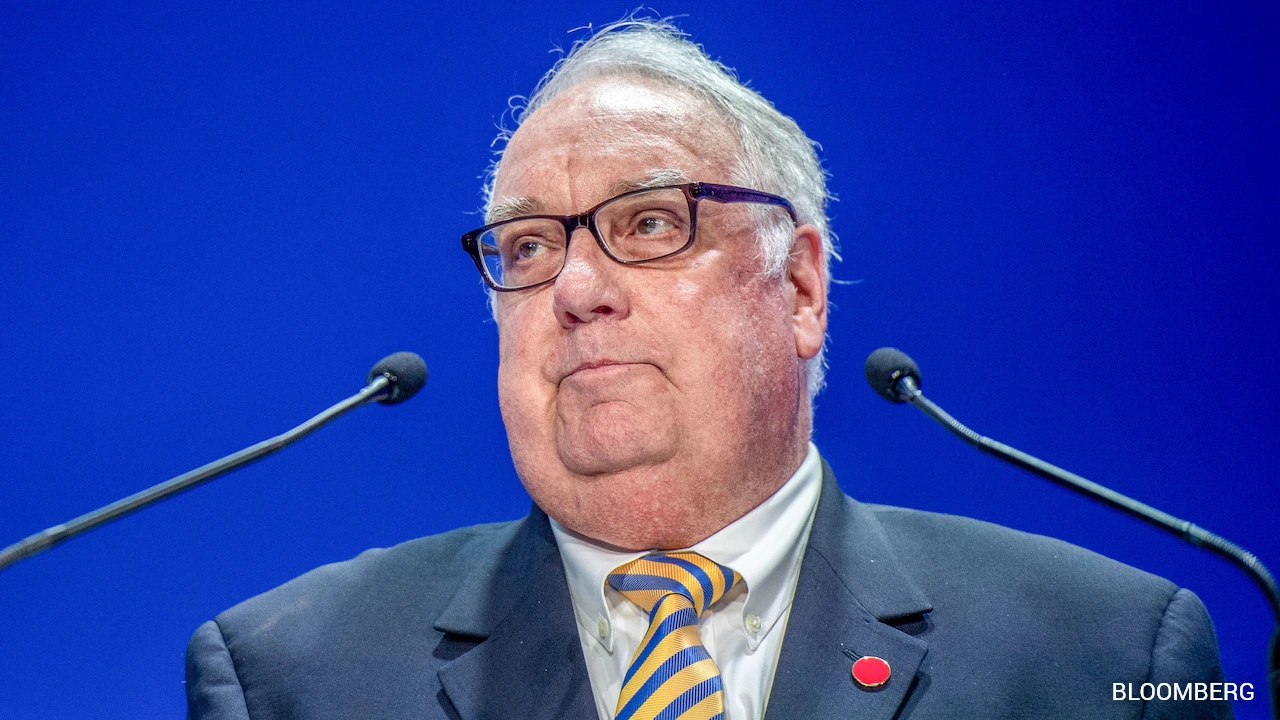
Consider, then, the quiet rebellion of Howard Graham Buffett.
For decades, the world watched Omaha like a hawk. Warren Buffett, the Oracle, built Berkshire Hathaway into an economic titan from a modest office in Nebraska, preaching the gospel of value investing, cherry Cokes, and long-term patience. Every word he uttered moved markets. Every annual shareholder letter was parsed by Wall Street analysts like ancient scripture. Naturally, the whispered question followed him everywhere: Who takes the keys when the Oracle steps down?
Most people expected a corporate shark. They looked for a ruthless optimizer, a cold-eyed chief executive officer who would slice costs, squeeze margins, and appease institutional shareholders hungry for quarterly blood. They looked for someone cut from the standard Wall Street cloth.
Instead, they got a farmer.
To understand Howard Buffett is to understand that he never really cared about the tickers. While other billionaires collected art or built superyachts, Howard spent his life collecting dirt. Literally. He bought farms across Nebraska, Illinois, and South Africa. He drove his own pickup truck, tracked soil erosion patterns with the meticulous eye of a scientist, and spent long, scorching afternoons studying how a single drop of rain interacts with a no-till cornfield.
When the news finally settled over corporate boardrooms that Howard would eventually step into the role of non-executive chairman of Berkshire Hathaway—a bridge to ensure the culture survives rather than an active day-to-day corporate operator—Wall Street blinked in confusion. How could a man obsessed with African soil conservation and hunger relief lead one of the most powerful holding companies on earth?
Because Wall Street still misunderstands what Warren Buffett built.
Berkshire Hathaway is not a bank. It is an ecosystem. And its true currency has never been cash; it has been trust.
Let us walk backward through the decades to see how this unfolded. Howard did not follow a straight line to his father's empire. In his younger years, he was a sheriff's deputy, a farmer, a businessman who learned the grit of daily payrolls, and a philanthropist managing billions through the Howard G. Buffett Foundation. He spent time on the ground in conflict zones, tackling food insecurity, water scarcity, and agricultural development in some of the most neglected corners of the planet. He did not sit in an ivory tower theorizing about charity; he sat in dust storms, listening to smallholder farmers explain why their yields were failing.
That kind of education changes a person. It strips away the superficial allure of corporate pageantry. When you spend your days worrying about whether a village in sub-Saharan Africa will have enough seed for the next harvest, a quarterly earnings beat loses its capacity to terrify you.
When Warren Buffett announced his succession plan—designating his son Howard to preserve the moral compass and corporate culture of Berkshire Hathaway as chairman, while Greg Abel handles the day-to-day operational machinery as chief executive—he wasn't playing nepotism. He was practicing architectural preservation.
Think of Berkshire Hathaway as an enormous cathedral built over generations. You do not hire a demolition expert to guard a cathedral. You hire a custodian who knows every stone, respects the original blueprint, and possesses the stubborn integrity to stop anyone from painting the stained glass gray.
Howard is that custodian.
People forget that a chairman’s primary job at Berkshire is not to pick stocks or manage individual subsidiaries like GEICO, Dairy Queen, or BNSF Railway. The CEOs of those companies run their own shows with radical autonomy. The chairman's duty is singular, heavy, and rare: to protect the culture. To ensure that the decentralized, long-term, ethical ethos established by Warren does not get swallowed by the short-term pressures of modern corporate America.
To do that job, you need someone who cannot be bought, flattered, or bullied. You need someone who is entirely comfortable getting his boots muddy.
There is a profound irony in Howard’s ascent. In a modern economy obsessed with hyper-specialization, tech disruption, and relentless scaling, the man guarding one of the world's most valuable conglomerates is fundamentally anchored in the oldest industry known to humanity: agriculture.
Yet, that is precisely why it works. Farming teaches patience. You cannot rush a corn stalk. You cannot force a drought to end by passing a resolution in a boardroom. You plant the seed, you protect the soil, you manage the risk, and you wait for the seasons to turn. That is value investing in its purest, most visceral form. Warren Buffett understood compound interest because he understood time; Howard understands time because he understands the earth.
When the transition fully solidifies, the headlines will scream about billions of dollars, governance structures, and market implications. Financial pundits will debate whether the Berkshire moat is wide enough to withstand the modern economic climate. They will dissect every syllable of the transition plan.
They will miss the point entirely.
The real story isn't about a son inheriting a chair. It is about a rare kind of institutional stewardship. It is about proving that corporate power does not have to be divorced from human empathy, and that the best guardians of massive wealth are often the ones who would rather be out in the field, watching the sun set over a row of healthy crops, wondering how to feed just one more person before tomorrow.
The tractors are parked for the night. The Nebraska wind whispers through the dry corn stalks, carrying the scent of damp earth and coming rain. Somewhere in Omaha, a legacy is being secured not with iron gates or golden handcuffs, but with the quiet, unyielding strength of someone who knows that the only things truly worth growing are the ones that outlive us all.