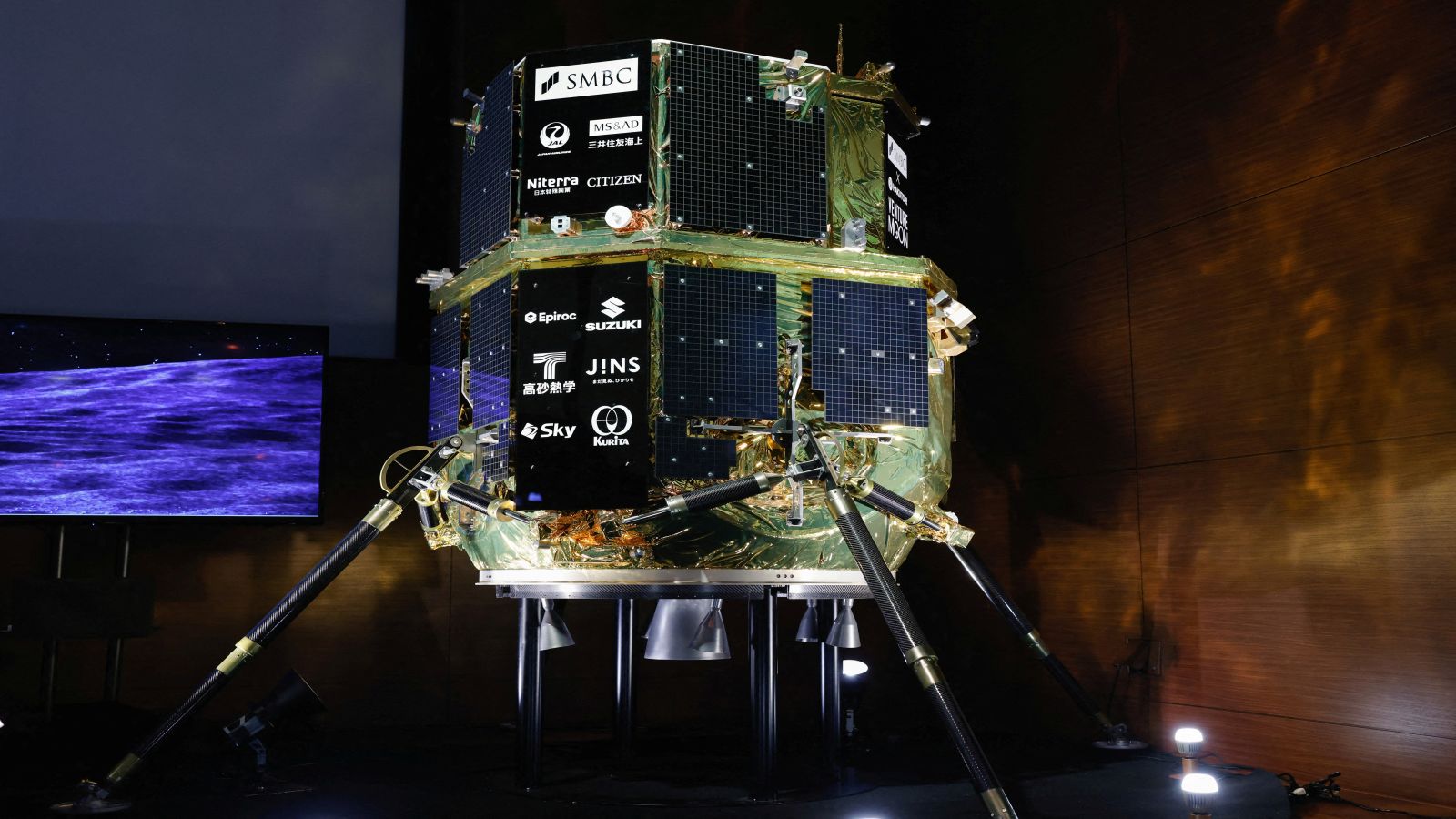
The midnight oil smells the same in Tokyo as it does in Boca Chica, Texas. It smells like stale coffee, ozone, and the quiet desperation of trying to make pieces of metal survive an environment that wants to rip them apart.
For decades, getting to space was an exclusive club. You needed a superpower’s treasury, a geopolitical axe to grind, and thousands of bureaucrats signing off on every single bolt. If you were a small private entity with a dream of touching the moon, you were treated like a child asking for a turn at the wheel of an aircraft carrier.
Then everything broke open.
The story of Japan’s ispace partnering with SpaceX to secure a ride-share to the lunar surface isn't just a corporate press release about logistics. It is a story about survival, scale, and the strange, deeply human realization that if we want to live among the stars, we have to start acting like commuters.
The Weight of the Small Dream
Consider an engineer sitting in a pristine cleanroom in Japan. Let’s call her Hana. She is adjusting a carbon-fiber leg on a lunar lander. Every gram she adds or subtracts matters. If the lander is too heavy, the rocket cannot break Earth's gravity. If it is too light, the harsh thermal cycles of the lunar night will crack the electronics like brittle glass.
Hana’s company, ispace, suffered a heartbreaking defeat in 2023. Their HAKUTO-R Mission 1 lander swept across the dark void, descended toward the lunar surface, and then, due to a software miscalculation regarding the rim of a crater, ran out of fuel moments before touchdown. It plunged into the gray dust. Silence.
Imagine the crushing weight of that silence in a control room after years of sleepless nights.
But giving up is a luxury scientists cannot afford. The team went back to the drawing board, preparing subsequent missions. Yet, a fundamental hurdle remained: how do you get your hard work across the 240,000-mile abyss without spending a nation's entire GDP on a dedicated rocket?
The answer lay across the Pacific Ocean, sitting on a windy beach in south Texas.
The Steel Monster in the Swamp
In Boca Chica, the philosophy is different. It is loud. It is messy. It involves giant towers of stainless steel called Starship, catching rockets out of the sky with mechanical chopsticks. Where Tokyo prioritizes meticulous precision, SpaceX thrives on iterative chaos—building, flying, breaking, and fixing at a pace that terrifies traditional aerospace.
Starship is gargantuan. It is designed to carry over a hundred tons to orbit. To a company building a compact lunar lander, Starship looks less like a rocket and more like an interplanetary freighter.
This is where the concept of the ride-share comes in.
Think of it as the ultimate carpool. In the old days of spaceflight, you had to buy the entire bus just to go down the street. Now, SpaceX is building the bus, and ispace is buying a ticket for a seat in the back. By booking a spot on Starship, the Japanese venture ensures that its landers can hitch a ride as secondary payloads.
The economic implications are dizzying. Suddenly, the cost of entering deep space drops by orders of magnitude. The barrier to entry isn't a mountain anymore; it is a staircase.
When Worlds Collide
This partnership forces two entirely different cultures to speak the same language. On one side, you have the Japanese heritage of craftsmanship—monozukuri—where every detail is meditated upon, and failure is a profound weight borne by the collective. On the other side, you have the Silicon Valley mindset transposed to heavy manufacturing, where blowing up a prototype is just an expensive way to gather data.
But the real problem lies elsewhere. It is a problem of physics and scheduling.
Starship is still a wild horse. It is a developmental system, shifting and evolving with every test flight. For ispace to mount its delicate, precise instruments inside this roaring steel cavern, engineers on both sides of the world must coordinate every vibration, every electrical connection, and every thermal shield.
Imagine trying to secure a grandfather clock inside the bed of a monster truck while it drives over boulders. That is what integrating a lunar lander into a mega-rocket feels like.
Consider what happens next: if this model works, it changes the geometry of human ambition.
The Unseen Passengers
We often view space exploration as a series of flags and footprints. We remember Neil Armstrong; we remember the Apollo program. But those were government operations fueled by cold war anxieties. They were unsustainable. They were picnics on the beach, not a settlement.
The ride-share agreement between ispace and SpaceX signals the arrival of the actual infrastructure. When you look closely at the payloads ispace intends to deliver, they aren't just scientific sensors to look at rocks. They are the building blocks of an economy. Water prospecting drills, rovers designed to map the distribution of regolith, commercial test equipment from private companies wanting to see how their materials hold up in a vacuum.
The moon is no longer just a destination for explorers. It is turning into a workplace.
It is easy to feel cynical about the commercialization of the night sky. We worry about space debris, about billionaires playing sandbox games with cosmic bodies, about the loss of the pristine wilderness we see from our backyards. Those doubts are valid. The sky is a shared heritage, and watching it turn into a logistics network can feel like a loss of poetry.
Yet, there is a different kind of poetry in the collaborative effort.
The Quiet Room in Tokyo
Step away from the thunder of the Texas launchpads and look back at the quiet offices in Japan. The engineers there know the odds. They know that space is a graveyard of good intentions and broken hardware. They know that hitching a ride on a giant rocket means they are bound to someone else's timeline, someone else's technical hiccups, and someone else's failures.
But they also know it is the only way forward.
No single company, and perhaps no single nation, can build the bridge to the moon alone. The ride-share model is an admission of interdependence. It acknowledges that the future belongs to the collaborative, to those willing to share the cargo bay, to those who understand that getting there together is better than standing on the launchpad alone.
Hana finishes her inspection. The carbon-fiber leg is secure. Months from now, that piece of metal will sit inside a dark shroud, shaking violently as millions of pounds of thrust lift it into the sky. It will ride the back of a giant built on a Texas beach, guided by calculations done in Tokyo, chasing a silver coin in the night sky that has fascinated humanity since we first learned to look up.
The journey is no longer a solitary leap into the dark. It is a shared commute, and the bus is leaving the station.
_(cropped).jpg/440px-Rob_O'Neill_(40543587961)_(cropped).jpg)