The dirt under a warehouse in Otay Mesa should be silent. It should be the compressed, ancient sediment of a California industrial zone, supporting the weight of semi-trucks and the mundane dreams of logistics managers. But for months, it vibrated with a rhythmic, mechanical heartbeat. Somewhere beneath the asphalt, men were breathing through plastic tubes, carving a path through the dark.
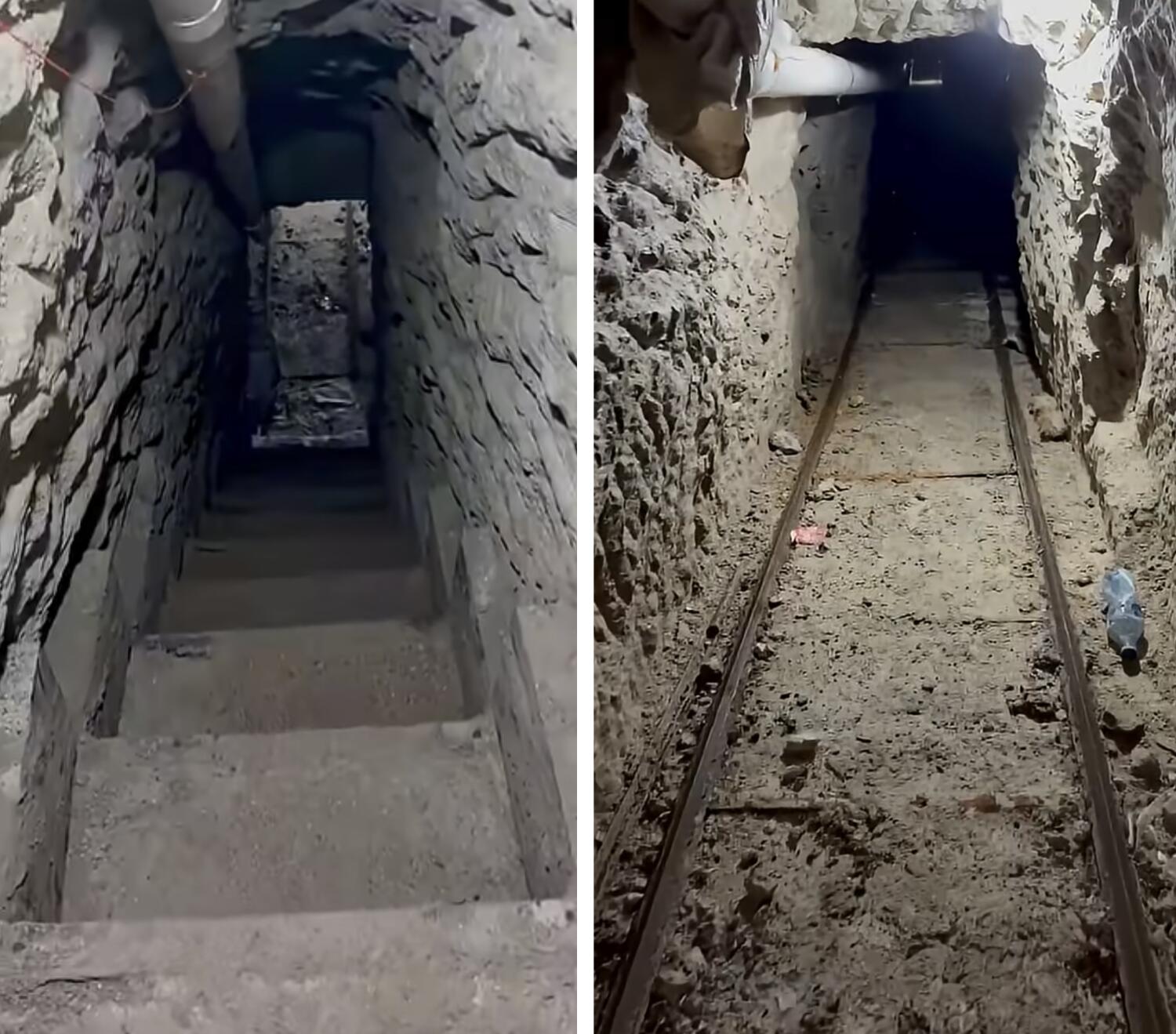
This wasn't just a hole in the ground. It was a feat of illicit engineering that stretched one-third of a mile, crossing from a residence in Tijuana, Mexico, to a nondescript warehouse in San Diego. When federal agents finally breached the concrete floor, they didn't just find a tunnel. They found a subterranean highway equipped with reinforced walls, a rail system, electricity, and a ventilation setup that would make a coal miner envious.
It was a $45 million ghost ship made of earth and timber.
The Architecture of the Invisible
Imagine standing in a room where every sound is muffled by six layers of soil. The air is thick, tasting of iron and sweat. This is the reality of the "narcoducto." Prosecutors allege that this specific artery was used to move more than 1,700 pounds of cocaine, alongside significant quantities of meth and heroin.
To understand the scale, you have to look at the geometry. The tunnel reached depths of sixty feet. That is the height of a six-story building, inverted. Down there, the border doesn't exist. There are no thermal cameras, no steel bollards, and no desert patrols. There is only the shovel and the silence.
The logistics of such a project are staggering. To build a tunnel of this magnitude, you have to dispose of tons of displaced dirt without alerting the neighbors. You have to shore up the ceiling so the weight of the world doesn't come crashing down on the "topos"—the moles—who are digging for their lives. It is a dark mirror of the American dream: a massive investment of capital, labor, and risk, all aimed at a single, lucrative goal.
The Ghost in the Warehouse
The warehouse in San Diego looked like every other boxy building in the district. It was a place where things were meant to be stored in crates and moved on pallets. But the cargo here was different. It didn't come in through the loading dock. It rose from the floor.
Consider the hypothetical life of a worker at a nearby legitimate business. They grab their coffee, they check their watch, and they hear a faint, distant hum. They assume it's a generator or a truck idling. They don't realize that twenty yards away, a fortune in white powder is being winched up a secret shaft. This is the "hidden cost" of our border reality. The infrastructure of the everyday is often a shroud for the extraordinary.
The sheer audacity of the rail system tells the real story. This wasn't a crawl space. It was a conveyor belt. The traffickers weren't just smuggling; they were industrializing. By installing tracks, they transformed a slow, grueling physical task into a high-speed transit line. It was a private subway for the underworld.
The Weight of the Evidence
When the task force moved in, the scene was a snapshot of a frantic exit. They found the drugs, of course—bricks wrapped in plastic, stamped with the logos of cartels that operate like multinational corporations. But the most haunting details are the small ones. The discarded tools. The half-empty water bottles. The realization that for every hour of law enforcement surveillance, there were a thousand hours of quiet, underground labor.
The legal fallout has been swift. Six people were charged with conspiracy to distribute cocaine. But the charges are just the paperwork of a much deeper conflict. The seizure of $45 million worth of product is a blow, certainly, but in the economy of the shadow world, it is often seen as a cost of doing business.
One might wonder how a hole in the ground stays secret for so long. The answer lies in the camouflage of the mundane. In a zone defined by trade and transit, movement is the best hiding place. If you want to hide a tree, you put it in a forest. If you want to hide a massive smuggling operation, you put it in a warehouse district where thousands of tons of freight move every single day.
The Cycle of the Soil
Every time a tunnel like this is discovered, it is filled with concrete. The veins are cauterized. The surface is restored. But the demand that dug the hole remains. It is a pressure that exists on both sides of the line, a vacuum that pulls substances through the earth regardless of the barriers placed on top of it.
The investigators who crawled into that space spoke of the cold. Even in the heat of a California afternoon, the deep earth remains chilled. It is a reminder that there is a world beneath the one we see, a network of connections that defy the maps we draw. We build walls to the sky, and so they go to the depths.
The tunnel is gone now, a plugged vein in the dirt of Otay Mesa. But somewhere else, perhaps only miles away, the vibration is starting again. A new rhythmic heartbeat in the dark. A new set of lungs breathing through a tube. The earth is never as solid as we want to believe.
The next time you drive past a row of silent warehouses, look at the floor. Think about the sixty feet of darkness beneath your tires. There is a whole other map being drawn in the dirt, one shovel at a time, by people who know that the shortest distance between two points is rarely a straight line above ground.