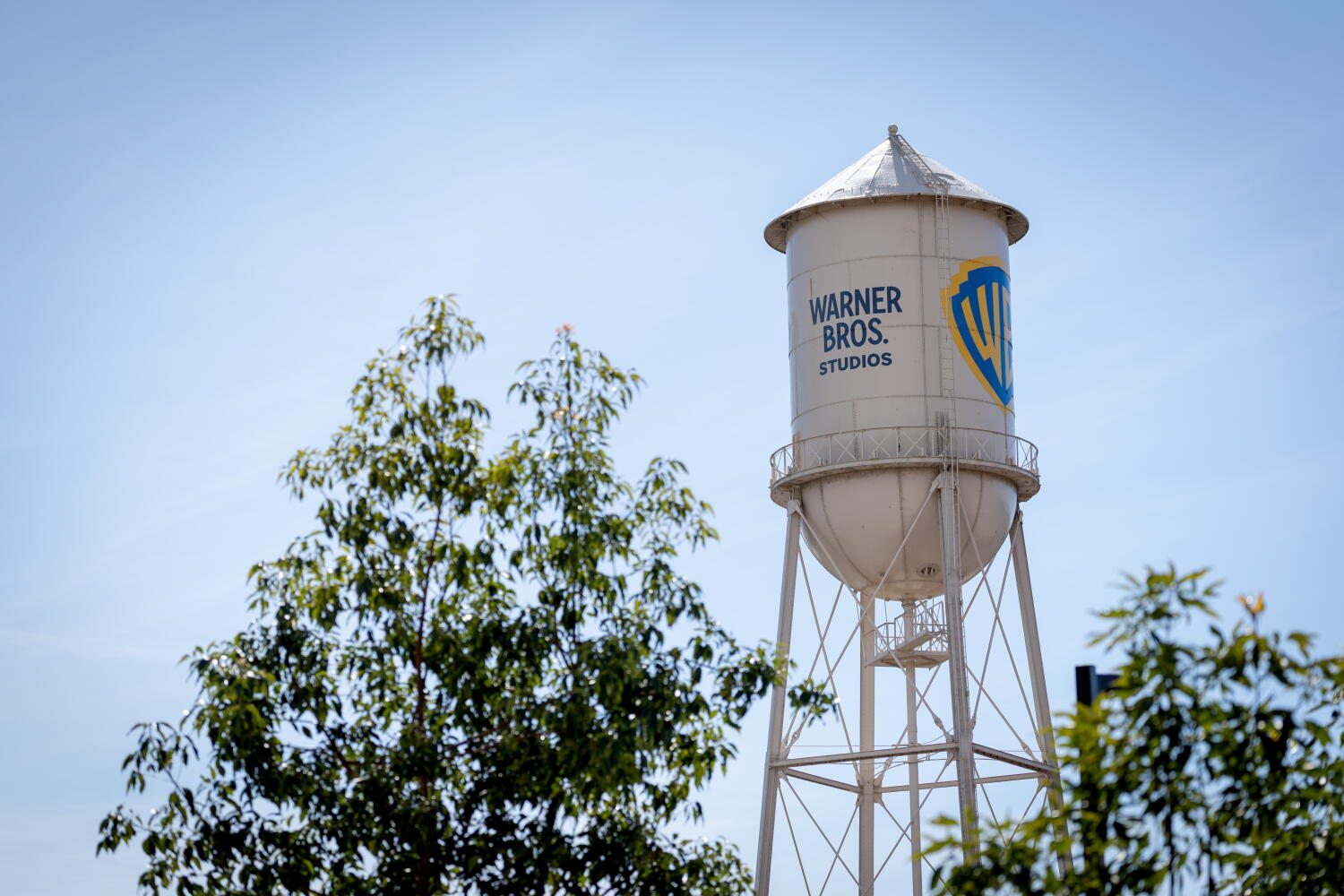
Hollywood trades spent the days after November 18, 2026, treating Skydance's decision to fold Paramount Television Studios into Warner Bros. Television Group like a routine corporate org-chart update. It isn't. When Skydance shakes up TV by collapsing two prominent studios into one—launching Warner Bros. Television Studios in early 2027—it doesn't just erase a legendary shingle. It shrinks the entire buyers' market for television creators while leaving an obvious architectural contradiction right down the hall at CBS.
Let's cut through the executive memo speak. On paper, Skydance TV co-chair and chief content officer George Cheeks pitched the union as a way to align leadership, resources, and creative focus. In reality, David Ellison's newly minted media giant—formed after Skydance closed its $8 billion Paramount merger in August 2025 and swallowed Warner Bros. Discovery in an $81 billion deal in October 2026—is staring down roughly $80 billion in net debt and hunting for $6 billion in annual cost savings. Combining two overlapping scripted and unscripted production engines isn't about creative alchemy. It's about survival math. Building on this idea, you can also read: Stop Calling Elsinore a Triumph Because Andrew Scott Deserves Better Than Grief Porn.
The Real Mechanics Behind Warner Bros. Television Studios
If you haven't tracked the dizzying corporate musical chairs in Burbank and Hollywood over the past fifteen months, here is what actually changes when the consolidation takes effect in early 2027:
- The Surviving Name: Paramount Television Studios vanishes as a standalone brand. The merged house will operate strictly as Warner Bros. Television Studios.
- The Co-Presidents: Current Warner Bros. TV chief Channing Dungey and Paramount Television Studios head Matt Thunell will share the president title, reporting directly to George Cheeks.
- The Roster Size: Overnight, the combined entity becomes home to more than 120 active television series across broadcast and streaming. Think The Pitt (HBO Max), Ted Lasso (Apple TV), Reacher (Prime Video), Landman (Paramount+), and the upcoming Neuromancer adaptation all sitting on the exact same balance sheet.
- The Extra Baggage: Dungey and Thunell won't just run domestic scripted and unscripted shows. Their remit also swallows BET Studios and Warner Bros. International Television Production.
Notice what happened to Paramount Television Studios' lifespan. Paramount Global shut down the studio in 2024 during pre-merger belt-tightening, only for Ellison to revive it in 2025 after Skydance took control. Barely a year later, it's being folded into Burbank. That kind of whiplash tells you everything about how fast the economics of third-party TV production shifted once the Warner Bros. Discovery assets entered the building. Experts at Rolling Stone have shared their thoughts on this situation.
Why CBS Studios Survived While Paramount TV Got Absorbed
Here is the question almost every casual observer misses: if Skydance wants efficiency, why didn't it collapse all of its scripted TV units into one mega-studio?
CBS Studios—led by president David Stapf, who also reports to Cheeks—remains completely independent. Under Stapf's umbrella sit CBS Studios International, Skydance Sports Entertainment, and See It Now Studios. While Dungey and Thunell merge prestige streaming and third-party supplier operations, Stapf keeps cranking out broadcast workhorses like the NCIS and Fire Country franchises.
From a production operations standpoint, keeping CBS Studios separate makes total sense. Broadcast procedural television runs on a completely different financial and scheduling engine than high-budget streaming dramas. CBS Studios is built to deliver 22-episode network seasons on tight turnarounds with predictable syndication and international licensing tails. Warner Bros. TV and Paramount TV, by contrast, were both competing in the exact same lane: pitching expensive, talent-driven series to outside streamers like Apple TV, Prime Video, and Netflix alongside internal platforms like HBO Max and Paramount+.
Running two separate studios that bid against each other for the same showrunners, intellectual property, and external streaming slots is corporate self-harm. Collapsing Paramount TV into Warner Bros. TV eliminates internal bidding wars immediately.
The Co-Presidency Question Nobody Wants to Ask
Hollywood has a long, messy track record with co-presidents. Usually, two bosses at the top of a merged studio means one executive stays long enough to smooth the transition while the other quietly updates their resume.
This pairing, however, has an unusual backstory that could actually make it work—at least temporarily. Before Channing Dungey took over Warner Bros. Television Group and Matt Thunell joined Ellison at Skydance in 2022, the two worked side by side as original series executives at Netflix. During their Netflix overlap, Thunell helped shepherd Stranger Things and The Umbrella Academy, while Dungey oversaw juggernauts like Bridgerton and Emily in Paris. They already know each other's creative instincts, deal-making styles, and blind spots.
Still, look closely at Dungey's calendar. On top of co-running a 120-show production juggernaut, Dungey was just named chair of Skydance Global Cable Media on November 17, 2026—putting her in charge of more than 50 combined cable networks from Warner Bros. Discovery and Paramount. Nobody can manage fifty linear cable channels and half of Hollywood's largest television studio at full bandwidth simultaneously. In practice, Thunell—who has spent four years inside Ellison's inner circle—is positioned to carry massive day-to-day operational weight on the studio floor while Dungey balances the broader cable and corporate portfolio.
What This Means for Writers, Showrunners, and Staff
If you work in television—or invest in media—the real story isn't the executive org chart. It's the brutal contraction of leverage across the industry.
The Human Toll Behind the Memo
George Cheeks' November 18 staff memo avoided announcing specific job cuts, offering the standard corporate reassurance that HR would share details as plans finalize. Nobody in Los Angeles is fooled. Industry reporting from the Los Angeles Times and Deadline points straight toward hundreds of layoffs hitting early 2027 as duplicate roles across development, casting, business affairs, physical production, and marketing get wiped out. Skydance already cut roughly 1,000 jobs in October 2026 right after closing the Warner Bros. Discovery acquisition, and co-CEO Ynon Kreiz has openly flagged real estate consolidation across the company's seven Los Angeles sites and five New York offices.
One Fewer Door for Creators
For decades, Warner Bros. Television thrived precisely because it operated independent of a single broadcast network, giving creators like Chuck Lorre, Greg Berlanti, John Wells, and Bill Lawrence a powerhouse home that could sell anywhere. Paramount Television Studios carved out a similar reputation as an agile third-party supplier.
Now, those two doors are one. When you pitch a high-concept drama in 2027, you no longer have Warner Bros. TV and Paramount TV bidding up your overall deal or competing to attach your script to a star. Fewer buyers always means tighter budgets, smaller upfront license fees, and more restrictive backend terms for showrunners. Even with Skydance pledging an aggressive $30 billion annual content spend across film and TV—more than Netflix's $20 billion or Disney's $24 billion—consolidation inside the studio walls shifts bargaining power squarely away from creative talent.
The Arms-Dealer Dilemma
There is also a subtle strategic risk for Skydance itself. Both Warner Bros. TV and Paramount TV made billions acting as "arms dealers" to rival streamers—producing Ted Lasso for Apple and Reacher for Amazon. Meanwhile, Skydance plans to bundle HBO Max and Paramount+ in early 2027 before merging them onto a single tech stack. Rival streamers already hate writing massive checks to feed a direct competitor's war chest. Putting Ted Lasso, Reacher, The Pitt, and Landman under one unified studio roof makes Skydance's leverage as a supplier unmistakable, which could push Apple, Amazon, and Netflix to lean harder on their own in-house production arms rather than enriching Ellison's balance sheet.
How Creators and Industry Pros Should Adjust Right Now
Waiting around for HR memos or hoping legacy bidding wars return is a losing strategy. If you're pitching, staffing, or navigating representation in television over the next six months, take concrete steps before the early 2027 merger locks in:
- Audit your active pitches for overlap immediately. If you have projects in early development at both Warner Bros. Television Group and Paramount Television Studios, get your agents on the phone this week. Projects with similar tonal hooks or competing IP angles will be the first casualties when Dungey and Thunell rationalize their combined 120-show slate.
- Diversify away from mega-conglomerate dependence. With legacy Hollywood down to four major studios—Disney, Skydance, Sony, and a soon-to-be-spun-off NBCUniversal—independent financiers like A24, Lionsgate, and international co-production partners matter more than ever for preserving creative control and backend upside.
- Price your deals for a leaner third-party market. Expect longer development cycles and stricter deficit-financing caps throughout the first half of 2027 while Skydance works through its Q1 restructuring and integrates its streaming bundles. Lock in multi-year commitments and clear production triggers on existing greenlit series before departmental handoffs stall momentum.


