You cannot smell carbon dioxide. You cannot see it spill over the continental shelf, nor can you hear it accumulating in the lower troposphere like a rising tide in a subterranean cave. It is an invisible guest at our global banquet, heavy and silent, altering the chemistry of the sky one molecule at a time.
For decades, humanity has tried to measure this breath from the ground. We build towers in remote forests, dispatch weather balloons into the teeth of the jet stream, and parse ice cores that hold ancient whispers of industrial ambition. Yet, looking up from the surface is like trying to map a hurricane while standing knee-deep in the surf. Also making headlines in related news: The Day the Stopwatch Broke.
Everything changed when the tracker left the ground.
The Weightlessness of an Idea
Imagine standing in a cleanroom in Hong Kong, years before a single bolt is tightened for space flight. Engineers stare at a compact metal housing no larger than a shoebox. Inside rests a piece of engineering wizardry designed to survive the violent, bone-rattling concussions of a rocket launch and the brutal thermal swings of low Earth orbit. Additional details regarding the matter are explored by ZDNet.
It is easy to think of space hardware as cold. Titanium, wiring harnesses, solder joints, gold plating. But every instrument sent aloft is an extension of human anxiety. It is our desperate, calculated bid to understand the consequences of our own acceleration.
When researchers built this greenhouse gas tracker, they weren't just assembling sensors. They were forging a pair of eyes that would soon look down at us from four hundred kilometers up, tracing the invisible plumes of methane and carbon dioxide pulsing from megacities, melting permafrost, and burning rainforests.
Orbit is unforgiving. If a solder joint cracks under thermal expansion, or if cosmic radiation scrambles a processor's memory address, months of meticulous labor become expensive space debris.
Up in the Void
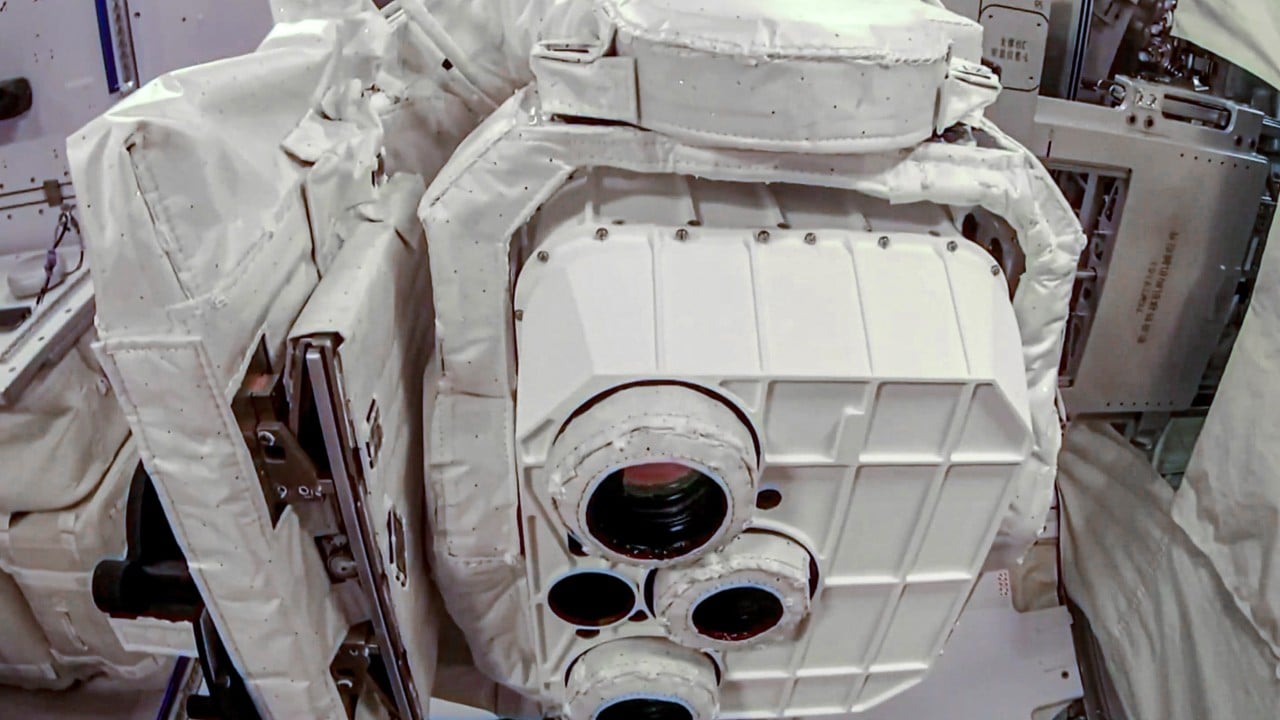
Today, aboard the International Space Station, that Hong Kong-built device is functioning well.
Think about what that phrase actually means in the vacuum of space. As the station hurtles around the globe at seventeen thousand five hundred miles per hour—witnessing sixteen sunrises and sunsets every single day—the instrument is alive. It drinks in sunlight reflected off the Earth's curved horizon. It analyzes how specific wavelengths of light are absorbed by atmospheric gases, translating those spectral fingerprints into hard numbers.
Every second, it records a pulse of data. A factory chimney in the industrial belt of Asia. A massive agricultural methane burp across the American plains. A silent forest fire smoldering in the taiga.
The device does not judge. It simply records the planetary ledger.
We often talk about climate metrics as if they are abstract political talking points. Parts per million. Gigatons. Carbon budgets. These are defensive shields we throw up to avoid feeling the visceral weight of the numbers. But when you shrink the monitoring apparatus down to a compact payload orbiting the stars, the abstraction falls away. We are watching our home through a keyhole.
The View From the Edge
Consider what happens next in the quiet control rooms scattered across the planet, where streams of telemetry flow down from the heavens. Scientists look at raw spectral data flashing on monitors, isolating the exact atmospheric signatures captured by the Hong Kong sensor.
The machine is healthy. The optics are clean. The telemetry is steady.
This success is not just a technological triumph for a dense urban territory known more for neon skylines and financial markets than aerospace engineering. It is proof that precision can emerge from crowded places. Hong Kong is a city built vertical, squeezed between granite mountains and deep harbor water, a place where space is the ultimate luxury. Perhaps it is fitting that engineers accustomed to maximizing every square millimeter of Earthly ground would design something capable of parsing the thin, fragile wrapper of our entire atmosphere.
The station completes another orbit. The terminator line between night and day sweeps across the Pacific Ocean, plunging the solar panels into shadow before the fierce, unfiltered glare of the sun hits them once again. Up there, high above the politics, the borders, and the noise, the tracker keeps its silent vigil, measuring the breath of a changing world.