The media is hyperventilating over a leaked report that the Trump administration is prepping for an extended blockade of the Strait of Hormuz. They’re painting a picture of global economic collapse, $200 barrels of oil, and a world shivering in the dark.
They are wrong. They are falling for a forty-year-old bluff that ignores the fundamental shift in energy physics and geopolitical leverage.
The Strait of Hormuz is the world’s most significant chokepoint, with roughly 20 to 21 million barrels of oil flowing through it daily. That is the "lazy consensus" figure everyone cites to trigger panic. But focusing on the volume of oil is like staring at the speedometer of a car while the engine is being replaced.
The "extended blockade" isn't a doomsday scenario for the West. It is a strategic trap for the East, and Trump knows it. If you’re waiting for the gas lines of 1973, you’re looking at a ghost. The world has changed, and the blockade is no longer the weapon it used to be.
The Crude Reality of 2026
The panic-mongers forget that the United States is now the world’s largest oil and gas producer. We aren't the thirsty, desperate victim of the 1970s.
When the Strait closes, the price of oil spikes globally, sure. But for a net exporter, a price spike is a revenue windfall. While the mainstream news talks about the "pain at the pump," they miss the fact that American shale producers can turn a profit at $40 a barrel. At $120? They aren't just profitable; they are printing money.
The real victims of a Hormuz blockade aren't in Washington or London. They are in Beijing and New Delhi. China imports roughly 75% of its crude oil, and a massive chunk of that comes through the Strait. If the flow stops, the Chinese manufacturing engine doesn't just slow down; it seizes.
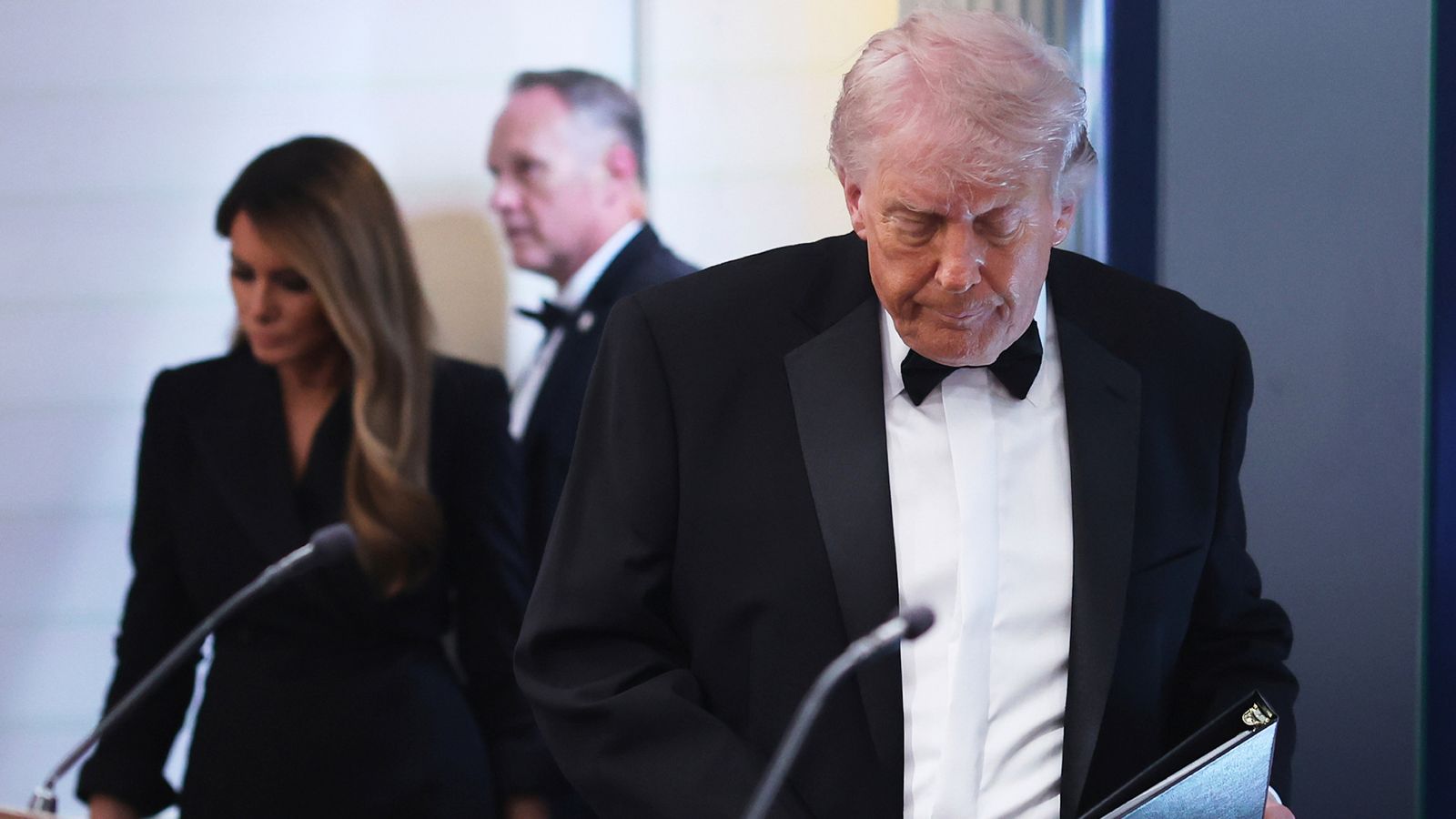
Trump’s "instruction" to aides isn't about protecting the world’s oil. It’s about demonstrating who holds the leash. By preparing for a blockade, the U.S. is signaling to its primary economic rivals that their entire industrial existence depends on American naval protection of a waterway they cannot control.
The Physics of a "Blockade" is a Fantasy
Let’s talk about the actual mechanics. Pundits act as if you can just "close" the Strait like a garage door.
The Strait is 21 miles wide at its narrowest point. The shipping lanes are two miles wide in each direction, separated by a two-mile buffer. To truly "blockade" it, an adversary—presumably Iran—would have to engage in a sustained kinetic effort against the U.S. Fifth Fleet.
I’ve seen how these war games play out. You don't "block" the water; you harass the ships.
- Sea Mines: They are cheap and effective, but they are also slow to deploy and easy to sweep once the U.S. Navy commits the necessary assets.
- Swarm Boats: Terrifying in a simulation, but less so when faced with modern electronic warfare and automated point-defense systems.
- Anti-Ship Missiles: The real threat, but one that requires a radar signature. Once you turn that radar on, you have roughly three minutes before a HARM missile turns your battery into a crater.
The idea that Iran could hold the Strait for an "extended" period against a determined U.S. military is a tactical joke. The only way the blockade lasts is if the U.S. allows it to last to squeeze someone else.
The Strategic Diversion
Why would Trump want the headlines to scream about a blockade?
It’s the ultimate leverage in trade negotiations. If you want China to blink on tariffs or currency manipulation, you remind them that their energy security is a house of cards. You don't need to fire a shot. You just need to leak a memo saying you're preparing for the "inevitable" closure of their primary artery.
The mainstream media calls this "instability." I call it a forced realization of the new hierarchy.
Furthermore, the "extended" part of the report is the most telling. A short-term spike in oil prices is a nuisance. An extended period of high prices is a death sentence for inefficient, energy-dependent economies. It forces a global reshuffle. It accelerates the move toward domestic energy sources and, ironically, forces the very "green" transitions that the administration's critics claim to want—just through the lens of national security rather than environmentalism.
The SPR Fallacy
"But what about our reserves?" the critics cry.
The Strategic Petroleum Reserve (SPR) is frequently cited as our only defense. This is another misunderstanding. The SPR is a psychological tool, not a physical one. Its capacity is roughly 700 million barrels. Even if the U.S. released a million barrels a day, it wouldn't "fix" the global price of oil if the Strait were closed.
The real "reserve" isn't underground in salt caverns in Louisiana. It’s the Permian Basin. It’s the ability to ramp up production and the fact that modern refineries are more flexible than they were twenty years ago.
We need to stop asking "How do we reopen the Strait?" and start asking "Who suffers most while it's closed?"
If the answer is "the people we are currently in a cold war with," then the blockade isn't a crisis. It’s an opportunity.
The Downside No One Mentions
I’m not saying this is without cost. The downside to this contrarian stance is the immediate inflationary shock to the domestic consumer.
Logistics costs would skyrocket. Food prices, which are heavily dependent on diesel and fertilizer (a byproduct of natural gas), would climb. There would be genuine civil unrest.
But from a cold-blooded geopolitical perspective, that is a tactical cost for a strategic gain. The administration is betting that the American public can stomach six months of expensive eggs if it means breaking the back of a rival's industrial dominance for a generation.
It’s a brutal, Machiavellian calculation. It’s also exactly how the game is played at this level.
The Myth of the "Global Community"
The competitor article suggests that Trump is "alarming allies."
Good. Allies who have spent decades offloading their security costs onto the U.S. taxpayer while simultaneously cozying up to energy providers in the Middle East should be alarmed.
A blockade of the Strait of Hormuz forces a "choose your side" moment. You either align with the naval power that can clear the lanes (the U.S.) or you scramble to find alternative routes that don't exist.
The "International Community" is a phrase used by people who don't want to admit that global trade is a privilege granted by the U.S. Navy. When that privilege is threatened, the hierarchy becomes clear.
Stop Looking at the Ships, Look at the Pipes
If you want to know if a blockade is actually dangerous, stop looking at the Strait. Look at the East-West Pipeline in Saudi Arabia and the Abu Dhabi Crude Oil Pipeline.
These bypass the Strait entirely. They can move millions of barrels a day to the Red Sea or the Gulf of Oman.
The capacity isn't enough to replace the whole flow, but it's enough to keep the essential lights on for the West. The "total blockade" is a mathematical impossibility unless those pipelines are also destroyed. And if we’re at the point where inland pipelines in Saudi Arabia are being leveled, we aren't talking about a "blockade" anymore. We’re talking about World War III.
The current report isn't a warning of war. It’s an exercise in market manipulation and geopolitical signaling.
Trump isn't preparing for a disaster. He's preparing a stage.
The media focuses on the potential for chaos because chaos sells. They miss the fact that in a world of energy abundance, the one who controls the chokepoint doesn't just control the oil—they control the competitors who need it more than they do.
If you’re still worried about the Strait closing, you’re playing a game from 1990. The board has been flipped. The U.S. isn't the victim of the blockade; it is the only entity capable of ending it, and therefore the only entity that decides when it’s over.
Panic is a commodity. Don't buy it.