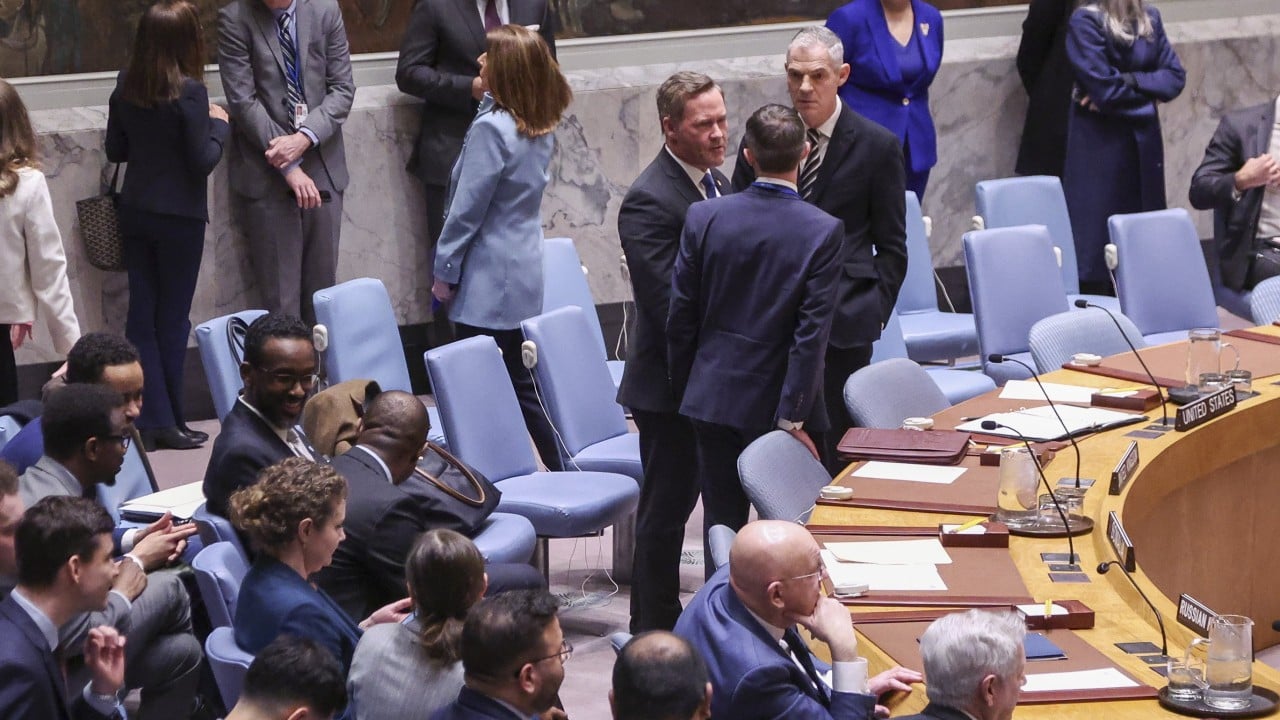
The media is currently hyperventilating over the latest UN veto. They want you to believe that Russia and China are twirling their metaphorical mustaches, gleefully blocking a resolution to reopen the Strait of Hormuz because they want to see the West bleed. It is a neat, cinematic narrative. It is also fundamentally wrong.
The "lazy consensus" suggests that a closed Strait is a win for the Revisionist Powers. The logic goes: oil prices spike, the US economy tanks, and the "bad guys" laugh from the sidelines. This analysis is surface-level at best and dangerously delusional at worst. If you actually look at the ledger, Russia and China are not the architects of this chaos; they are its most vulnerable hostages. They didn't veto that resolution because they want the Strait closed. They vetoed it because the resolution was a backdoor for a permanent Western military escalation that scares them far more than expensive oil.
The China Paradox: The Worlds Largest Importer Cannot Support a Blockade
Let's dismantle the China myth first. Beijing is the world’s largest crude oil importer. Approximately 70% of their oil comes from overseas, and a massive chunk of that—roughly 15 million barrels per day—must pass through that narrow chokepoint.
When the Strait of Hormuz closes, China doesn't just pay more at the pump. Their entire industrial base, the very engine of their political stability, starts to seize. The CCP’s social contract relies on one thing: consistent economic growth. A prolonged energy crisis in the Persian Gulf is an existential threat to Zhongnanhai.
So why the veto? Because Beijing views a UN-sanctioned "police action" as a Trojan horse. They aren't voting against a free Strait; they are voting against a US-led maritime coalition that would give the Pentagon a permanent, legal mandate to board ships and dictate traffic in the region. To China, a closed Strait is a headache, but a US-controlled Strait is a heart attack.
Russias False Windfall
The pundits love to claim that Putin is cheering for $150 oil. It’s a seductive idea. Russia is an energy exporter; high prices mean more money for the war chest, right? Wrong.
Russia is currently operating under a "shadow fleet" model to bypass Western price caps. This system is fragile. It relies on a delicate network of aging tankers, murky insurance, and specific Asian ports. In a total Hormuz shutdown, the global shipping market doesn't just get expensive; it becomes a fortress.
The moment the Strait closes, the world enters a state of emergency. Maritime insurance premiums for any vessel in the Middle East or bordering waters don't just rise—they vanish. Russia’s discount oil, which they are already forced to sell to India and China at a loss compared to Brent, becomes even less attractive when the logistical costs of moving it triple. Furthermore, if China's economy crashes due to energy starvation, Russia loses its biggest customer. You cannot sell oil to a factory that has no electricity to run its assembly lines.
The Myth of the Chokepoint
Everyone talks about the Strait of Hormuz as a physical gate that can be locked. It’s not. It’s a 21-mile-wide strip of water where the actual shipping lanes are only two miles wide in each direction.
Closing it isn't about sinking one ship. It’s about the threat of kinetic action. The "lazy consensus" assumes that Iran can just flip a switch and the world stops. In reality, modern naval power—even asymmetrical power—is about perception. The veto at the UN wasn't a signal of support for Iran’s ability to block the water; it was a diplomatic middle finger to the Western attempt to define "freedom of navigation" on purely Atlanticist terms.
The Math of Disaster
Consider the current global spare capacity. If 20 million barrels per day are removed from the market, there is no "Plan B."
- Strategic Petroleum Reserves (SPR): The US has already tapped its reserves heavily to manage domestic inflation. It is a band-aid for a gunshot wound.
- OPEC Capacity: Most members are already producing at or near their limits.
- The Price Floor: In this scenario, we aren't looking at $100 oil. We are looking at a complete breakdown of the global supply chain where the price of oil becomes irrelevant because there is no supply to buy.
The Sovereignty Trap
The real reason for the veto—the one the "experts" won't tell you—is the precedent of "Internationalized Waters."
Russia and China are terrified of any resolution that allows the UN to override a coastal state's sovereignty in the name of global trade. Why? Because of the Arctic and the South China Sea.
If Moscow agrees that the UN has the right to forcibly reopen the Strait of Hormuz against the wishes of the regional power (Iran), they are effectively hand-delivering a legal precedent that the West will use to challenge Russia’s "Northern Sea Route." If Beijing agrees, they are signing away their claim to the "Nine-Dash Line."
This isn't about oil. This is a cold, calculated move to prevent the West from writing the rules of the ocean for the next century. They are willing to let the global economy burn slightly if it means keeping the fire away from their own territorial claims.
Why the "Diplomatic Solution" is a Fantasy
You’ll hear calls for "de-escalation" and "multilateral dialogue." These are words people use when they have no power and even less leverage.
The Strait of Hormuz will not be reopened by a piece of paper in New York. It will be reopened when the pain of the closure exceeds the perceived benefit for the actors involved. Right now, the media is focused on the wrong actors. They are looking at the UN Security Council. They should be looking at the insurance markets in London and the refineries in Gujarat.
The reality is that Russia and China are playing a high-stakes game of chicken with their own economies. They are betting that the West will blink first and offer a deal that doesn't involve a permanent US naval presence. It is a massive gamble.
The Hard Truth for Investors
Stop looking at the oil tickers and start looking at the shipping lanes. The real crisis isn't the price of a barrel; it’s the availability of a hull.
If you think this is a repeat of 1973, you’re missing the point. In 1973, the world was less integrated. Today, a 48-hour delay in the Strait ripples through the semiconductor plants in Taiwan and the automotive plants in Germany within a week.
Russia and China aren't "vetoing peace." They are vetoing a world order they no longer wish to subscribe to, even if that means the house they are sitting in starts to smell like smoke. They are banking on the idea that they can endure the poverty of a collapsed trade route longer than the West can endure the political instability of $7-per-gallon gasoline.
This isn't a war of ships. It's a war of nerves. And the UN is just the stage where the actors go to recite lines they don't believe for an audience that doesn't understand the plot.
The Strait stays closed not because of a veto, but because the cost of reopening it on the West’s terms is a price the East refuses to pay. Keep your eyes on the tankers, not the gavels. If the "shadow fleet" starts moving toward the Gulf, you'll know the real deal is being made in the dark, far away from the UN floor.
Everything else is theater. Stop buying the tickets.