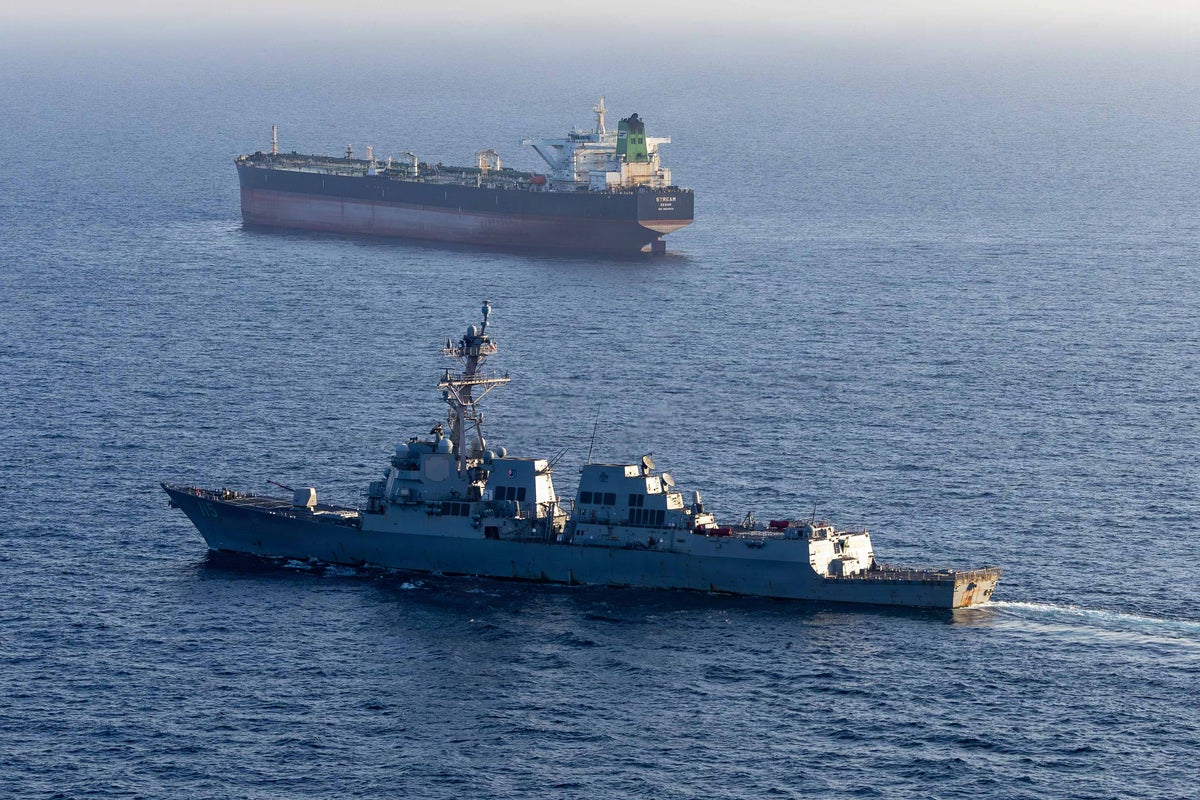
Fear sells. Specifically, fear of a $200 barrel of oil. Every time a former intelligence chief goes on a press circuit, we get the same tired narrative: Iran holds the world’s jugular at the Strait of Hormuz, and we are one bad day away from global economic collapse. It’s a convenient story for the defense lobby and a terrifying one for the average commuter. It’s also fundamentally wrong.
The "gun to our head" rhetoric isn't just an exaggeration; it’s a failure to understand the basic physics of global trade and the survival instincts of a pariah state. If Iran closes the Strait, they aren't holding a gun to the West's head. They are holding a live grenade to their own chest.
The Chokepoint Fallacy
The mainstream media treats the Strait of Hormuz like a light switch. You flick it, and the oil stops. You flick it again, and it starts. Reality is much messier.
The Strait is a 21-mile-wide stretch of water with shipping lanes that are roughly two miles wide in each direction. Yes, it’s narrow. Yes, it’s congested. But the idea that a few scuttled tankers or a field of "dumb" mines could permanently "close" the Strait is a relic of 1980s thinking.
We are no longer in the era of the Tanker War. Modern mine-sweeping technology, satellite-guided navigation, and the sheer scale of the U.S. Fifth Fleet’s maritime capability mean that any physical blockage is a temporary nuisance, not a permanent seal. The disruption would last days or weeks, not months or years. Markets hate uncertainty, but they adapt to reality with brutal efficiency.
Suicidal Economics
Let's talk about the money—the one thing the doom-mongers always ignore.
Iran’s economy is currently a house of cards held together by grey-market oil sales, primarily to China. If Tehran closes the Strait, they aren't just blocking Saudi or Kuwaiti oil. They are blocking their own exports.
China is Iran’s only significant lifeline. Do we honestly believe the CCP will sit idly by while their primary energy source is choked off by their own "partner" in the Middle East? If Iran shuts the Strait, they lose their only remaining friend with a permanent UN Security Council seat.
Furthermore, Iran lacks the storage capacity to simply "pause" production. If they stop the flow, they have to cap wells. Capping wells in mature fields is an engineering nightmare that can lead to permanent reservoir damage. For a regime that relies on every cent of oil revenue to suppress domestic unrest, closing the Strait is a fast track to a state-wide bankruptcy and a revolution that wouldn't need a single CIA operative to succeed.
The "Invisible" Alternatives
The "Hormuz is the only way" crowd ignores the massive infrastructure built specifically to bypass this threat.
- East-West Pipeline (Saudi Arabia): Can move 5 million barrels per day (bpd) to the Red Sea.
- Abu Dhabi Crude Oil Pipeline: Moves 1.5 million bpd directly to the Gulf of Oman, bypassing the Strait entirely.
- Strategic Reserves: The U.S. and IEA members hold enough SPR (Strategic Petroleum Reserve) to offset a total Hormuz shutdown for months.
When you do the math, the "unreplaceable" volume of oil at risk is significantly lower than the 20 million bpd headline figure suggests. The world has spent forty years building a nervous system that routes around the Hormuz appendix.
The Asymmetric Bluster
Iran’s military strategy isn't based on winning a war; it’s based on the threat of starting one. This is "Strategic Ambiguity 101."
They use fast boats to harass tankers and fly drones near carriers because it keeps the risk premium high. Every time a former CIA director goes on television and says "the regime has a gun to our head," Iran gets a free win. They get the leverage of a superpower without having to fire a single shot.
If they ever actually followed through, the illusion of their power would vanish. The moment they sink a ship in the shipping lanes, they move from "regional nuisance" to "global target." The international coalition that would form to reopen the Strait wouldn't just be Western; it would include every major Asian economy that relies on that oil. Iran knows this. They are many things, but they are not stupid.
The Real Threat is Not the Strait
While we obsess over a 21-mile stretch of water, we are missing the actual shift in the power dynamic. The real "gun" isn't a physical blockade. It’s the transition of the energy market itself.
As the world moves toward a diversified energy mix, the geopolitical weight of any single chokepoint diminishes. The fear-mongering about Hormuz is a distraction from the fact that we are entering an era of energy abundance through American shale and renewable integration.
The U.S. is now a net exporter of petroleum. The historical umbilical cord that tied American prosperity to the stability of the Persian Gulf has been severed. We are acting out of habit, not necessity.
Stop Playing Their Game
We need to stop validating the regime's loudest threats. When we treat the Strait of Hormuz as the Achilles' heel of the global economy, we give Tehran a seat at a table they don't deserve to sit at.
The Strait is a geographic reality, but the "catastrophe" is a choice. We choose to be afraid. We choose to let oil prices spike on rumors. We choose to ignore the massive redundancy built into the global supply chain.
Iran can't close the Strait. They can only try. And the moment they try, they cease to exist as a functioning state. That isn't a "gun to our head." It’s a desperate regime shouting into a megaphone because they know their actual relevance is leaking away with every new barrel of oil produced outside the Gulf.
Stop looking at the map and start looking at the balance sheets. The threat is a ghost. It’s time we stopped jumping every time it makes a noise.

:max_bytes(150000):strip_icc():focal(819x186:821x188)/Murdaugh-Family-e90854a716884d608fb6fd925e18d840.jpg)
