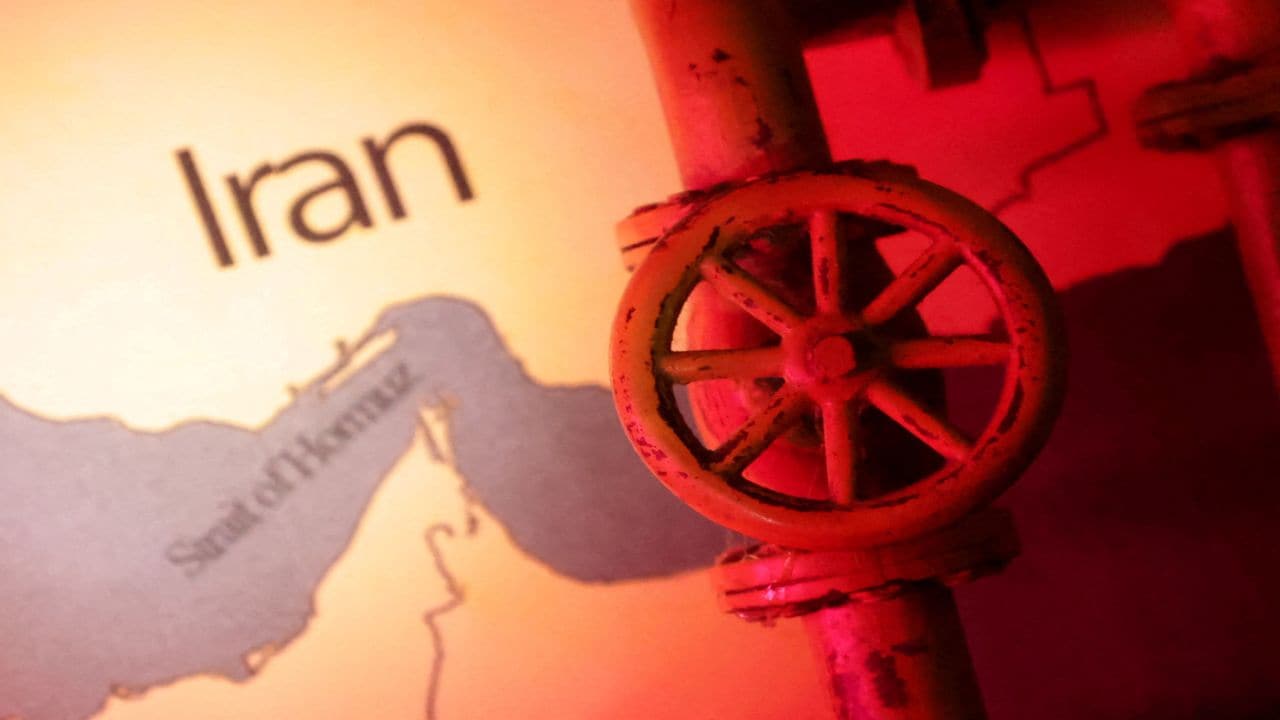
The fragile ceasefire between the United States and Iran is currently on life support, and the global energy supply is the primary casualty of the fallout. On Tuesday, the Strait of Hormuz remains a high-stakes bottleneck where a single miscalculation could ignite a full-scale regional war. While President Trump threatens to resume hostilities following a rejected peace proposal, a more subtle but equally significant shift is occurring in the diplomatic background. South Korea is moving to join maritime security talks, and the European Union has finally broken a years-long deadlock to sanction Israeli settlers in the West Bank. These are not isolated events; they are the gears of a global realignment.
The immediate crisis centers on the water. Following a drone attack on a cargo vessel in Qatari waters, South Korea has signaled its intent to join multilateral discussions aimed at securing the Strait of Hormuz. For Seoul, this is a matter of survival. South Korea relies on the Middle East for nearly 70% of its crude oil imports. Any prolonged closure of the Strait would paralyze its industrial economy. By stepping into these talks, South Korea is effectively hedging its bets, moving away from a purely US-led security umbrella toward a broader coalition that includes regional players like Qatar and potentially China.
The Hormuz Chokehold
The strategic reality of the Strait of Hormuz is brutal. Approximately 20% of the world’s liquefied natural gas and oil passes through this narrow corridor. Iran has long used its ability to close the Strait as its ultimate deterrent. Tehran recently warned that any deployment of American, French, or British warships in the waterway would be viewed as an act of aggression, promising an immediate response.
This is not empty rhetoric. The Islamic Revolutionary Guard Corps (IRGC) has spent decades perfecting "swarm" tactics—using hundreds of small, fast-attack boats armed with missiles to overwhelm larger, more sophisticated Western destroyers. In the shallow, confined waters of the Strait, the technological superiority of a US carrier strike group is mitigated by the sheer volume of low-tech threats.
The US Treasury recently issued a red-alert to global banks, warning that the IRGC is ramping up efforts to evade sanctions to fund these maritime operations. This suggests that despite the "blockade" of Iranian ports, the regime in Tehran has maintained enough liquidity to keep its naval proxies fueled. The "why" is simple: as long as Iran can threaten the global oil price, it maintains a seat at the negotiating table, even if the US President calls their proposals "stupid."
Europe Breaks the Veto
While the Middle East teeters on the edge of a naval war, the European Union has made a historic pivot in the West Bank. For years, sanctions against violent Israeli settlers were blocked by Hungary’s Viktor Orbán. With his recent ouster and the rise of the pro-EU Peter Magyar, that wall has collapsed.
The EU’s new sanctions are not just symbolic slaps on the wrist. They target the financial architecture of the settlement movement. Specifically, the bloc has frozen the assets of Amana, a powerful organization that manages the development and financing of settlements. By targeting Amana, the EU is effectively cutting off the capital flow that allows for the expansion of outposts in Area C.
This move signals a growing rift between Brussels and the current Israeli government. Gideon Sa’ar, Israel’s Foreign Minister, has decried the sanctions as political persecution. However, from the European perspective, the rise in settler violence is viewed as a direct threat to regional stability—stability that is already being shredded by the US-Iran conflict. Europe is tired of being the junior partner in Middle East diplomacy; it is now using its massive economic market as a blunt instrument.
The Power of Financial Exclusion
The EU sanctions will force Israeli banks into a corner. If a bank continues to process transactions for a sanctioned entity like Amana, it risks losing its ability to transact in Euros. This is the same "financial nuclear option" the US used to isolate Iran. If Israeli institutions are forced to choose between supporting the settlement movement and maintaining access to the European financial system, the result will be internal political chaos in Tel Aviv.
The Beijing Factor
In the middle of this chaos, a trip to China by the US President looms large. Washington is looking for a "Chinese solution" to the Iran problem. China is the largest buyer of sanctioned Iranian crude. If Beijing decides to turn off the taps, the Iranian economy would likely collapse within months.
However, China is unlikely to do this for free. Beijing’s support for an Iranian peace plan—publicly noted by the Iranian ambassador—suggests that China is positioning itself as the true mediator in the region. While the US uses the "stick" of military threats, China uses the "carrot" of infrastructure investment and energy demand.
The South Korean decision to join maritime talks fits perfectly into this narrative. If the US cannot guarantee the safety of the Strait of Hormuz, and Iran refuses to back down, the world’s energy consumers will look for any power that can broker a deal. If that power is China, the geopolitical map of the 21st century changes permanently.
No Clean Exit
There is no "win" scenario currently on the table. The US and Iran are operating on fundamentally different timelines. The White House believes that military pressure will eventually force a concession. Tehran believes it can outlast the political will of the American public, banking on the fact that another round of fighting would send global gas prices into the stratosphere during an election cycle.
The EU's move against settlers and South Korea's entry into maritime security are the first signs of a world preparing for a post-American Middle East. These nations are no longer waiting for a Washington-led solution that never comes. They are building their own defenses and choosing their own targets.
The ceasefire might be on life support, but the global response is rapidly evolving. The next 72 hours will determine if the Strait of Hormuz becomes a graveyard for global trade or the birthplace of a new, multipolar security order.
The window for a diplomatic "save" is closing. Those who rely on the flow of oil through the Gulf are already moving their pieces on the board, assuming the worst is yet to come.