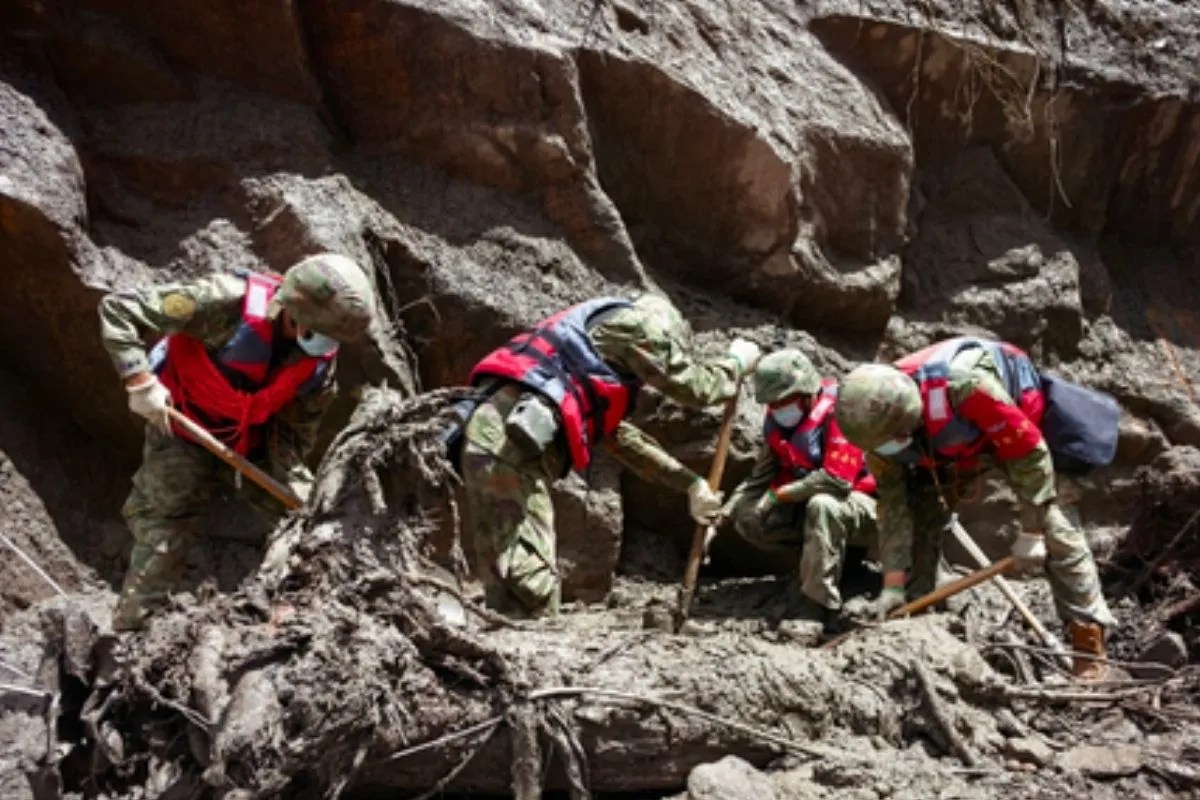
Severe meteorological events in Himalayan topography expose structural vulnerabilities where rapid hydrological surges immediately paralyze rescue logistics, trap industrial workforces, and fracture regional supply chains. When continuous heavy precipitation elevates river corridors like the Trishuli and Bhote Koshi, emergency operations transition from extraction missions to containment protocols. Analyzing the mechanical failure points of disaster response in these zones requires deconstructing the operational variables that dictate survival rates during catastrophic flash flooding.
The Mechanics of Hydrological Surges
Mountainous river basins possess minimal time of concentration, meaning intense rainfall rapidly converts into high-velocity runoff funneled through steep gorges. The Trishuli corridor exemplifies this dynamic, where narrow valley geometries amplify discharge volumes and velocity. As water levels breach critical thresholds, two primary operational vectors fail simultaneously: aerial extraction and ground-based access.
Helicopter rotor stability depends on visibility, barometric pressure stability, and clear landing zones. Torrential downpours introduce turbulence and cloud cover that ground aviation assets entirely, neutralizing aerial shuttle operations between isolated zones like Dhunche, Timure, and Syabrubesi. Simultaneously, high-energy bedload transport—the movement of boulders, silt, and debris along the riverbed—undercuts adjacent roadways. A prime example is the critical 500-meter damaged stretch near the Trishuli River in Rasuwa, which instantly turns from a transit route into an impassable chasm. This severs the logistical umbilical cord required to move heavy plant machinery, medical supplies, and relief personnel.
The Industrial Vulnerability Matrix
Himalayan river corridors serve as primary sites for run-of-the-river hydroelectric installations, placing dense clusters of industrial infrastructure directly within high-risk flood zones. The architecture of these projects—featuring underground tunnels, diversion weirs, and subterranean turbine halls—creates unique entrapment risks during flash floods.
When debris flows and sudden surges block tunnel portals, workers inside face immediate isolation. Rescue operations targeting facilities like the Upper Trishuli Hydropower Project and the Rasuwagadhi Hydropower Station operate under extreme operational friction:
- Portal blockage caused by wet debris landslides requires specialized heavy earth-moving equipment that cannot reach the site due to downstream road collapses.
- Atmospheric hazards inside flooded tunnels, including rising water levels and compromised structural integrity, restrict entry to elite military engineering units.
- Communication blackouts sever telemetry and voice links, forcing commanders to rely on manual reconnaissance where every hour exponentially decreases survivability for trapped technicians.
Resource Allocation Under Resource Constraints
Scale matters in national disaster response, but absolute numbers obscure operational bottlenecks. Deploying a force of over 15,000 security personnel—drawn from the Nepali Army, Nepal Police, and Armed Police Force—represents a massive mobilization effort. However, human capital cannot substitute for kinetic logistical capacity when infrastructure is structurally compromised.
The economic and material response function relies on immediate liquidity mobilization, demonstrated by the rapid accumulation of over NPR 1.9 billion within the Prime Minister's Disaster Relief Fund and decentralized disbursements exceeding NPR 67.5 million across affected local levels. Yet, financial allocation speed does not correlate linearly with clearance speed. Monetary policy tools and emergency funds fail to clear physical blockages on washed-out mountain tracks.
Early warning systems present a parallel efficiency dilemma. Issuing over 200,000 automated SMS alerts provides crucial lead time for lowland and valley-floor evacuation. However, population density and rugged terrain dictate that mobile alerts only succeed where telecommunications architecture survives. With dozens of cell towers knocked offline across network providers like Nepal Telecom and Ncell, data transmission stalls precisely when telemetry is most valuable.
Cross-Border Hydrological Transmission
Flash floods in high-altitude transboundary basins carry immediate implications for downstream nations. The hydraulic energy generated in Rasuwa and Sindhupalchok cascades southward into the Gangetic plains of India, specifically impacting barrages along the international border, such as the Gandak Barrage in West Champaran.
Managing this downstream transmission requires real-time hydrometric data sharing between upstream and downstream authorities. When river discharges fluctuate around critical thresholds—such as normal operational ranges near 97,500 cusecs—downstream regulators must balance reservoir storage capacity against catastrophic overflow risks. A failure in upstream communication protocols forces downstream authorities to manage peak flows blindly, amplifying flood exposure across international boundaries.
Strategic Reinforcement of Mountain Logistics
Establish redundant, hardened communication relays utilizing satellite-mesh networks immune to terrestrial cell tower destruction along high-risk hydropower corridors. Mandate the pre-positioning of modular, rapid-assembly Bailey bridges at intermediate valley depots to bypass washed-out road segments without waiting for heavy civil construction equipment to traverse blocked trunk highways.