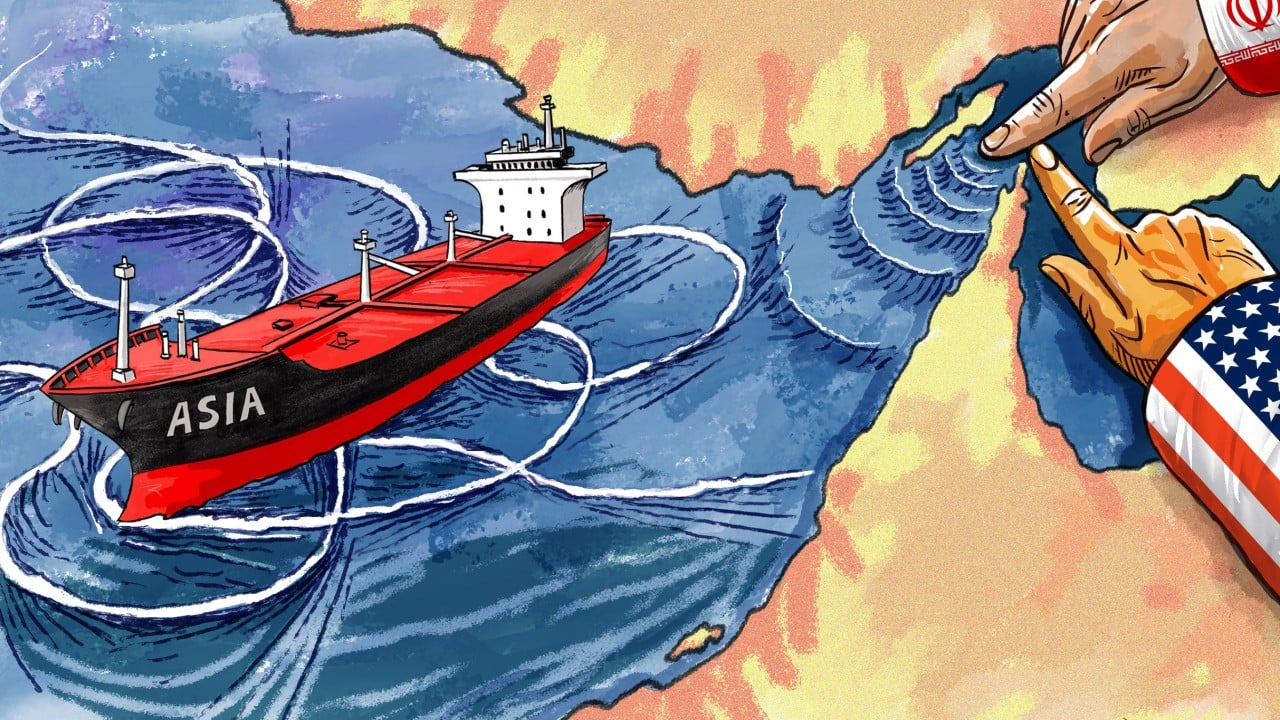
The immediate spike in global oil benchmarks following the suspension of U.S.-Iran diplomatic efforts is not a localized pricing anomaly; it is a mechanical repricing of the Geopolitical Risk Premium (GRP). When negotiations stall, the market shifts from a "normalization" model—where Iranian supply is expected to return to the global balance—to a "containment" model, characterized by restricted supply and heightened maritime risks.
Understanding this price action requires looking past the headlines and into the three structural pillars that govern the relationship between failed diplomacy and the price at the pump.
The Triple-Constraint Framework of Oil Pricing
The current surge is driven by the simultaneous tightening of three distinct levers. Most mainstream reporting treats "tension" as a monolithic force, but a granular analysis reveals a more complex interaction between physical supply, paper markets, and logistics.
1. The Supply Elasticity Deficit
The global oil market currently lacks sufficient "spare capacity." This term refers to the volume of production that can be brought online within 30 days and sustained for 90 days. Because OPEC+ members are already producing near their self-imposed or technical limits, the potential loss of Iranian barrels—or the continued absence of their 1.5 to 2 million barrels per day (bpd) of potential exports—creates an inelastic supply curve. In this environment, even a small shift in perceived risk leads to an outsized move in price because there is no immediate "buffer" to absorb the shock.
2. The Speculative Risk Multiplier
Commodity traders do not trade based on today's physical supply; they trade based on the Probability of Disruption (PoD). When U.S.-Iran talks stall, the PoD for the Strait of Hormuz increases. This waterway facilitates the passage of approximately 21 million barrels of oil per day, or roughly 21% of global petroleum liquids consumption.
The market applies a "risk carry" to every barrel. If the probability of a blockade or seizure increases by even 5%, the mathematical expected value of a future barrel must rise to compensate for that risk. This is why prices move long before a single tanker is actually delayed.
3. The Downstream Refinement Bottleneck
Crude oil prices are only one half of the "gas price" equation. The second half is the Crack Spread—the profit margin for turning crude into gasoline. When geopolitical instability rises, refiners often face higher insurance premiums and logistical costs. These "friction costs" are passed directly to the consumer. Even if crude prices were to stabilize, the uncertainty surrounding the sourcing of specific grades of Iranian heavy crude (which some Mediterranean and Asian refiners are optimized to process) forces a shift to more expensive alternatives, further inflating the retail price.
The Mechanics of the Iranian Supply Gap
To quantify the impact of stalled negotiations, one must examine the specific volume Iranian production represents within the global energy balance. Before the re-imposition of sanctions, Iran exported significantly more than its current "shadow market" levels.
The Opportunity Cost of Failed Diplomacy
The "Stall" in negotiations functions as a supply ceiling.
- Current State: Iran exports between 1.2M and 1.5M bpd, largely through "ghost fleets" and ship-to-ship transfers that bypass traditional financial monitoring.
- The Delta: A successful diplomatic resolution would likely reintegrate 1M bpd of high-quality crude into the formal market within six months.
- The Price Impact: Standard economic modeling suggests that for every 1 million barrels of undersupply in the global market, the price of Brent crude carries a $7 to $10 premium. The failure to close the U.S.-Iran deal effectively "bakes in" this $10 premium as a permanent floor until alternative supply (such as U.S. shale or Brazilian offshore) can scale to fill the gap.
The Heavy Crude Paradox
Global refinery configurations are not universally compatible with all types of oil. Much of the world's complex refining capacity—specifically in the U.S. Gulf Coast and parts of India—is designed to process "sour" or "heavy" crudes. Iranian exports primarily consist of these grades. The absence of this specific feedstock forces refiners to bid up the price of similar grades from Iraq or Saudi Arabia, creating a localized price war for specific molecules that eventually ripples out to global retail averages.
The Maritime Chokepoint: Quantifying the Hormuz Factor
The most significant "hidden" variable in gas price surges is the status of the Strait of Hormuz. In a stalled diplomatic environment, the risk of "Asymmetric Maritime Interference" becomes a primary pricing driver.
The logic of the market follows a specific escalatory ladder:
- Diplomatic Friction: Lowers the threshold for kinetic activity.
- Insurance Surcharges: Lloyd's of London and other insurers apply "War Risk" premiums to tankers in the Persian Gulf.
- Freight Rate Spikes: Tanker owners demand higher day rates to compensate for the physical danger to their assets.
- Retail Inflation: These logistical surcharges add an estimated $0.05 to $0.15 per gallon to the final pump price, independent of the actual cost of the oil.
Why "High Prices" are Self-Correcting (The Demand Destruction Threshold)
A fundamental principle of energy markets is that the "cure for high prices is high prices." However, the threshold at which consumers stop buying gas—known as Demand Destruction—is shifting.
In previous decades, a surge to $4.00 per gallon in the U.S. triggered an immediate and sharp decline in miles driven. Today, the threshold is higher due to several factors:
- Inelastic Commuting Patterns: Despite the rise of remote work, the global logistics chain remains 95% dependent on petroleum.
- The CAPEX Lag: Oil companies are hesitant to invest in new long-term production (Capital Expenditure) due to the overarching transition toward renewables. This creates a "structural undersupply" where prices must stay high for longer to incentivize any new drilling.
The stalling of U.S.-Iran talks effectively removes the most "efficient" way to lower prices (adding existing capacity) and leaves the market dependent on "inefficient" ways (reducing consumption through economic pain).
Strategic Trajectory: The Persistence of the Volatility Floor
The failure of recent negotiations suggests a shift from a "cyclical" price spike to a "structural" higher floor. Analysts should anticipate the following market behaviors over the next two fiscal quarters:
- Heightened Sensitivity to Inventory Data: Because the Iranian "buffer" is off the table, the weekly EIA (Energy Information Administration) reports on U.S. stockpiles will trigger more extreme price swings. Any drawdown in stocks will be viewed as a critical vulnerability.
- Regional Pricing Divergence: Expect Asian markets (which are more reliant on Middle Eastern flows) to pay a higher premium than Atlantic Basin markets. This creates an arbitrage opportunity that will ironically keep U.S. prices high as domestic supplies are exported to capture higher overseas margins.
- The Weaponization of the Strategic Petroleum Reserve (SPR): Governments will likely use emergency stockpiles to blunt the initial shock. However, this is a finite strategy. Replenishing the SPR at high prices creates a secondary demand source that prevents prices from falling back to historical norms.
The path forward for energy consumers and industrial planners is not to wait for a "return to normal," but to hedge against a sustained period where the GRP remains above $15 per barrel. The diplomatic stalemate has effectively reclassified Iranian oil from a "near-term probability" to a "long-tail risk," and the market is now priced accordingly.
The most effective strategic response for large-scale energy buyers is the immediate implementation of layered hedging through "collar" options. By buying a floor and selling a cap, organizations can protect against the 20% "worst-case" surge that would accompany a total breakdown in Persian Gulf security, while accepting the current elevated price as the new operational baseline. Relying on a diplomatic "breakthrough" to lower costs is no longer a viable procurement strategy; the risk of the "stall" becoming a permanent "freeze" is the dominant market reality.