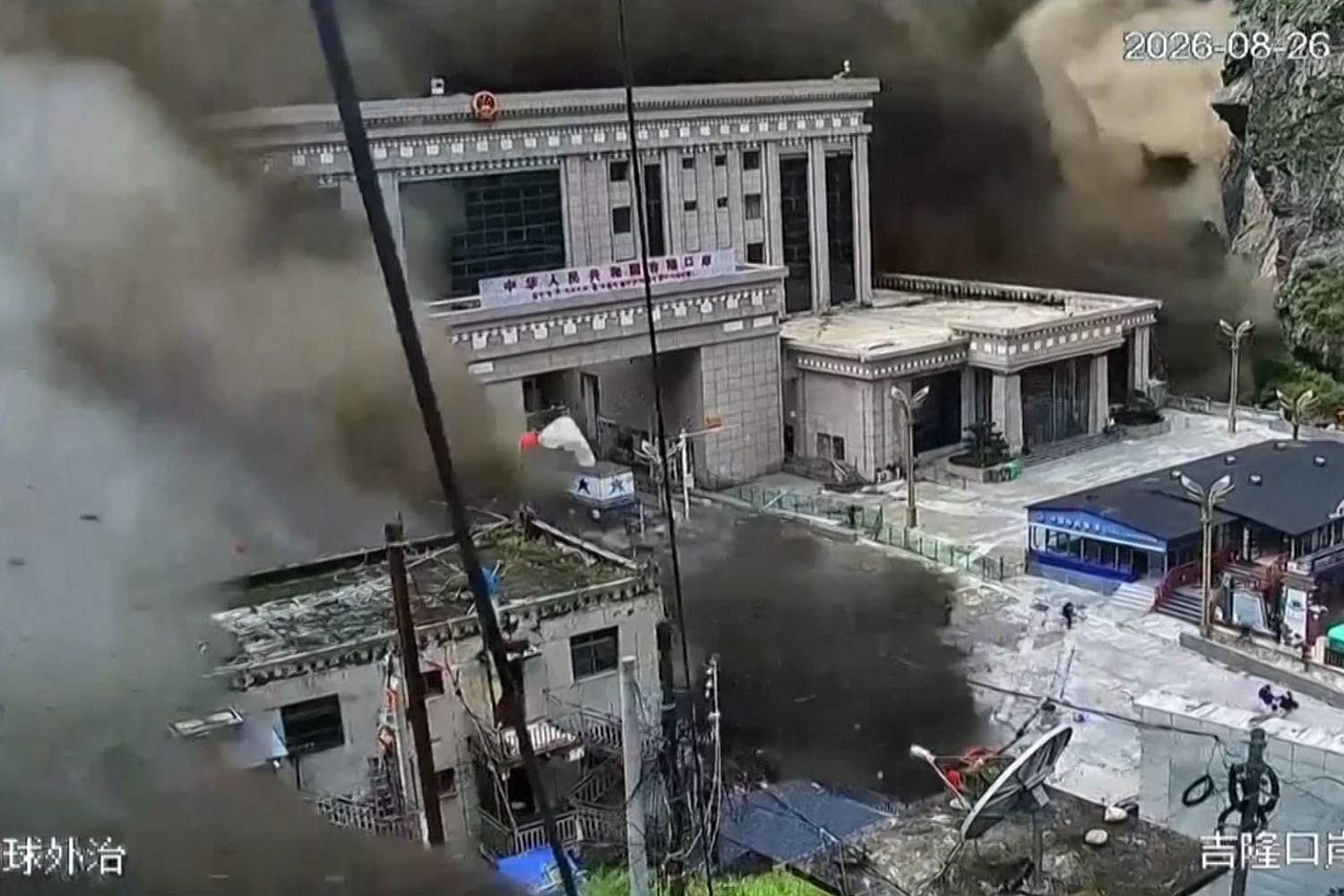
Visual documentation from the Nepal-Tibet border reveals catastrophic structural failures driven by sudden hydrological surges, commonly captured as crushing walls of water obliterating buildings and infrastructure. When glacial lakes breach or intense monsoon downpours concentrate runoff within narrow Himalayan gorges, kinetic energy increases exponentially. This dynamic transforms predictable river channels into high-velocity debris flows. Understanding these events requires abandoning anecdotal weather reporting and examining the physical mechanics of flash floods, boundary layer hydrodynamics, and the systemic vulnerabilities inherent in trans-Himalayan construction.
The Mechanics of Himalayan Flash Floods
Mountain watersheds possess extreme hypsometric characteristics. High relief ratios and steep valley walls mean precipitation converts rapidly into gravitational potential energy, which transitions directly into kinetic energy as water funnels downward.
When a barrier fails—whether a natural moraine dam holding a glacial lake outburst flood or an artificial constriction caused by a landslide—the release is non-linear. The resulting flood wave does not behave like standard open-channel flow. Instead, it forms a dam-break wave front characterized by a sheer vertical face known as a bore.
This wall of water carries immense sediment loads, often transforming up to 60 percent of the flow mass into boulders, gravel, and organic debris. Muddy flows of this density increase the bulk specific gravity of the fluid. Water that normally weighs one metric ton per cubic meter can surge to two metric tons per cubic meter. This doubling of density directly doubles the impact pressure exerted against any bridge pier, retaining wall, or building foundation standing in the flow path.
Infrastructure Vulnerability and Boundary Layer Shear
Human settlements along transnational river corridors like the Bhote Koshi or Arunkhola valleys occupy restricted flat benches of land situated on alluvial fans. These locations are geomorphologically unstable, representing historical deposition zones where rivers naturally shed sediment during past floods.
Buildings constructed from unreinforced masonry or local stone lack the tensile strength required to resist lateral hydrodynamic forces. When the flood front impacts a structure, two primary failure modes occur simultaneously:
- Hydrodynamic Drag Pressure: The velocity head of the fluid exerts a massive lateral force proportional to the square of the velocity. If flow speed doubles, the structural load quadruples.
- Scouring and Foundation Undermining: High-velocity water accelerates around structural obstructions, creating localized vortices that rapidly scour riverbed sediments away from foundations, leading to immediate structural collapse through differential settlement or complete overturning.
Bridges spanning these gorges face identical mechanical limits. Standard superstructure designs fail when the clearance between the low chord of the bridge deck and the maximum flood level is insufficient. Once rising water and debris choke the opening under a bridge, the deck acts as a dam. Lateral water pressure accumulates instantly, shearing anchor bolts and tearing steel girders or reinforced concrete spans off their abutments.
Transboundary Monitoring Deficits and Information Latency
Mitigating risk along the Nepal-Tibet border involves complex geopolitical and hydrological hurdles. The headwaters of major river systems originate on the Tibetan Plateau, controlled by upstream authorities, while the high-impact zones sit downstream in Nepal.
Data sharing regarding upstream precipitation, landslide dam formation, and glacial lake expansion remains fragmented. Without real-time telemetry linked via automated satellite transmission across the international boundary, early warning systems operate with fatal latency. By the time downstream communities register a sudden drop in baseline flow—often an indicator of an upstream temporary blockage—or a sudden surge, the travel time of the flood wave through steep gorges leaves minutes, not hours, for evacuation.
Emergency response planning cannot rely on historical flood frequencies because climate change accelerates glacial retreat and destabilizes permafrost slopes. Traditional recurrence intervals, such as hundred-year floods, lose statistical validity when baseline temperatures shift upward, increasing the frequency of catastrophic glacial lake outburst floods.
Risk Mitigation Protocols for High-Risk Mountain Corridors
Addressing structural vulnerability in high-energy mountain environments demands a fundamental shift from reactive reconstruction to anticipatory engineering.
Engineering teams must mandate setbacks that account for maximum credible flood heights, rather than standard high-water marks. Infrastructure footprints should be relocated off active alluvial fans entirely, even if space constraints dictate higher development costs. Where bridges must cross narrow gorges, single-span suspension or arch designs that eliminate piers from the active channel bed reduce the risk of debris accumulation and structural blockage.
Retaining walls and embankment protections require deep-socketed micropiles anchored into bedrock rather than surface soils prone to liquefaction and scouring. Integrating distributed acoustic sensing and automated pressure transducers along upstream gorges provides the micro-second telemetry required to trigger automated acoustic alarms downstream, bypassing human communication chains that fail during communication network outages.
Relocate critical civic infrastructure away from valley floors, establish strict zoning laws forbidding permanent habitation within high-risk hydraulic zones, and deploy multi-tiered upstream retention basins designed to absorb and diffuse the initial kinetic energy of glacial outbursts before the flow reaches populated border crossings.


