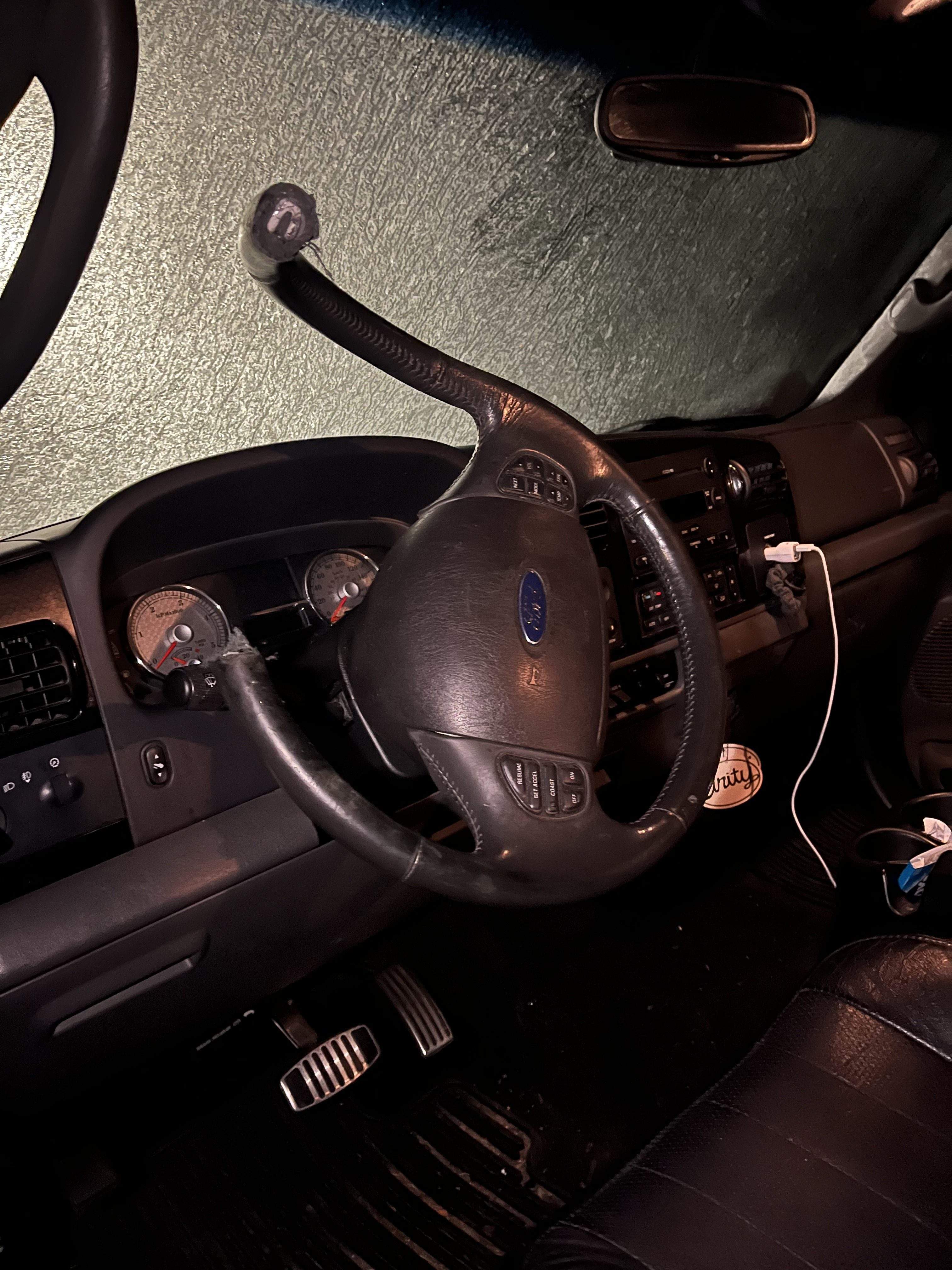
British Columbia drivers often think they’re covered for the weird stuff. You pay your premiums, you drive safely, and you expect ICBC to have your back when a mechanical failure turns your morning commute into a near-death experience. Then you meet reality. A Vancouver man recently found out the hard way that when your steering wheel locks up while you're moving, ICBC might just look the other way. It's a terrifying scenario that exposes a massive gap in how our public insurer handles mechanical defects versus traditional accidents.
If your steering wheel fails, you aren't just dealing with a broken car. You're dealing with a legal gray area that ICBC loves to exploit. They want to call it "wear and tear" or a "mechanical breakdown." You call it a life-threatening malfunction. The difference between those two definitions determines who pays the thousands of dollars in repair bills or, worse, who’s liable if that locking wheel sends you into a ditch.
The mechanical failure trap that ruins your claim
The core of the issue is how ICBC distinguishes between a "collision" and a "comprehensive" claim. Most people assume that if the car breaks and causes a mess, it's covered. Not quite. ICBC’s policy language is notoriously specific. They generally don't cover mechanical breakdown, rusting, or wear and tear.
When a driver experiences a steering rack failure or a locked ignition cylinder while driving, ICBC’s first instinct is to blame the age of the vehicle. They’ll argue the part simply reached the end of its life. If you didn't hit another car or a stationary object, they often argue there’s no "accident" to speak of. This leaves the driver holding a bill for a repair that often costs more than the car's actual market value.
Think about the sheer physics of a steering failure. You're doing 80 km/h on the Upper Levels Highway. The wheel goes stiff. You manage to muscle it to the shoulder without hitting anything. You're a hero, right? You saved lives and prevented a multi-car pileup. ICBC sees it differently. Because you didn't crash, there’s no "resulting damage" from an accident. You’re stuck paying for a brand-new steering assembly out of pocket. It’s a perverse incentive system that almost rewards you for actually hitting something, though I’d never suggest doing that.
Why the steering wheel stalemate happens
The stalemate usually starts at the repair shop. A technician looks at the car and says the steering column is shot. They might even find evidence of a defect. But ICBC adjusters aren't mechanics. They're risk managers. Their job is to follow the letter of the Insurance (Vehicle) Act.
Section 65 of the B.C. Insurance (Vehicle) Regulation is where dreams of a fair payout go to die. It explicitly excludes loss or damage caused by mechanical fracture or breakdown. Unless you can prove the failure was caused by an external factor—like a previous poorly-executed repair by an ICBC-accredited shop—you're fighting an uphill battle.
Drivers get stuck in this loop for months. The car sits in a lot. Storage fees rack up. ICBC refuses to pay because it's "mechanical." The manufacturer refuses to pay because the car is out of warranty. You're left taking the bus while paying insurance on a driveway ornament. It’s a bureaucratic nightmare that feels designed to make you give up.
Manufacturers versus the public insurer
We need to talk about recalls. In a perfect world, if a steering component is faulty, the manufacturer issues a recall, and the problem is fixed for free. In reality, recalls only happen after enough people almost die or actually do.
If your car hasn't been recalled yet, ICBC won't help you pressure the manufacturer. They aren't your advocate. They're a crown corporation looking at a spreadsheet. Many drivers find themselves caught between a giant car company that says "it’s an isolated incident" and a giant insurer that says "it’s not our problem."
Take the case of modern electronic power steering (EPS) systems. These aren't like the old hydraulic systems where you might get a little warning whine before things go south. When EPS fails, it can fail instantly. One second you're turning; the next, the motor has seized or the software has glitched. Proving this was an "accidental" event rather than a "mechanical" one is nearly impossible without hiring a private forensic engineer. Who has the money for that? Almost nobody.
How to fight back when the wheel locks up
If you find yourself in this stalemate, stop talking to your adjuster over the phone. Start a paper trail. Document every single thing.
- Get an independent inspection. Don't just rely on the shop ICBC suggested. Find a specialist who understands your specific make and model. Ask them for a written report on whether the failure was "sudden and accidental" or a slow "wear and tear" issue.
- Check the VIN for "silent recalls." Sometimes manufacturers have Technical Service Bulletins (TSBs) that aren't full recalls but acknowledge a known part failure. This is your leverage.
- Contact the Civil Resolution Tribunal (CRT). In B.C., the CRT handles motor vehicle disputes up to a certain dollar amount. It’s way cheaper than a lawyer and forces ICBC to actually defend their position in front of a neutral third party.
- File a report with Transport Canada. If your steering failed, it’s a safety defect. Reporting it helps build the case for a future recall, which could eventually get you reimbursed.
Don't let them tell you it's just "old car problems." A steering wheel shouldn't lock up while a vehicle is in motion, regardless of its age. That is a catastrophic safety failure.
The cost of safety shouldn't fall on the victim
We pay some of the highest insurance rates in the country. The "Enhanced Care" model was supposed to make things smoother, but for many, it just made the walls higher. When the system fails to protect a driver who managed to avoid a wreck despite a major equipment failure, the system is broken.
You're told to be a responsible driver. You maintain your car. You follow the rules. But when the machine itself betrays you, the provincial insurer expects you to have the engineering degree and the legal budget of a Fortune 500 company just to get a fair shake. It's exhausting.
If you're currently in a stalemate, don't back down. ICBC counts on people getting tired of the bureaucracy and just scrapping their cars. If the evidence shows a sudden, unexpected failure that put your life at risk, keep pushing. Call your MLA. Use the CRT. Make it more expensive for them to fight you than to settle the claim.
Next time you get in your car, check your steering for any "notchy" feeling or unusual resistance. If it feels off, get it checked immediately. Don't wait for it to lock up on the highway, because the only thing harder than wrestling a locked steering wheel is wrestling a settlement out of ICBC.