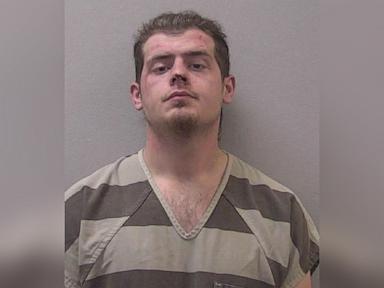
Eighteen years in federal prison. That's the reality facing an Idaho man convicted in an Islamic State support plot, a sentence that forces us to look closely at how federal prosecutors handle domestic extremism cases today.
When headlines break about an Idaho man getting 18 years in prison for an Islamic State support plot, most readers skim the surface. They see the location, the shock value of a terror-related charge in the Pacific Northwest, and the heavy sentence. Yet the real story sits inside the mechanics of federal counterterrorism law, specifically how the U.S. Department of Justice prosecutes material support charges under 18 U.S.C. § 2339B. If you've ever followed federal criminal dockets, you know these cases rarely involve Hollywood-style plots. Instead, they almost always center on digital footprints, encrypted messaging apps, and the sharp legal line between radical speech and actionable support. For an alternative perspective, check out: this related article.
Why Federal Prosecutors Target Material Support
To understand why an Idaho resident ends up with nearly two decades behind bars, you have to look at how the government defines "material support." Under federal law, providing currency, training, expert advice, or even personnel—including oneself—to a designated Foreign Terrorist Organization (FTO) carries severe penalties. You don't need to build a bomb or cross an international border to trigger a multi-decade sentence.
I've reviewed dozens of federal indictments over the years, and the pattern is remarkably consistent. Prosecutors rarely wait for an attack to materialize. They intervene the moment online radicalization crosses into tangible action. That action might be sending a few hundred dollars in cryptocurrency, translating propaganda, or attempting to travel abroad to join a militant group. In the context of an Islamic State support plot, federal agents rely heavily on undercover operations and confidential human sources to test intent long before public safety is put at risk. Similar coverage on this matter has been provided by NPR.
The Anatomy of Domestic Extremism Cases in Rural States
People often assume counterterrorism investigations only happen in major coastal hubs like New York or Los Angeles. That's a massive misconception. Geography no longer insulates any community from extremist networks.
Think about how recruitment works now. Ten years ago, radicalization required physical proximity to a recruiter or a specific social circle. Today, an isolated individual in a quiet Idaho town has instant access to the exact same encrypted channels as someone in Raqqa or Mosul. Federal law enforcement, particularly the FBI's Joint Terrorism Task Forces (JTTFs), operates in every state precisely because online ecosystems erase state lines.
Here's what typically unfolds in these investigations:
- Digital Surveillance and Tip-Offs. Most cases begin when an individual flags attention on public social media platforms before migrating to encrypted apps like Telegram.
- Undercover Engagement. Once law enforcement identifies a potential threat, undercover employees often step in, posing as fellow sympathizers or facilitators to determine whether the target is merely venting or actively seeking to assist a terrorist organization.
- The Predisposition Test. Defense attorneys frequently argue entrapment in these scenarios. To beat that defense, prosecutors must prove the defendant was already predisposed to commit the crime before federal agents ever made contact.
- Overt Acts. Before making an arrest, agents wait for a concrete step—purchasing a plane ticket, transferring funds, or acquiring tactical gear—that proves criminal intent beyond mere talk.
What Most People Get Wrong About Federal Sentencing
When you hear "18 years in prison," you might assume the defendant will serve half that time and walk out on parole. That's not how the federal system works. Congress abolished federal parole for offenses committed after November 1, 1987.
Under federal sentencing guidelines, inmates must serve at least 85% of their imposed sentence, assuming they maintain good behavior while incarcerated. On an 18-year sentence, that translates to more than 15 years in a federal correctional facility. On top of prison time, judges routinely impose lengthy periods of supervised release—often lasting decades or even life—alongside strict digital monitoring conditions once the individual eventually exits prison.
The statutory maximum for providing material support to a designated terrorist organization was raised to 20 years in 2015 under the USA FREEDOM Act. Receiving 18 years means the court viewed the conduct as sitting right near the top of the severity scale, just shy of the absolute legal ceiling. Judges weigh several factors when calculating that number, including the defendant's lack of remorse, the sophistication of the support effort, and the need to deter others who might be consuming similar propaganda online.
The Legal Line Between First Amendment Speech and Crime
One of the trickiest aspects of covering or analyzing any Islamic State support plot is separating protected speech from criminal conspiracy. The First Amendment protects radical, offensive, and even hateful ideology. You can legally express sympathy for extremist views in the United States, provided you aren't inciting imminent lawless action or coordinating with a designated terrorist group.
The legal trap springs shut the moment speech becomes coordination. In Holder v. Humanitarian Law Project (2010), the U.S. Supreme Court ruled that the government can prohibit providing material support to foreign terrorist organizations even if that support takes the form of speech, such as legal training or advocacy coordinated with the group. That precedent gives the Department of Justice enormous leverage. Once a defendant takes direction from an FTO—or someone they believe represents an FTO—First Amendment protections evaporate.
How Online Radicalization Impacts Local Communities
When a federal terrorism case hits a smaller state like Idaho, the ripple effects hit local communities hard. Neighbors are often blindsided. Family members struggle to reconcile the person they knew at the dinner table with the digital persona outlined in a federal criminal complaint.
From a practical standpoint, these cases highlight a glaring gap in how we address early-stage radicalization. By the time the FBI opens a full investigation, the legal outcome is almost predetermined. Federal prosecutors boast a conviction rate well above 90% in national security cases, largely because they don't bring charges until they have airtight digital records, recorded conversations, and documented overt acts.
If you're looking at this from a community or family perspective, waiting for law enforcement intervention isn't a strategy—it's a last resort. Recognizing behavioral shifts early matters:
- Sudden Social Isolation. Pulling away from long-time friends, family, and local community groups while spending excessive hours alone online.
- Obsessive Consumption of Grievance Narratives. Fixating on geopolitical conflicts through one-sided, apocalyptic framing rather than mainstream news or historical context.
- Secrecy Around Devices. Adopting strict operational security habits—constantly clearing browser histories, using multiple encrypted messaging platforms, or becoming hostile when asked about online activity.
- Dehumanizing Language. Adopting rigid "us versus them" rhetoric that justifies violence against broad groups of civilians.
Evaluating Primary Sources in National Security News
Whenever a high-profile sentencing like this Idaho case makes the news cycle, public commentary quickly splits into partisan talking points. If you want to understand what actually happened without media spin, go straight to the primary documents.
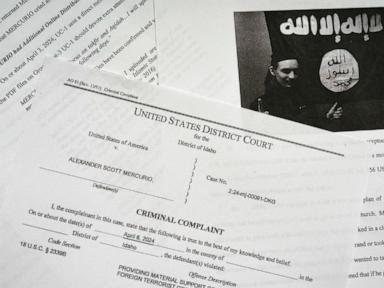
You don't need a law degree to read federal court filings. Look up the case via the Department of Justice's Office of Public Affairs press releases or search the federal court docket through PACER (Public Access to Court Electronic Records). Pay close attention to the Criminal Complaint and the Sentencing Memorandum. The complaint outlines the exact probable cause—the specific messages, dates, and actions that triggered the arrest. The sentencing memorandum reveals what prosecutors asked for, what the defense argued in mitigation, and why the judge landed on 18 years instead of 10 or 20. Reading those two documents will give you a clearer picture of modern counterterrorism enforcement than a hundred cable news segments ever could.