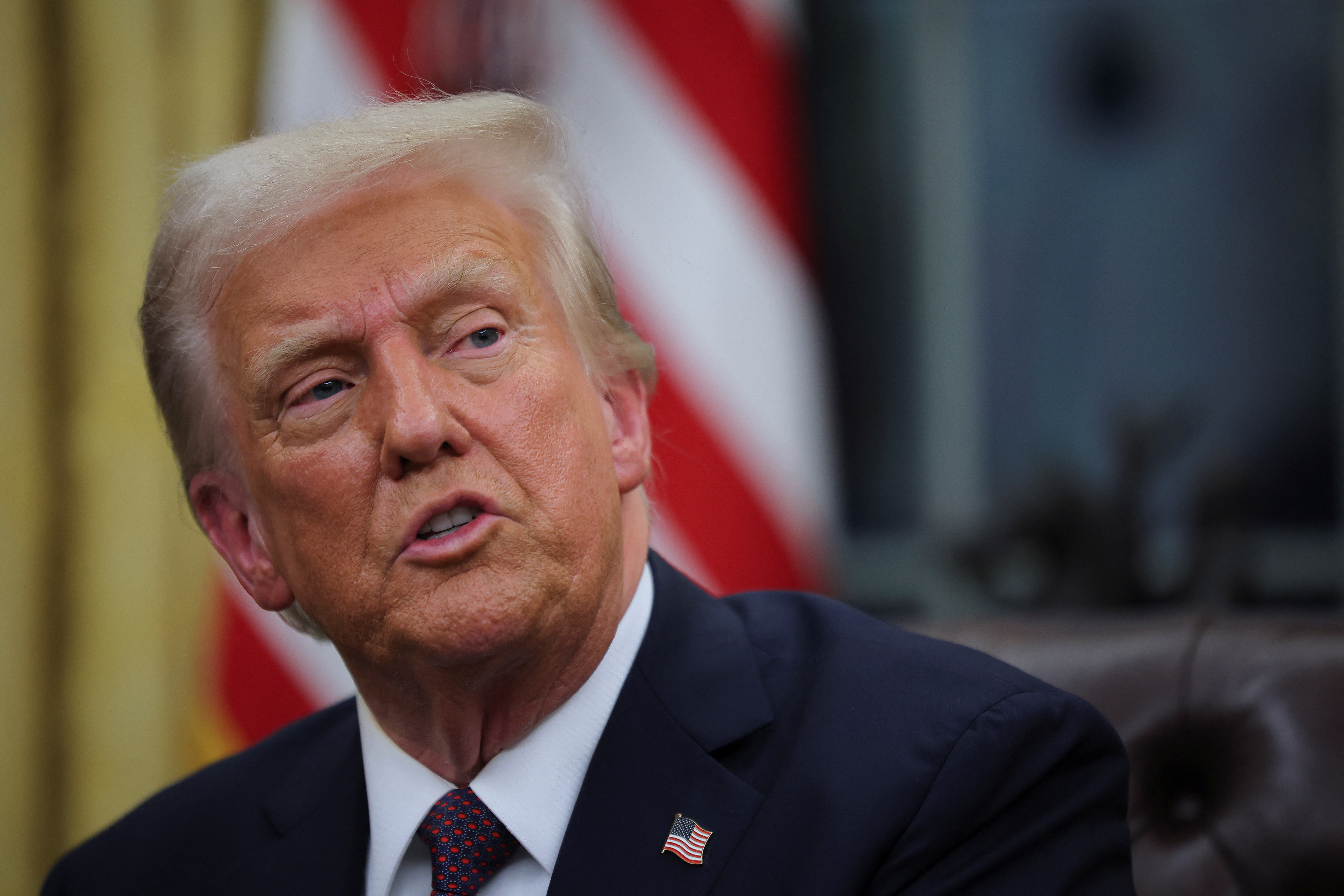
Donald Trump spent three and a half hours at Walter Reed National Military Medical Center on Tuesday for a medical evaluation, emerging to declare on social media that everything checked out "PERFECTLY." The pronouncement, arriving just weeks before his 80th birthday, aims to project absolute vitality as he governs as the oldest sitting president in American history. Yet, the choreography of the visit reveals a widening gap between carefully managed political optics and the unavoidable realities of geriatric medicine. The official narrative of flawless health glosses over a series of documented physical symptoms and an increasingly irregular schedule of diagnostic screenings.
Beneath the celebratory social media posts lies a long-standing structural flaw in American governance. The public relies entirely on a self-reported, heavily filtered summary of the commander-in-chief’s physical fitness. There is no law requiring a president to undergo an exam, let alone publish the findings. What the electorate receives is not a clinical chart, but a political document designed to project strength ahead of the upcoming midterm elections.
The Discrepancy in the Diagnostic Calendar
The White House billed Tuesday's visit as a routine annual medical and dental assessment. Trump himself immediately contradicted this characterization, labeling it a "6-month physical" in his public statements. This terminological confusion is part of a broader pattern of irregular medical scheduling that has characterized his second term.
A standard preventive care timeline for an octogenarian typically involves a single comprehensive annual exam, supplemented by targeted follow-ups. Trump's clinical calendar has been far more compressed. He underwent a scheduled annual examination in April 2025. Just six months later, in October 2025, he returned to Walter Reed for an unannounced visit. The administration initially labeled that October trip a routine follow-up, but later acknowledged that the president underwent a computed tomography scan to review his cardiovascular and abdominal health.
Frequent trips to a military hospital for advanced imaging suggest a diagnostic reactivity that sits uncomfortably with the official line of "exceptional health." Healthy individuals do not generally require repeated, semi-annual deep-tissue imaging and extensive laboratory panels to confirm they are well.
Observable Symptoms and the White House Explanations
While the president's political team insists he possesses the stamina of a man decades younger, several visible physical ailments have emerged over the past year. These signs have drawn intense scrutiny from independent medical observers who are forced to evaluate the president from afar.
Chronic Venous Insufficiency
Last summer, the White House confirmed that Trump had been diagnosed with chronic venous insufficiency. This condition occurs when the tiny valves inside the leg veins weaken, failing to pump blood efficiently back up toward the heart. The diagnosis followed repeated public appearances where observers noted pronounced swelling in the president's lower legs, ankles, and feet.
http://googleusercontent.com/image_content/215
While the condition is common among older adults, it requires active management. Prolonged standing, frequent long-distance travel on Air Force One, and a lack of cardiovascular exercise can exacerbate the pooling of fluid, leading to severe cramping, skin changes, and an increased risk of complications.
Hand Bruising and Anticoagulation
Frequent, dark bruising on the president's right hand has also become a regular fixture of his public appearances, occasionally obscured by cosmetic makeup. White House Press Secretary Karoline Leavitt dismissed the marks as the benign byproduct of vigorous handshaking on the campaign trail and during official duties.
However, White House physician Sean Barbabella later offered a more clinical explanation, attributing the bruising to the president's daily aspirin regimen. Aspirin acts as an antiplatelet agent, thinning the blood to lower the risk of a heart attack or stroke. In an individual approaching 80, even minor trauma or everyday friction can cause blood to leak from fragile capillaries into the surrounding tissue, creating conspicuous hematomas.
The Mystery of the Neck Rash and Fatigue
Compounding these visible signs was a blotchy red rash observed on the president's neck during a recent Oval Office event, alongside repeated instances where he appeared to close his eyes for extended periods during high-level meetings. The administration has steadfastly denied that the president is dozing off, attributing these moments to intense concentration. Nevertheless, a recent poll indicates that fewer than half of American adults believe the president possesses the physical health or mental sharpness required to execute the duties of the office effectively.
The Fiction of Cardiac Age
To counter skepticism, Captain Barbabella released a memo following the late 2025 exams asserting that Trump's "cardiac age" was roughly 14 years younger than his chronological age. This metric, derived from electrocardiogram data and cardiovascular stress models, is highly malleable.
In clinical practice, cardiovascular vitality is heavily influenced by lifestyle factors. The president has long made light of his aversion to traditional exercise, joking during a recent event that his primary physical activity consists of walking the golf course—but only when he chooses not to use the cart. His affinity for fast food, well-done steaks, and Diet Coke is equally well-documented.
While genetics can provide a powerful shield against high cholesterol and arterial plaque, claiming an octogenarian with a self-proclaimed aversion to exercise has the heart of a 65-year-old is a stretch of medical terminology intended for public consumption rather than peer-reviewed journals. It recalls the first-term pronouncements of Dr. Ronny Jackson, who famously declared that Trump had "incredible genes" and could live to be 200 years old if he changed his diet.
The Cognitive Screening Shield
Much of the political defense surrounding the president's health centers on his performance on standardized cognitive assessments. Trump has frequently boasted about scoring a perfect 30 out of 30 on the Montreal Cognitive Assessment, both in 2018 and again during his 2025 evaluations.
The MoCA is not an IQ test, nor is it designed to measure executive function, strategic vision, or the ability to process complex geopolitical data under stress. It is a basic screening tool used by neurologists to detect early signs of mild cognitive impairment, Alzheimer's disease, and dementia.
+-----------------------------------------------------------------+
|                  Montreal Cognitive Assessment                  |
|                         (MoCA) Focus Areas                      |
+-----------------------------------------------------------------+
|  * Alternating Trail Making (Drawing lines between numbers/letters) |
|  * Visuospatial Skills (Drawing a clock face, copying a cube)   |
|  * Confrontation Naming (Identifying pictures of animals)        |
|  * Immediate Memory Recall (Repeating a list of five words)     |
|  * Attention and Concentration (Tapping at specific letters)    |
|  * Language Fluency (Naming words starting with a specific letter)|
|  * Abstraction (Finding commonalities between two objects)      |
|  * Delayed Recall (Recalling the initial word list after time)   |
|  * Orientation (Stating the exact date, month, year, and city)  |
+-----------------------------------------------------------------+
Passing the MoCA simply means the patient does not currently exhibit gross neurological deficits. Using a perfect score on a screening test meant to identify cognitive decline as proof of superior presidential fitness is a misapplication of the medical instrument.
The Transparency Deficit
The fundamental issue highlighted by Tuesday's three-hour visit to Walter Reed is the complete lack of institutional transparency governing presidential health. Under the current framework, the White House physician answers to the president, not the public. The executive retains absolute veto power over every line, data point, and laboratory value included in the public release.
Bioethicists have long argued that this arrangement creates an inherent conflict of interest. A White House physician is a military officer whose commander-in-chief can dictate the parameters of medical disclosure. If a routine colonoscopy reveals a polyp, or if a blood panel indicates elevated tumor markers, there is no mechanism to force that information into the light unless the president consents.
The public is left to parse curated memos and social media declarations of perfection, while independent specialists warn that an aging leadership class demands a more rigorous, independent standard of medical review. Until an independent medical board is tasked with evaluating the health of the executive branch, the annual physical will remain a tool of political theater rather than an exercise in civic accountability.