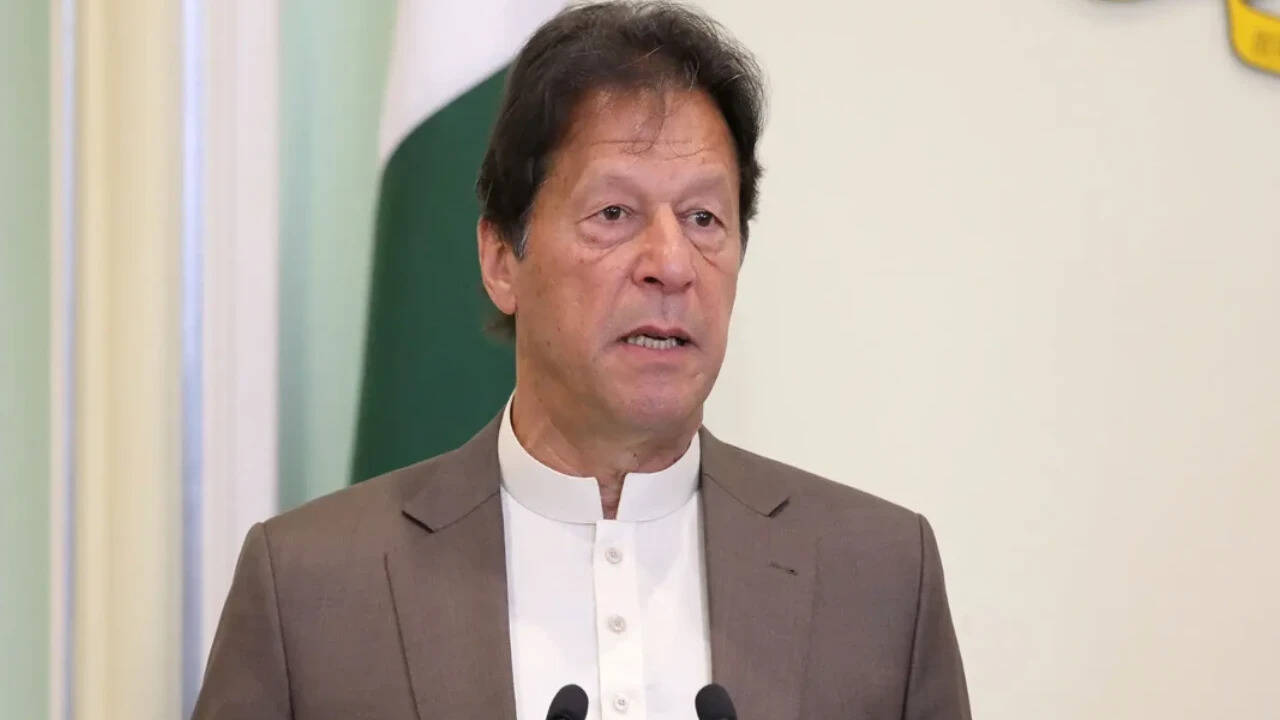
The mainstream media has fallen in love with a predictable, dramatic script: Imran Khan’s Pakistan Tehreek-e-Insaf (PTI) is launching nationwide protests against "extreme brutality," and this street power will force the establishment's hand to release the former prime minister.
It is a captivating narrative. It is also entirely wrong.
The belief that massive street rallies can fundamentally break the structural gridlock of Pakistani politics is a lazy consensus. Commentators, activists, and foreign observers look at the massive crowds PTI can summon and mistake noise for leverage. Having analyzed the mechanics of South Asian power structures for over a decade, I have watched political parties repeatedly burn their best assets on the pyre of pointless street agitation.
PTI’s leadership is making a classic, fatal error. They are treating a deep structural and judicial crisis as if it were a simple public relations battle.
The Street Power Fallacy: Why Crowds Do Not Equal Power
The standard political playbook says that if you get enough angry people into the streets of Islamabad, Lahore, and Karachi, the government will capitulate. This is a fundamental misunderstanding of how the Pakistani state operates.
In a hybrid democracy, the currency of real power is not popularity; it is institutional resilience.
- The asymmetry of force: A highly centralized state apparatus possesses an almost infinite capacity to absorb and neutralize unstructured street protests. Tear gas, shipping containers, cellular blackouts, and targeted anti-terror laws are highly effective tools that can disperse any crowd over a long enough timeline.
- The exhaustion cycle: Street protests require immense logistical energy. Activists must travel, feed themselves, risk arrest, and face physical harm. The state, funded by taxpayers, can play the waiting game indefinitely.
- The middle-class bottleneck: PTI's core demographic is the urban middle class. While highly vocal on social media and capable of showing up for festive weekend rallies, this demographic has a incredibly low tolerance for sustained, violent state crackdowns. They are not seasoned, hardened union workers or ideologically militant cadres. When the baton charges start and the internet goes down, the mobilization collapses.
Imagine a scenario where a corporate CEO tries to fight a hostile board takeover by hosting a massive pep rally with the factory staff. The rally might look great on the evening news, but the board members in the closed-room meeting still hold the legal proxies and the debt covenants. PTI is holding a pep rally while its opponents are rewriting the corporate bylaws.
The Judicial Illusion: Hoping for a Savior in Robes
Another pillar of the current PTI strategy is relying on judicial intervention. The party believes that if they create enough public pressure, the courts will feel emboldened to strike down the charges against Khan and order his release.
This ignores the reality of judicial politics in developing democracies.
+-----------------------------------------------------------------+
|                    THE POWER DYNAMICS OF THE STATE              |
+-----------------------------------------------------------------+
|                                                                 |
|   [Popular Will / Rallies]  --->   Has zero formal veto power   |
|                                                                 |
|   [Judicial System]         --->   Highly vulnerable to         |
|                                    institutional pressure       |
|                                                                 |
|   [Executive / Establishment] ->   Holds the physical monopoly  |
|                                    on force and administration  |
+-----------------------------------------------------------------+
The judiciary does not operate in a vacuum. Judges are acutely aware of the limits of their own enforcement mechanisms. A supreme court ruling is only as powerful as the police force willing to execute it. When the executive branch and the security apparatus are aligned against a political figure, the judiciary almost always finds a way to compromise, delay, or pivot.
Relying on the legal system to deliver a political revolution is a strategy born of desperation, not calculation.
Dismantling the "People Also Ask" Assumptions
To truly understand why the current approach is doomed, we have to dismantle the flawed assumptions that dominate the public discourse.
"Can protests force a government to hold early elections?"
Historically, almost never—unless the establishment has already decided to dump the sitting government. In 2014, PTI held a record-breaking 126-day sit-in (dharna) in Islamabad. It was highly disruptive, incredibly well-funded, and completely failed to force the resignation of then-Prime Minister Nawaz Sharif. The government survived because the key institutional players decided that allowing a street mob to dictate terms would set a dangerous precedent. The exact same logic applies today.
"Isn't international pressure PTI's best weapon?"
This is a fantasy. Western capitals, particularly Washington and London, view Pakistan through a highly transactional lens focused on regional security, nuclear assets, and geopolitical stability. They prefer a predictable, quiet administration—even one with questionable democratic credentials—over the chaotic uncertainty of a populist uprising. No foreign embassy is going to risk its bilateral state-to-state relationship to bail out a populist leader who built much of his recent platform on anti-Western rhetoric.
The Hard Truth: What Actually Works (and the Cost of Admitting It)
If street protests are a dead end, what is the alternative?
The only path to political survival in this landscape is transactional, behind-the-scenes negotiation. This is a bitter pill for Imran Khan's supporters to swallow. It lacks the romanticism of a revolution. It requires compromising with the very entities they have labeled as corrupt and illegitimate.
But politics is the art of the possible, not the preservation of ideological purity.
To get Khan out of prison, PTI needs to offer a deal that addresses the establishment's core anxieties. This means:
- A credible guarantee of political de-escalation: Lowering the temperature, ending the targeted social media campaigns against state institutions, and agreeing to play within the existing rules of the game.
- A shared economic roadmap: Demonstrating that the party will not sabotage crucial international bailouts or structural reforms just to score cheap political points.
- An acceptance of a managed transition: Acknowledging that a return to absolute power is off the table for the immediate future, and settling for a seat at the table instead of trying to flip it over.
The downside of this approach is obvious. It will alienate the radical wing of the party. It will make Imran Khan look like a pragmatist rather than a martyr. But the alternative is a slow, grinding war of attrition that PTI simply does not have the institutional resources to win.
The current leadership of PTI is selling their supporters a pipe dream. They are asking them to march into the teeth of a state apparatus that has spent decades perfecting the art of political suppression, promising that one more march, one more protest, one more hashtag will break the deadlock.
It won't.
Every leader who has ever successfully navigated a crack down in Pakistan’s history—from Benazir Bhutto to Nawaz Sharif—eventually understood that the way out of a cell is through a backroom deal, not a front-gate riot. It is time for PTI to stop marching down the street and start walking down the hallway where the real decisions are made.