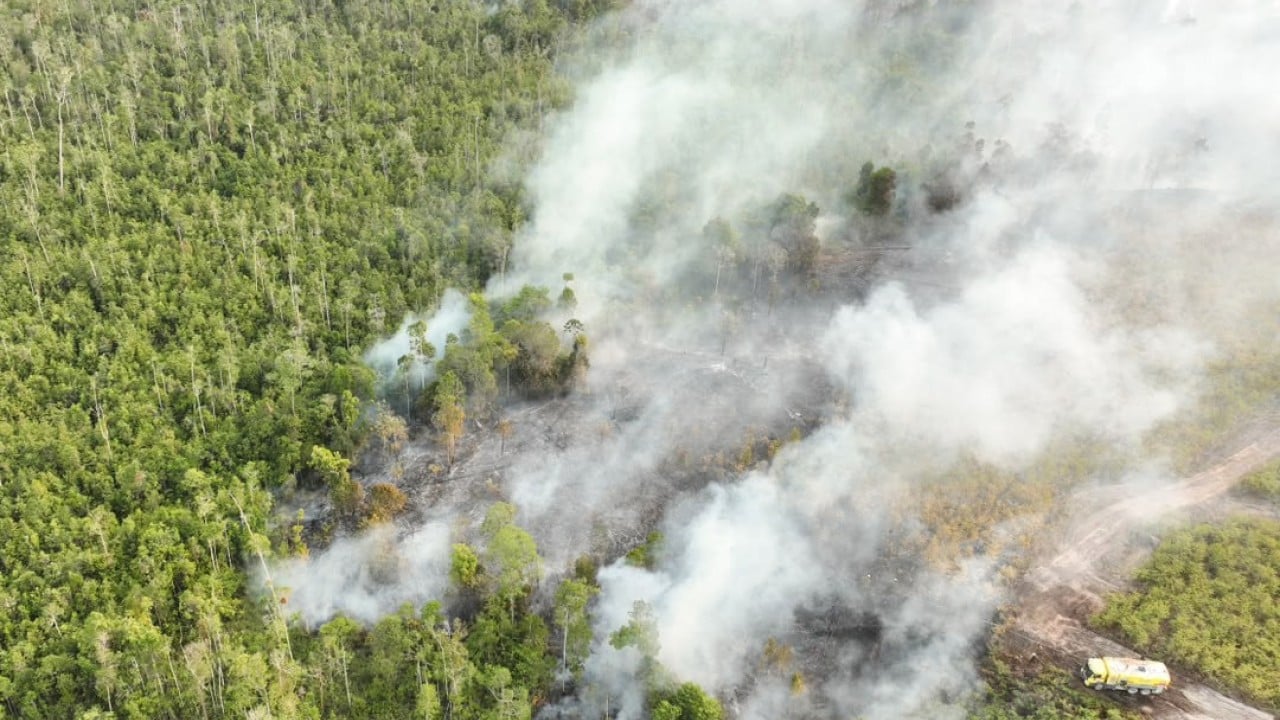
Thick, yellow smoke is choking parts of Southeast Asia again, and Indonesian authorities are locking people up to try and stop it. Police have arrested 72 suspects tied to deliberate forest and peatland fires across Sumatra and Borneo.
If you live in the region, you already know the routine. Every dry season brings the smoke, the stinging eyes, and the diplomatic tension with neighboring countries like Malaysia. But this time, the government claims it's chasing the money, not just the match-lighters.
Following the Money Behind the Flames
Let's be real. Small farmers don't burn thousands of hectares of land for fun. Mohammad Irhamni, director of special crimes at Indonesia's National Police Criminal Investigation Agency, pointed out the obvious motive during a Jakarta briefing. Burning is simply the cheapest way to clear land for commercial or smallholder plantations.
The recent arrests span 89 active cases across five provinces on Borneo and four on Sumatra. Investigators aren't just looking at the peasants caught with lighters. They are digging through bank records to see which corporate entities financed or ordered the clearing.
"We will not stop at the perpetrators on the ground," Irhamni stated. "We will determine who benefited from these activities and who was ultimately behind them."
Suspects caught on the front lines face up to 15 years in prison and heavy fines. Meanwhile, President Prabowo Subianto flew directly into Central Kalimantan—where over 7,600 hectares have scorched—to demand corporate accountability. At least four companies in West Kalimantan are already under direct investigation for potential permit revocations.
Why Peatland Fires Are a Nightmare to Fight
Putting out these fires isn't as simple as dumping water from a bucket. A massive driver of the current crisis is the combination of a prolonged dry season and an intensifying El Niño pattern.
When fires hit peatlands, they burn underground. Surface flames might look extinguished after a water drop, but hot embers smolder deep beneath the dirt for weeks. BNPB chief Suharyanto warned that only heavy, consistent rainfall can fully rewet the peat and stop the subsurface burn.
Because Mother Nature isn't cooperating yet, the state has deployed massive emergency measures:
- 52 total helicopters operating across Sumatra and Kalimantan for water-bombing and patrols.
- Aggressive cloud-seeding missions to force artificial rain over dry hotspots.
- Ground teams digging trenches and saturation canals to block fire paths.
The Cross-Border Toll
Smoke doesn't care about national borders. Dense haze drifted straight across the Malacca Strait into Malaysia, hammering the state of Sarawak. Air quality readings plunged into "very unhealthy" brackets, forcing the government to shut down nearly 600 schools and disrupt education for roughly 200,000 students.
When visibility drops to 10 meters in parts of South Sumatra and hotspots soar past 3,700 on Borneo alone, local economies grind to a halt. Flights get canceled. Respiratory clinics fill up with coughing children and elderly residents.
Indonesia has promised crackdowns before, and critics have often dismissed them as seasonal theater. Yet, with state leaders stepping in early and financial investigators tracking corporate ledgers, the real test is whether courts will actually hand down heavy penalties to the powerful entities pulling the strings behind the smoke.