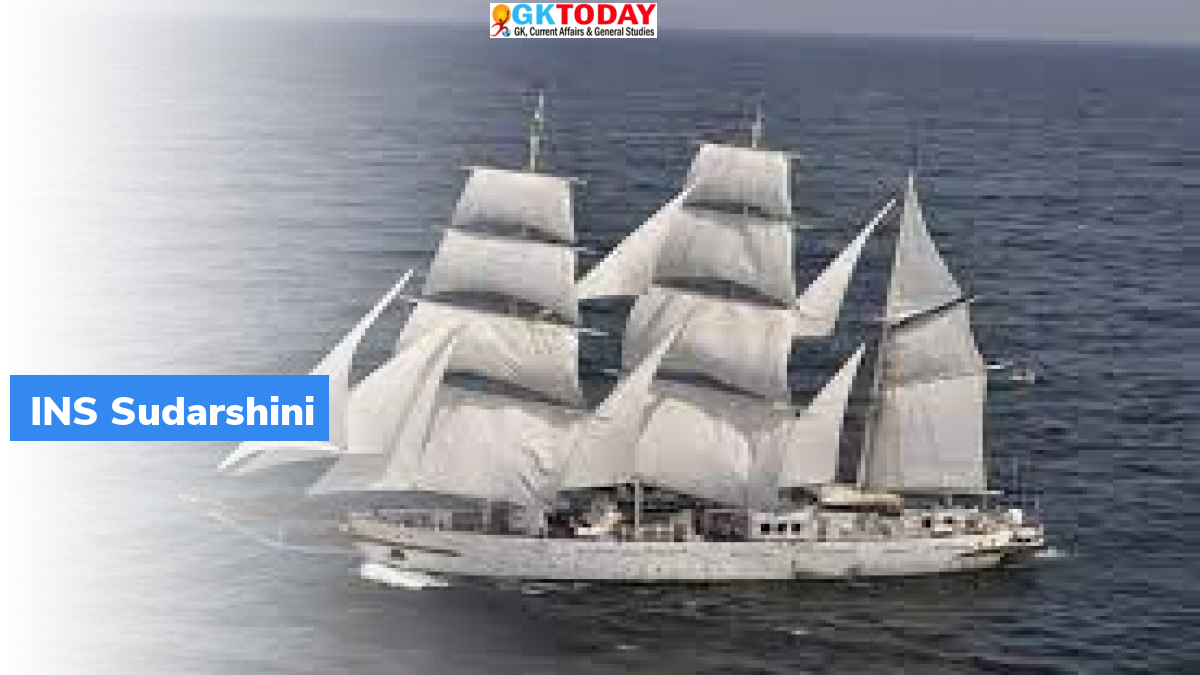
The departure of INS Sudarshini from an Italian port rarely makes the front page of mainstream global newspapers. It lacks the explosive drama of a carrier strike group deployment or the high-stakes friction of territorial standoffs in contested straits. Yet naval analysts tracking the subtle shifts of the Indo-Pacific understand that sail training vessels often reveal far more about long-term geopolitical intent than heavy destroyers ever will. This deployment, carrying the ethos of maritime partnership and the broader framework of MAHASAGAR, represents a calculated exercise in persistent diplomatic presence.
To understand why a training ship matters, one must look past the canvas sails and teak decks. Navies do not dispatch traditional barques across thousands of miles of open ocean simply to teach midshipmen how to handle rigging in a gale. These voyages serve as floating embassies. They project a very specific flavor of national power—one built on cooperation, joint training, and diplomatic reassurance rather than coercion.
The Architecture of MAHASAGAR
When India articulates its vision for regional security through initiatives like MAHASAGAR, acronyms often obscure the concrete mechanics on the ground and at sea. MAHASAGAR translates conceptually to high seas or ocean, but in diplomatic parlance, it functions as a high-level digital and operational security grid designed to foster maritime domain awareness among Indian Ocean littoral states.
Critics often dismiss these initiatives as bureaucratic talking shops. They point to the vast asymmetries in naval power between India and smaller island nations, arguing that security cooperation is merely a euphemism for regional hegemony. However, that perspective misses the fundamental constraint shaping modern naval strategy: no single nation, regardless of its industrial capacity or defense budget, can police the entire expanse of the Indian Ocean alone.
Transnational crime, illegal fishing, human trafficking, and environmental degradation do not respect maritime boundaries. When INS Sudarshini docks in foreign harbors, the port visits are working sessions. Officers exchange operational protocols, cadets build personal networks that last decades, and host nations experience a tangible demonstration of interoperability.
+-------------------------------------------------------+
|              MAHASAGAR Operational Pillars            |
+-------------------------------------------------------+
| 1. Maritime Domain Awareness (MDA) Information Sharing|
| 2. Capacity Building & Joint Training Exercises       |
| 3. Humanitarian Assistance & Disaster Relief (HADR)   |
| 4. Blue Economy Sustainable Development Frameworks    |
+-------------------------------------------------------+
The Logistics of Soft Power
Operating a sail training ship across global oceans is an expensive, logistically complex endeavor. Modern navies rely on automation, gas turbines, and digital navigation suites. Training young officers on a vessel powered primarily by wind requires a distinct set of operational disciplines. It forces personnel to understand the fundamental physics of the sea before they ever step onto the bridge of a guided-missile frigate.
Simultaneously, the diplomatic utility of such a deployment lies in its low threat profile. When a country sends a nuclear submarine or an amphibious assault ship to a foreign port, local populations notice, and regional rivals adjust their posture accordingly. A sail training ship elicits curiosity rather than alarm. It lowers the barrier for diplomatic engagement, allowing defense attachés to conduct quiet negotiations away from the glare of summit-level media coverage.
Consider the route taken by INS Sudarshini on its return journey from Europe. Every port call along the Mediterranean and the Red Sea corridor represents a diplomatic node. These stops allow the Indian Navy to maintain active communication lines with European partners who share concerns over freedom of navigation, while simultaneously reassuring African and Asian littoral states that supply chains will remain open and protected.
Beyond the Horizon
The real test of these maritime partnerships is not measured in joint press releases or the number of handshakes captured on camera. It is measured during crises. When a cargo vessel encounters engine failure in rough seas, or when a coastal community faces the devastation of an unseasonal cyclone, pre-existing personal and institutional relationships dictate the speed of the response.
INS Sudarshini is currently traversing waters that have grown increasingly volatile. Supply chain vulnerabilities, geopolitical posturing, and shifting alliances demand a level of diplomatic agility that traditional deterrence models struggle to provide. By investing in the human element of naval diplomacy—teaching young sailors how to work alongside international counterparts under the most demanding natural conditions—the Indian Navy is quietly laying the groundwork for future security architectures that will outlast current political administrations.
The sails will eventually be furled, and the midshipmen will graduate to command modern warships. But the operational habits formed during these long ocean crossings will shape how maritime security is managed across the hemisphere for the next thirty years.