Elon Musk wants to put massive AI compute capacity into orbit, and he is using SpaceX's balance sheet to pay for the silicon. Following reports and statements from Musk indicating that SpaceX has secured $40 billion in debt financing specifically earmarked for AI GPUs, Wall Street and Silicon Valley are confronting an unprecedented convergence of aerospace manufacturing and artificial intelligence infrastructure. The core premise is straightforward on paper yet staggering in execution. By borrowing against the cash flow and valuation of the world's dominant commercial launch provider, Musk is acquiring tens of thousands of high-end graphics processing units to power a new generation of orbital data centers and cross-pollinate his broader corporate empire.
For anyone who has tracked Musk's corporate maneuvers over the past two decades, the playbook looks familiar. Only the scale has mutated. Raising $40 billion in debt is not a standard venture capital round or a routine equipment lease. It is a sovereign-sized capital expenditure bet that ties the financial health of the premier private rocket company directly to the volatile economics of AI hardware depreciation.
The Mechanics of Borrowing $40 Billion Against Rockets
To understand how a private aerospace company secures $40 billion in debt, you have to look at what lenders actually value. Banks and institutional credit funds do not lend tens of billions of dollars on science fiction promises about Mars colonies or orbital server farms. They lend against predictable, recurring cash flow.
SpaceX has two distinct engines generating that credibility. First is the near-monopoly on commercial orbital launch cadence, driven by the reusable Falcon 9 and the heavy-lift capabilities of Starship. Second, and far more important to credit analysts, is Starlink. With millions of active subscribers globally paying monthly fees for low-Earth orbit satellite internet, Starlink has transformed SpaceX from a lumpy, contract-dependent defense and commercial launch contractor into a high-margin telecommunications utility.
When lenders underwrite a $40 billion credit facility, they are looking at Starlink's subscriber growth and SpaceX's multi-hundred-billion-dollar equity valuation as the ultimate backstop. Yet there is a structural mismatch here that seasoned credit analysts immediately spot.
Debt is unforgiving. Unlike equity investors, who can wait ten years for a moonshot to pay off, bondholders and institutional lenders demand scheduled interest payments regardless of technological hiccups. If SpaceX takes on $40 billion in debt at standard corporate yields—even at a conservative 7% to 8% interest rate—the company is signing up for roughly $2.8 billion to $3.2 billion in annual interest expenses alone, before paying back a single dollar of principal.
That money has to come from somewhere. Either the AI GPUs purchased with this debt must generate immediate, massive revenue, or Starlink's broadband profits will be siphoned off to service the interest on computer chips.
Why SpaceX Wants AI GPUs in the First Place
A decade ago, the idea of a rocket company buying $40 billion worth of graphics processing units would have sounded absurd. Today, it sits at the intersection of two overlapping strategies within the Musk ecosystem.
The first driver is terrestrial and immediate. Musk's artificial intelligence venture, xAI, is locked in a brutal capital arms race against OpenAI, Anthropic, and Google. Training frontier AI models requires colossal clusters of specialized silicon, primarily Nvidia's flagship architectures. Securing supply and financing for these clusters is the single biggest bottleneck in modern tech. By utilizing SpaceX's massive balance sheet and creditworthiness, the broader Musk network gains access to cheap, large-scale debt capital that a younger standalone AI startup could never raise on its own without giving up massive equity stakes.
The second driver is the long-term engineering vision that Musk has repeatedly championed—orbital data centers.
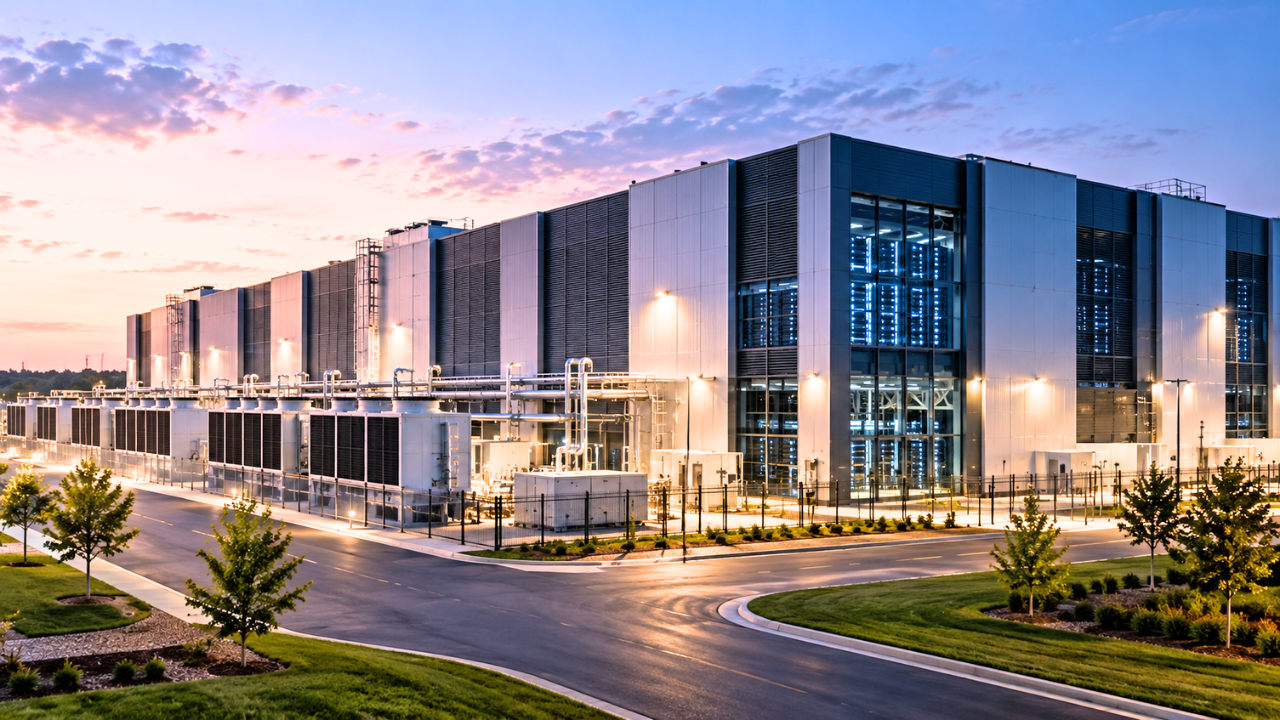
On Earth, building a gigawatt-scale AI data center is becoming an exercise in regulatory and physical frustration. AI clusters consume staggering amounts of electricity, straining municipal power grids to their breaking points. Getting utility interconnects approved in the United States or Europe can take up to five years. Cooling those chips requires millions of gallons of water or massive industrial chillers.
Space solves the power and real estate problems in a very literal way. In a sun-synchronous low-Earth orbit, solar arrays receive nearly continuous, unfiltered solar energy without atmospheric interference or nighttime interruptions. SpaceX already manufactures satellites at an assembly-line pace in Redmond, Washington, and possesses the only launch vehicle system—Starship—designed to put massive payloads into orbit at a fraction of historical costs.
If you integrate AI compute modules directly into next-generation satellites, you theoretically bypass terrestrial power grid bottlenecks entirely. The satellites process data in orbit and beam the results down via laser links and Starlink's existing mesh network.
The Brutal Physics of Orbital Compute
The financial engineering is bold, and the vision is compelling. The engineering reality, however, is unforgiving.
Anyone who has worked on radiation-hardened avionics or thermal management in vacuum environments knows that putting commercial AI GPUs into space is an absolute nightmare. Terrestrial data center GPUs—like Nvidia's H100, H200, or Blackwell series—are built on cutting-edge, ultra-dense semiconductor nodes. They are designed to sit in climate-controlled server racks on Earth, bathed in chilled liquid, protected by Earth's magnetosphere and atmosphere.
Put those same chips into low-Earth orbit, and three distinct physical enemies immediately attack them.
Heat Dissipation in a Vacuum
On Earth, data centers get rid of heat through convection—moving air or water across hot surfaces to carry thermal energy away. Space is a vacuum. There is no air. There is no water. The only way to shed heat in orbit is through thermal radiation, which is wildly inefficient compared to liquid cooling. A single high-end AI server rack can draw over 100 kilowatts of power, turning almost all of that electricity into heat. Radiating megawatts or gigawatts of thermal energy away from a satellite requires gigantic, fragile deployable radiator wings that add mass, complexity, and failure points to every spacecraft.
Cosmic Radiation and Bit Flips
Commercial AI chips are not radiation-hardened. In orbit, high-energy protons and heavy ions constantly bombard spacecraft. When a cosmic ray strikes a dense modern transistor, it causes a single-event upset—flipping a zero to a one in memory, corrupting calculations, or permanently frying delicate silicon pathways. While engineers can use software error-correction and physical shielding, shielding adds heavy mass, and radiation-hardened chips typically lag terrestrial GPUs by three to four generations in raw computing power.
The Maintenance Problem
This is the fatal flaw that keeps aerospace veterans awake at night. In a terrestrial data center in Virginia or Texas, when a GPU fails—and in a cluster of 100,000 chips, components fail every single day—a technician walks down the aisle, pulls the server blade, and swaps in a new one in fifteen minutes. In orbit, you cannot send a technician with a screwdriver. Once a satellite is launched, hardware upgrades and physical repairs are impossible.
The Depreciation Trap of Silicon Debt
Even if SpaceX engineers solve the thermal and radiation challenges through brute-force iteration, the financial structure of this deal carries a glaring hazard. Wall Street has a golden rule for debt financing—never fund a rapidly depreciating asset with long-term debt unless the cash flow payback is virtually instantaneous.
AI GPUs are the ultimate depreciating asset.
Unlike commercial aircraft, real estate, or fiber-optic cables, which retain utility and value for twenty to thirty years, an AI chip has a competitive lifespan of roughly twenty-four to thirty-six months. Every year, Nvidia and its competitors release new architectures that double or triple performance per watt. A GPU bought today for $30,000 or $40,000 will be worth a fraction of that in three years, not because it stops working, but because the electricity required to run it becomes uneconomical compared to newer silicon.
Consider a hypothetical example to see how the math breaks down. Suppose a company borrows $40 billion structured over a seven-year repayment schedule to buy top-tier AI processors. By year three, next-generation chips arrive on the market that perform the same AI inference tasks at one-quarter the cost. The older chips suddenly lose their pricing power. Their revenue-generating capacity plunges, yet the company still owes billions of dollars in principal and interest payments for another four years.
You are left paying off a mortgage on an asset that has become technologically obsolete.
Governance and the Musk Ecosystem Overlap
Beyond physics and depreciation schedules lies a thorny corporate governance question that institutional investors have wrestled with for years. SpaceX is a private corporation with its own distinct cap table, including outside venture firms, sovereign wealth funds, mutual funds like Fidelity, and thousands of rank-and-file employees holding stock options. Meanwhile, xAI is a separate corporate entity with a different group of investors.
When SpaceX takes on $40 billion in debt to purchase AI GPUs, who is the ultimate customer for that compute capacity?
If SpaceX builds out massive compute clusters—whether on the ground to run internal simulations and Starlink network optimization, or in orbit as a new commercial cloud service—the transaction sits cleanly within SpaceX's fiduciary boundaries. However, if SpaceX acts as the debt-raising vehicle to buy hardware that is predominantly leased or utilized by xAI, minority shareholders in SpaceX bear the downside financial risk of a $40 billion debt load while xAI shareholders capture the equity upside of the resulting AI models.
Musk has a long history of cross-pollinating his companies. Tesla engineers have consulted on SpaceX alloys; SpaceX has purchased Cybertrucks; Boring Company tunnels have been planned beneath Tesla factories. Usually, these transactions are small enough to pass as minor related-party deals. A $40 billion debt facility is entirely different. At that scale, any transfer pricing, compute-leasing agreements, or intellectual property sharing between SpaceX and xAI will face intense scrutiny from SpaceX's institutional investors and potentially federal regulators.
What This Means for Nvidia and the AI Supply Chain
For the broader semiconductor industry, SpaceX's $40 billion war chest confirms that the AI infrastructure boom has entered a phase where only balance-sheet titans can play.
The sheer volume of capital required to build frontier AI systems has priced out traditional startups. Only hyperscalers like Microsoft, Google, Amazon, and Meta—companies generating tens of billions of dollars in free cash flow every quarter—could previously write $40 billion checks for data center hardware. By unlocking the debt markets against SpaceX's valuation, Musk has effectively forced his way into the hyperscaler spending tier without having a legacy search engine or retail cloud monopoly to fund it.
For Nvidia and its supply chain partners—including Taiwan Semiconductor Manufacturing Company, SK Hynix, and server assemblers like Supermicro and Dell—this represents another massive wave of locked-in demand. A $40 billion allocation does not get spent overnight; it translates into multi-year purchase orders that lock up wafer capacity and high-bandwidth memory well into the future.
At the same time, it concentrates risk. When an increasing percentage of global semiconductor revenue is funded not by end-user software profits, but by massive debt issuances collateralized by adjacent industries like telecommunications and aerospace, the entire tech sector becomes sensitive to interest rates and credit market sentiment.
Watching the Burn Rate
History shows that betting against Elon Musk's ability to execute impossible engineering timelines is usually a losing trade. Critics laughed at reusable rockets until Falcon 9 dominated global launch markets. Skeptics dismissed Starlink as a bandwidth-constrained niche product until it became a multi-billion-dollar cash machine.
Yet the $40 billion GPU debt bet changes the margin for error. Equity funding allows a company to survive delays, blown-up prototypes, and shifting timelines; investors simply take a paper markdown and wait. Debt does not wait. The clock starts ticking the moment the wire transfers clear.
Between the brutal thermal laws of vacuum computing, the relentless three-year obsolescence cycle of AI silicon, and the heavy interest burden of a $40 billion credit line, SpaceX has tethered its future to the most volatile hardware market on Earth. Watch Starlink's subscriber margins and xAI's commercial revenue over the next eight quarters—if those cash flows do not scale fast enough to outrun GPU depreciation, the weight of that $40 billion debt will pull even the strongest rocket company back down to gravity.