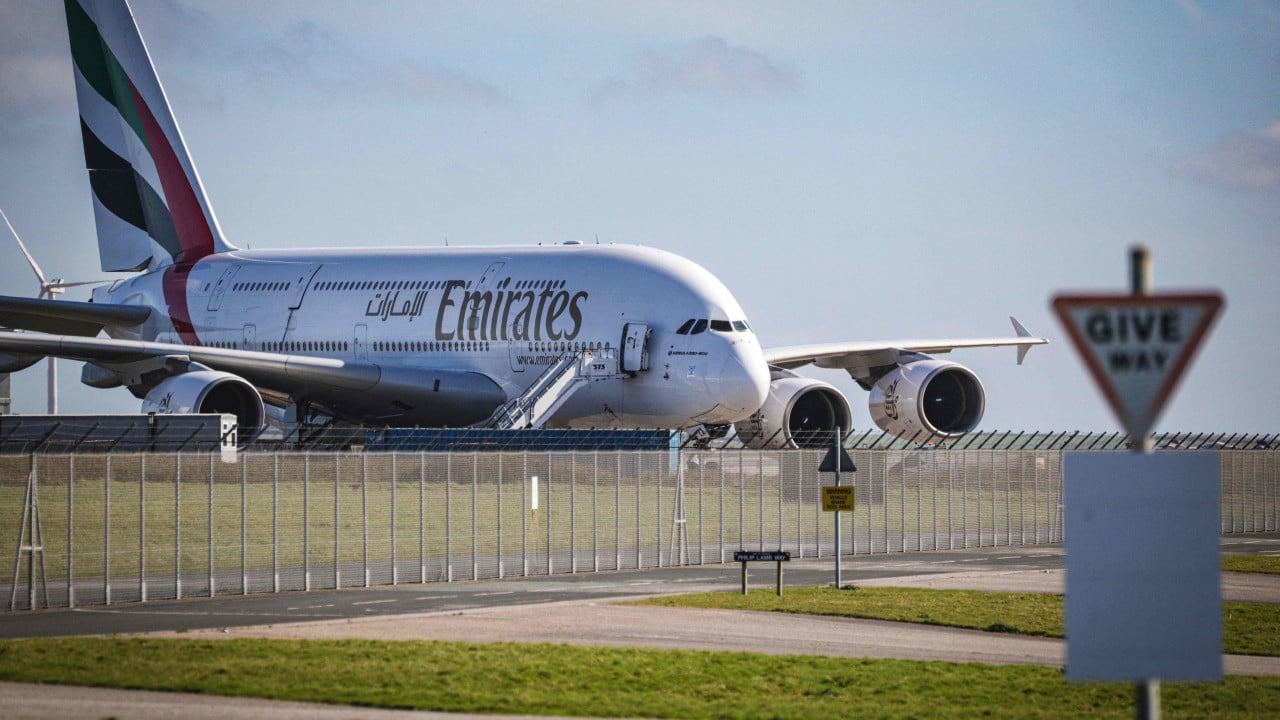
Airbus is scrambling to address a serious structural vulnerability in its flagship double-decker aircraft after engineers discovered micro-cracks inside the wing infrastructure of multiple superjumbos. The European Union Aviation Safety Agency issued an emergency airworthiness directive ordering immediate non-destructive testing on 16 specific A380 airframes operated by Emirates and Qantas. Regulators confirmed that the metal fatigue surfaced in the wing-spar assembly, the primary structural beam responsible for carrying the immense aerodynamic load during flight. If left unchecked, these fractures threaten to compromise the overall structural integrity of the wing, exposing a deeply uncomfortable reality regarding the long-term aging profile of the world's largest passenger jet.
This is not a simple maintenance hiccup. It represents a fundamental challenge to the economic and operational math of the superjumbo fleet.
The Anatomy of the Spar Fracture
To understand why safety regulators panicked, you have to look past the aluminum skin of the aircraft and look at the internal skeleton. The wing spar is effectively the spine of the wing. It is an immense, solid metal girder running from the fuselage out to the wingtip. When a 500-ton aircraft takes off, the wings flex upward, shifting the entire weight of the hull onto these internal beams.
[ Fuselage ] ===( Wing Mid Spar Area )================> [ Wingtip ]
                        ||
             [ Cracks detected between ]
             [    Ribs 14 and 38       ]
According to technical specifications released regarding the directive, inspectors found micro-fractures in three distinct zones: the Wing Mid Rear Spar, the Inner Mid Front Spar, and the Outer Mid Front Spar. These defects are buried deep between structural aluminum ribs 14 and 38. They are invisible to the naked eye. Technicians must use high-frequency eddy-current testing and ultrasonic scanners to find them, relying on electromagnetic fields to map tiny interruptions in the grain of the metal.
Aerospace engineers design these components with high-strength aluminum alloys, specifically formulated to withstand millions of flex cycles. However, the sheer scale of the A380 works against it. The leverage exerted by a 261-foot wingspan creates localized stresses that defy classic simulation models. When an aircraft encounters turbulence, these spars endure rapid, alternating cycles of tension and compression. Over a decade of heavy long-haul flying, those cycles translate into metal fatigue.
A Worrying Pattern of Structural Fragility
Veterans of the aviation industry are experiencing an intense sense of deja vu. This is not the first time the giant jet has suffered from wing vulnerabilities.
In 2012, Airbus was forced to enact a wildly expensive global repair program after inspectors discovered cracks in the standard L-shaped brackets, known as rib feet, that attach the outer wing skin to the internal skeleton. That crisis cost the manufacturer hundreds of millions of dollars and required structural retrofits across the global fleet. Airbus engineers blamed the 2012 issue on manufacturing stresses and material choices, shifting away from certain aluminum-zinc alloys in later production batches.
The current crisis is significantly more alarming. Rib feet are secondary attachment points, but the wing spar is a primary load-bearing asset. You can fly safely with a compromised bracket; you cannot fly safely with a failing spar.
The targeted nature of this directive points to a specific production window. Out of the 16 planes flagged for urgent evaluation, 15 belong to Dubai-based Emirates, while a single unit is operated by Australia's Qantas. Regulators have explicitly tied the order to a shared "production history," suggesting a batch-specific variation in manufacturing execution, raw material purity, or component fastening techniques.
Five of the Emirates superjumbos are deemed so high-risk that they have been ordered into maintenance bays immediately, forbidden from commercial flight until they receive clearance. The remaining 11 aircraft face a strict deadline, requiring comprehensive testing before they log their 13th subsequent flight or 25 flight cycles.
The Operational Nightmare for Mega Airlines
The timing of these structural findings presents a major headache for long-haul carriers, particularly Emirates. The Dubai carrier has anchored its entire global hub-and-spoke strategy on the A380. They operate more than half of all active superjumbos in existence.
Pulling multiple flagship airframes out of rotation on 48 hours' notice shatters tightly optimized flight schedules. The A380 cannot be easily replaced by a smaller widebody without leaving hundreds of high-paying passengers stranded at the gate. If ultrasonic testing reveals deep sub-surface cracking on those five immediate-risk planes, the fix will not involve a simple aluminum patch. It will require cutting open the wing skin, constructing heavy shoring scaffolds, and replacing internal structural segments. That is an intensive engineering project that takes an aircraft out of service for weeks, if not months.
The financial fallout extends far beyond the immediate repair bills, which Airbus will likely have to subsidize. It compromises the residual value of these aging giants. Airlines that had planned to fly their superjumbos deep into the 2030s must now factor in the cost of highly invasive, recurring structural monitoring.
The Technical Reality of Aging Superjumbos
Aviation regulators generally manage structural risks through a philosophy known as damage tolerance. Modern passenger jets are built to ensure that if a crack forms, it will propagate slowly enough to be caught during standard, routine heavy maintenance checks before it endangers the aircraft.
The issuance of an emergency directive indicates that the regulator no longer trusts standard maintenance intervals to catch this specific defect. It implies the cracking is either developing faster than anticipated or occurring in an area that standard visual checks bypass entirely.
The aluminum alloys used in these older A380 variants are known to be vulnerable to environmental factors over time. For instance, planes that spend significant periods parked in high-humidity or high-salinity coastal environments can experience accelerated hydrogen environmental assisted cracking. When an aircraft sits idle, microscopic moisture can cause hydrogen atoms to diffuse into the metal lattice, making the alloy brittle and prone to fracturing under load. Given that many global A380s spent prolonged periods in storage during the early 2020s, the industry may just be beginning to see the delayed structural bill for that idle time.
Airbus faces a delicate balancing act. They must rapidly engineer a standardized structural sleeve or modification kit to reinforce the affected spars, while reassuring global operators that this issue is isolated to a narrow 16-plane manufacturing batch. If ongoing testing reveals similar micro-fractures spreading into younger serial numbers, EASA will have no choice but to expand the directive, potentially threatening a wider grounding of the world’s largest passenger fleet.