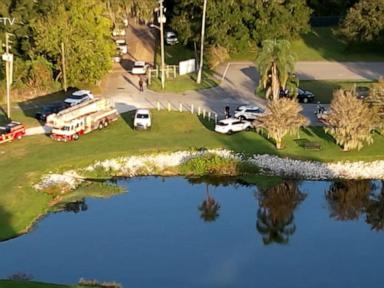
Seventy-one-year-old Steven Hamilton was killed on October 16, 2026, while fishing along the shoreline of Dr. Bradford Memorial Park in Winter Garden, Florida. Wildlife officials and trappers removed an 11-foot, 8-inch alligator linked to the attack from ponds connected to Lake Apopka.
Attacks remain statistically rare across a state home to roughly 1.3 million alligators. Still, treating Hamilton's death as an isolated freak accident misses the real structural friction driving deadly human-alligator collisions across Central Florida.
The Shoreline Illusion in Suburban Parks
Parks like Dr. Bradford Memorial Park are engineered for human leisure on the exact edges where apex predators hunt. A pedestrian walkway called Gator Bridge and fishing banks set right next to ponds tied into Lake Apopka invite people to treat wild habitat like a manicured backyard.
Water is rarely neutral territory. In Florida, nearly half of documented fatal alligator encounters occur at the water's edge or in shallow margins rather than deep open water. That first strip of bank and shallow water acts as an ambush zone where visibility drops and reaction time vanishes.
An alligator riding low in dark or rippled water can hold nearly its entire body out of sight. Standing near the bank with fishing gear, casting lines, or landing fish adds sensory cues that mimic prey activity.
| Risk Factor | Operational Reality | What Visitors Often Miss |
|---|---|---|
| Shoreline Proximity | Shallow banks and edges see frequent ambush behavior. | Calm water looks peaceful even when a large predator is staged nearby. |
| Animal Size | Alligators approaching or exceeding 11 to 12 feet carry far higher lethality. | Older, larger males hold territory in productive lakes and canals. |
| Late Afternoon Light | Dusk and late day shift lighting and predator activity. | Shadows on the water mask movement along grassy or muddy banks. |
| Suburban Growth | More residents and anglers share historic wetland corridors. | Familiarity breeds complacency when sightings happen every week. |
What the Numbers Actually Show
Official press releases tend to repeat two lines whenever a tragedy strikes. They remind readers that Florida has tracked unprovoked bites since 1948, with 500 unprovoked bites and 32 fatalities recorded prior to the late-June 2026 attack, and they stress that fatal outcomes are uncommon.
Both statements are true on paper. Both can also lull people into misreading risk.
Between 2016 and 2025, Florida logged 116 unprovoked bites and 10 fatalities—meaning roughly one-third of all recorded fatal attacks since 1948 happened in a single ten-year stretch. Population growth and heavier recreational traffic near waterways put more people into contact with large reptiles every year.
Size changes the math immediately. A 6-foot alligator can inflict a severe bite, yet an animal near 12 feet—like the 11-foot, 8-inch reptile taken after the Winter Garden attack—possesses jaw force and dragging power that turn a brief grab into a life-or-death struggle.
Familiarity is the quietest hazard in Florida outdoor recreation; seeing alligators every week does not make the next one predictable.
Older adults face compounded vulnerability during water-edge encounters. Reduced mobility, balance shifts on sloped banks, or getting pulled off footing near deep drop-offs can turn a sudden lunge into a catastrophe before help can reach the scene.
The Policy Trade-Off Behind Nuisance Management
After a fatal attack, public frustration almost always turns toward wildlife agencies. Residents ask why a large alligator was still in a public park pond or why proactive culling isn't blanket-applied across every neighborhood waterway.
The Florida Fish and Wildlife Conservation Commission operates a nuisance alligator program that removes thousands of problem animals each year—over 184,000 nuisance alligators were killed between 1997 and 2021 alone. Relocation is rarely a clean fix because displaced alligators frequently try to return home and become harder to catch a second time.
Even aggressive removal has hard limits. Lake Apopka and connected basins support vast numbers of alligators across expansive marshes and channels. You cannot sterilize a major Florida wetland of its native top predator without hollowing out the ecosystem or running into endless turnover as neighboring animals move into open territory.
Critics of current management argue that high-traffic municipal parks with fishing access deserve tighter buffers, clearer hazard signage, and faster response thresholds when large reptiles linger near anglers. Defenders of existing policy counter that resources must stay focused on confirmed nuisance reports and public education rather than chasing every large gator in healthy habitat. Neither side has a silver bullet, because every pond in Central Florida sits at the intersection of ecological recovery and suburban convenience.
Practical Adjustments That Change Odds
Safety advice fails when it sounds like a sermon. Concrete habits work better when they match how accidents actually happen.
- Keep real margin from the water: Treat the bank edge as active habitat, not a patio.
- Rethink bank fishing habits: Cleaning catch near the shore, leaving fish scraps around banks, or standing inches from steep drop-offs draws attention.
- Watch the clock and light: Late afternoon and dusk reduce your ability to spot a submerged head in dark or choppy water.
- Report bold behavior early: Contact the FWC nuisance alligator hotline at 1-866-FWC-GATOR when an alligator shows aggression or lingers unusually close to people.
To make the hazard concrete, consider a hypothetical scenario where an angler fishes alone near a low-hanging bank at 5:00 p.m. beside a pond linked to a major lake. One step onto slick mud or a sudden tug at the shoreline puts the person within reach of an ambush strike before anyone nearby realizes trouble has started.
Winter Garden's tragedy shows that even well-known local parks carry real risk when people let routine lower their guard. Respecting the water's edge is the cheapest insurance anyone on a Florida shoreline can carry.
Officials discuss alligator attack at Winter Garden park
This video provides official remarks and initial details from authorities responding to the fatal alligator attack at Dr. Bradford Memorial Park in Winter Garden.