When federal bureaucrats sit down in Canberra to draft projections stretching forty years into the future, they perform a remarkable magic trick. They model population aging, tax receipts, healthcare burdens, and productivity curves with meticulous precision. Yet, they manage to draw a complete blank on the financial devastation wrought by planetary heating. Economists and climate scientists are sounding alarms, declaring it profoundly negligent to project the nation's financial trajectory while ignoring the quantifiable economic damage of the climate crisis.
For decades, official forecasting treated environmental collapse as an external footnote kept safely outside the spreadsheet. That intellectual laziness is no longer tenable. As recent data from national risk assessments and independent economic think tanks reveals, the physical costs of extreme weather, rising sea levels, and ecosystem degradation are actively cannibalizing public budgets and private wealth. To model an economy in 2066 without factoring in the cost of ecological breakdown is not just an oversight. It is a deliberate falsification of reality.
The Fiction of the Forty Year Spreadsheet
Every few years, the federal government publishes an intergenerational report designed to map out the fiscal health of the country for generations yet unborn. These documents are heavy with charts, tables, and solemn declarations about fiscal discipline. They project economic growth out to the middle of the century as if the baseline conditions of the twentieth century will quietly persist.
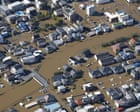
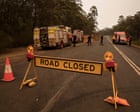
This assumption is absurd on its face. Australia sits on the front lines of global heating. Prolonged droughts, catastrophic bushfires, and torrential floods are not random anomalies anymore. They are structural features of the contemporary climate. When financial models pretend these events carry zero systemic cost to GDP, they construct a fairy tale.
Consider a hypothetical example to illustrate the bookkeeping failure. Imagine a coastal town where municipal infrastructure is repeatedly washed out by storm surges. Under traditional economic accounting, rebuilding that infrastructure counts as a positive contribution to gross domestic product because money changes hands and construction occurs. The model registers economic activity. It completely fails to register the capital destruction, the lost productivity, the abandoned assets, and the compounding debt required to fund the repairs. The ledger records a triumph while the community bleeds capital.
Treasury officials defend their omissions by arguing that climate shocks are too difficult to model with actuarial certainty over long horizons. That excuse wears thin when private insurers, credit rating agencies, and international banks are already pricing physical climate risks into their lending portfolios. If commercial entities can model default risks driven by fire and flood, a national government has no excuse for pleading ignorance.
The Insurance Spiral and Property Valuations
The fracture line is already visible in the domestic insurance market. Premiums across high-risk regions have surged beyond the reach of ordinary households. In many parts of northern and coastal Australia, home insurance policies now cost more than four weeks of gross household income. This is not a temporary spike caused by a bad season. It is a permanent structural repricing of risk.
When insurance becomes unaffordable, mortgages become uninsurable. When mortgages become uninsurable, property markets freeze and asset values plummet. National assessments project that trillions of dollars in property value face severe devaluation over the coming decades as climate hazards shift from moderate risks to permanent threats.
Yet, these multi-billion-dollar shocks vanish when they reach the macro-level economic projections used to set fiscal policy. The models assume property values will rise steadily alongside population growth. They ignore the reality that entire postcodes will become financial dead zones where borrowing money to buy a home is mathematically impossible.
The disconnect between physical vulnerability and financial planning exposes a deep institutional cowardice. Bureaucrats prefer the comfort of steady-state assumptions over the unsettling reality of compounding crisis. They draft policies for a country that no longer exists, leaving citizens and local councils to absorb the fallout without institutional backing.
Passing the Bill to Generation Alpha
The most insidious aspect of this willful blindness is how it shifts the financial burden onto the young. Economists who model intergenerational equity point out that children born today will inherit a depleted asset base coupled with astronomical adaptation costs.
Independent analysis indicates that a business-as-usual trajectory leaves the youngest generations facing hundreds of thousands of dollars in lifetime economic damages compared to a stable climate baseline. These costs manifest through higher taxes for disaster relief, degraded public infrastructure, soaring health expenditures driven by extreme heatwaves, and diminished superannuation returns as corporate portfolios take hits from stranded fossil fuel assets.
When governments issue reports claiming that future generations will be twice as wealthy simply because GDP per capita creeps upward, they obscure the distribution of that wealth. A higher nominal GDP means very little if the baseline cost of basic survival, housing protection, and healthcare scales exponentially faster than wages.
The debt being accumulated is not just financial. It is ecological and structural. Every dollar spent on reactive emergency response after a catastrophe is a dollar stolen from preventative infrastructure, education, or transition funding. By refusing to tally the true cost of inaction today, policymakers guarantee that future administrations will face emergency scenarios with depleted treasuries.
The Political Calculus of Denial
Why do sophisticated treasury departments continue to publish half-blind economic forecasts? The answer lies in the short-term incentives of electoral politics.
Admitting the full scale of the climate crisis requires confronting uncomfortable truths about dominant industries. It means acknowledging that continued expansion of fossil fuel extraction directly undermines the long-term stability of the financial system. It requires telling voters that suburban expansion into high-risk flood plains or bushfire zones must halt.
Politicians hate delivering hard truths. They prefer the comforting illusion of uninterrupted growth. Consequently, bureaucratic modeling bends to political convenience. Reports are shaped to validate current policy rather than interrogate future hazards.
This dynamic creates a dangerous feedback loop. Because official reports omit climate damages, politicians claim there is no empirical basis for radical intervention. Because there is no radical intervention, the physical impacts accelerate, compounding the hidden liabilities. The system traps itself in a cycle of willful ignorance, mistaking silence for safety.
Breaking the Cycle of Fiscal Evasion
Correcting this systemic failure requires a complete overhaul of how national wealth and risk are calculated. Economic projections must incorporate dynamic climate modeling that accounts for asset write-downs, productivity losses from extreme heat, supply chain disruptions, and health system burdens.
Accountability standards must also change. Financial regulators should require public and private institutions to stress-test their long-term portfolios against severe warming scenarios. If corporate boards face strict liabilities for ignoring climate risk, government treasuries should be held to an equally high standard of transparency.
Building resilience requires upfront capital investment on a scale that makes traditional fiscal conservatives squirm. Yet every dollar spent upgrading transmission grids, hardening coastal defenses, relocating vulnerable settlements, and accelerating the clean energy transition pays massive dividends by preventing exponentially larger losses down the track.
The era of comfortable denial is over. Pretending that the financial ledger can be balanced while the natural systems supporting it collapse is an act of economic self-harm. Australia cannot afford another decade of cooked books and willful blindness. The true cost of the crisis is already accumulating, and the longer the ledger ignores the red ink, the heavier the bill will be when it finally comes due.