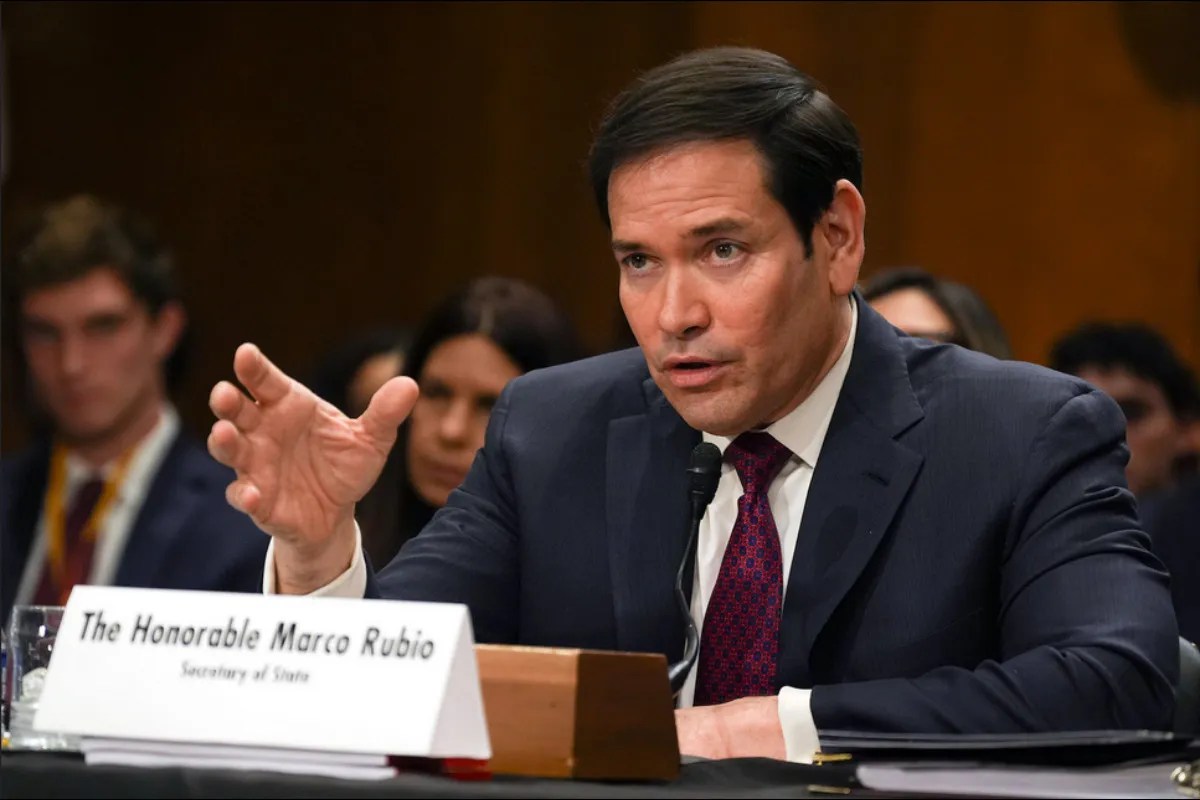
US Secretary of State Marco Rubio explicitly denied that Washington received any backchannel warning from Iran via Pakistani intermediaries before the recent escalation in the Persian Gulf. Speaking to lawmakers, Rubio dismissed reports of a backchannel communication as regional speculation designed to complicate American diplomatic leverage. However, his forceful denial masks a deeper, far more chaotic reality. Highly placed intelligence sources and diplomatic records paint a different picture, revealing that Pakistan has been actively shuttling messages between Washington and Tehran to keep a fragile ceasefire from collapsing entirely.
The state department line is clear. Washington does not accept warnings from an adversary it is currently blockading. Yet behind the public posturing lies a high-stakes intelligence choreography that both sides are desperate to keep off the record.
The Geometry of the Secret Pipeline
Publicly, the United States maintained a stance of absolute deterrence during Operation Epic Fury, the months-long air campaign aimed at degrading Iran's military infrastructure. When that operation transitioned into a tense, grinding naval blockade of Iranian ports, the official narrative shifted to a simple binary: Tehran must comply with the White House's terms or face swift military consequences.
Behind that binary is Islamabad. Pakistan shares a volatile nine-hundred-kilometer border with Iran and maintains a delicate, often transactional relationship with Riyadh and Washington. This positioning makes the Pakistani intelligence apparatus, specifically the Inter-Services Intelligence, the ideal mailbox for messages that neither the US nor Iran can afford to send through official channels.
When Rubio met with Pakistani Deputy Prime Minister and Foreign Minister Mohammad Ishaq Dar in Washington, the official press releases spoke in broad strokes about regional stability and maritime security. The real agenda was much narrower. The primary objective was managing the terms of the April ceasefire and preventing accidental escalation in the Strait of Hormuz.
An intelligence source familiar with the proceedings indicated that Pakistani officials did indeed relay specific red lines from Tehran regarding the US naval blockade. Rubio's public denial is a tactical necessity. Acknowledging a formal warning would imply that the US accommodates Iranian terms, a concession that the current administration cannot afford politically.
Why Washington Denies the Backchannel
The refusal to acknowledge these communications is driven by domestic political strategy and international credibility. Admitting that Pakistan serves as a conduit for Iranian warnings carries significant risks for the state department.
- Domestic Political Exposure: The administration is under heavy pressure from congressional hawks who view any communication with Tehran as a sign of weakness. Admitting to a backchannel would trigger immediate demands for oversight hearings.
- The Leverage Equation: Washington believes that acknowledging Iranian warnings dilutes the psychological impact of its naval blockade. The goal is to project an image of absolute indifference to Tehran's rhetorical posture.
- The NATO Complication: Rubio recently criticized European allies for their reluctance to assist in policing the Persian Gulf. Acknowledging a functional, bilateral backchannel via Pakistan would give European partners a diplomatic excuse to stay out of the conflict entirely.
The strategy relies on a distinct separation between public diplomacy and intelligence operations. While Rubio handles the cameras in Washington, Pakistani army leadership travels to Tehran to manage the actual mechanics of the gridlock.
The Sticking Points in the Shadow Talks
The core issue keeping the region on the edge of renewed conflict is not a lack of communication, but a fundamental disagreement over sequence. The backchannel messages passing through Islamabad have hit a wall over two specific demands.
| State Department Position | Iranian Regime Position |
|---|---|
| Total Nuclear Dismantling: Washington demands verifiable destruction of all enriched material before lifting sanctions. | Immediate Asset Release: Tehran demands the unrestricted release of twelve billion dollars in frozen assets held in foreign banks. |
| Unconditional Maritime Reopening: The US demands the immediate cessation of all tolls and inspections in the Strait of Hormuz. | Sequenced De-escalation: Iran insists on maintaining oversight of regional waters until the naval blockade is formally ended. |
Pakistan's role is to find a middle ground between these positions. It is a nearly impossible task. The Trump administration wants a definitive diplomatic victory that looks like a total capitulation by Tehran. Iran, reeling from economic pressure but wary of regime survival, is using its residual leverage over global energy lanes to avoid appearing defeated.
The Hidden Costs of Maritime Brinkmanship
While the diplomatic denials continue, the economic reality in the Persian Gulf is deteriorating. The conflict has moved past state-on-state military strikes into a war of economic attrition.
Iran's implementation of a toll system in the Strait of Hormuz, combined with the US naval blockade, has left dozens of commercial vessels stranded. Thousands of civilian sailors from third-party nations remain stuck at sea, facing shortages of food and potable water.
"You don't leave a ship out there for this long," Rubio noted during a recent press briefing, framing the situation as state-sponsored piracy.
👉 See also: The Midnight Gamble in Riga
What he omitted was that the blockade is a two-way street. The US Central Command has redirected or disabled nearly one hundred commercial vessels since mid-April to cut off Iranian trade. The backchannel warnings relayed by Pakistan are directly tied to these maritime actions. Tehran has signaled through Islamabad that if the blockade continues to choke its domestic economy, it will expand its target zone to include commercial ports in neighboring Gulf states.
The drone strike on Kuwait International Airport earlier this year demonstrated that this threat is real. That attack damaged a passenger terminal and killed an Indian national, proving that the conflict can spill over into states that considered themselves insulated from the friction between Washington and Tehran.
The Reality of Pakistani Mediation
Pakistan's involvement is born of geographic necessity, not diplomatic altruism. A full-scale war on its western border would destabilize its own balancing act between domestic economic instability and regional security commitments.
By acting as the primary interlocutor, Islamabad gains leverage with both Washington and Riyadh. For the US, utilizing Pakistan avoids the optical mess of using European intermediaries or direct public engagement. For Iran, Pakistan provides a buffer against total diplomatic isolation.
This arrangement means that Rubio's denials are technically accurate but fundamentally misleading. While there may not be a formal document stamped "Warning" sitting on the Secretary of State's desk, the substance of Iran's operational thresholds is delivered to American officials during every high-level meeting with Pakistani representatives.
The danger of this approach is the high margin for error. Relying on a third party to translate intents, threats, and red lines increases the risk of miscalculation. A misinterpreted message or an unacknowledged warning could easily lead to a resumption of hostilities, turning a managed diplomatic freeze back into an active conflict.