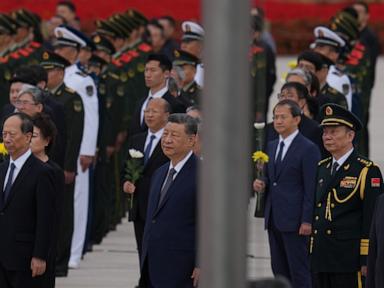
When Beijing elevates a military general to the Politburo while simultaneously tightening the screws on party discipline, the official press releases always read like sterile bureaucratic housekeeping. Do not buy the official framing. That twin maneuver is the unmistakable signature of a leadership consolidating control over the gun barrel while scrubbing out internal rot before a major strategic shift.
In the Chinese political system, personnel changes at the top are never isolated administrative updates. Placing a uniformed officer into the 24-member Politburo—the party's primary decision-making body—alongside a renewed campaign for ideological and organizational discipline signals two urgent realities in Zhongnanhai. First, the People's Liberation Army (PLA) is being pulled closer to the core of political power to ensure absolute operational alignment. Second, the years-long anti-corruption drive inside the military establishment has uncovered deeper structural vulnerabilities than Beijing wants to admit publicly. You might also find this similar coverage interesting: The Empty Chair at the Table (And Why Europe Cannot Agree on Who Should Sit in It).
The Mechanics of Party Control Over the Gun
To understand why a general’s promotion matters, you have to look at how the Chinese Communist Party (CCP) actually governs its armed forces. Unlike Western militaries that swear allegiance to a constitution or a state, the PLA is explicitly the armed wing of the party. Mao Zedong’s famous dictum—"The Party commands the gun, and the gun must never be allowed to command the Party"—remains the foundational operating rule.
Yet maintaining that command requires constant institutional maintenance. The Central Military Commission (CMC) sits at the apex of military authority, chaired by the party's top leader. Below the CMC, however, sits a sprawling apparatus of theater commands, service branches, and logistics networks that historically operated as semi-autonomous fiefdoms. As reported in recent coverage by TIME, the results are worth noting.
Elevating a senior general to the Politburo bridges the gap between operational military command and high-level political strategy. It gives the brass a direct seat at the table where economic policy, foreign affairs, and domestic security are debated. More importantly, it binds the military leadership directly to the political survival of the top leadership.
Why Discipline Campaigns Always Accompany Promotions
Whenever a general rises in Beijing, watch the discipline inspectors. They move in tandem. Over the past decade, and intensifying sharply in recent years, the CCP has purged dozens of high-ranking officers, including former defense ministers and top commanders of the Rocket Force—the elite unit overseeing China's nuclear and conventional ballistic missiles.
These purges were not merely about pocketing bribes on real estate deals or selling promotions, though that happened on an industrial scale. The real crisis was procurement corruption that directly degraded combat readiness. When defense contractors and logistics officers skim money off missile fuel, guidance systems, or naval shipbuilding, the hardware looks impressive on a parade ground in Beijing but risks catastrophic failure in an actual conflict.
A discipline campaign paired with a Politburo elevation serves as a carrot-and-stick reset. The promotion rewards proven political reliability and signals to the rank and file that loyalty to the central leadership is the only viable path upward. Simultaneously, the discipline push reminds every theater commander that their communications, finances, and personal networks are under continuous surveillance by the Central Commission for Discipline Inspection (CCDI) and its military counterpart.
The Structural Friction Inside the PLA
Western analysts often view the Chinese military as a monolithic machine marching in lockstep. That is a dangerous misreading. Having tracked Asian defense postures and internal party dynamics for decades, the reality on the ground looks far more like a high-stakes tug-of-war between modernization goals and political control.
Consider the core tension facing any PLA commander today. Beijing demands a "world-class military" capable of fighting and winning modern, information-heavy wars. Achieving that requires decentralized initiative, rapid tactical adaptation, and officers who are willing to take risks and tell hard truths about equipment failures.
At the exact same time, the party's discipline apparatus demands absolute ideological conformity, rigid adherence to political commissars, and zero tolerance for deviation from central directives.
You cannot easily build an agile, bottom-up fighting force inside a top-down, fear-driven political culture. When political loyalty becomes the primary metric for survival, officers inevitably prioritize political study sessions and ideological compliance over realistic, failure-prone combat training. They hide flaws in readiness reports rather than risk a career-ending investigation.
The Role of the Political Commissar System
To enforce this dual mandate, the PLA relies on a parallel command structure that has no equivalent in NATO militaries. Alongside every operational commander sits a political commissar of equal rank.
- The Operational Commander focuses on tactics, logistics, training, and warfighting execution.
- The Political Commissar oversees party loyalty, personnel promotions, morale, counterintelligence, and ideological compliance.
In theory, they share power. In practice, during periods of heightened discipline campaigns, the commissar's pen carries far more weight than the commander's tactical brilliance. Elevating a general who understands—or comes directly out of—this political-military nexus ensures that the Politburo has an enforcer who speaks both languages. It prevents the emergence of independent military strongmen who might prioritize institutional army interests over party directives.
What History Tells Us About Dual-Track Consolidation
This pattern is not an invention of the current era; it is baked into the DNA of Leninist party-states. Looking back at CCP history reveals a clear cycle whenever the leadership faces severe external pressure or internal economic headwinds.
During the late 1990s, when Jiang Zemin ordered the PLA to divest itself from its massive commercial empire—which included hotels, telecom firms, and smuggling operations—he paired the crackdown with selective promotions of loyalists to the CMC and Politburo. He had to buy off the top brass with institutional prestige while stripping away their illicit revenue streams.
Similarly, in the mid-2010s, the sweeping overhaul that dissolved the four traditional general departments and replaced them with 15 smaller agencies under direct CMC control was accompanied by relentless anti-graft sweeps. The goal then, as now, was to break up entrenched patronage networks—often referred to as "mountain strongholds" in party parlance—where generals promoted their own protégés from the same regional group armies.
The current elevation and discipline drive represents the third phase of that exact playbook. The institutional reorganization is done. The commercial divestment is done. Now, the focus is on ideological purification and ensuring that the modernized force will actually obey orders under extreme stress.
The Overlooked Factor of Economic Strain and Defense Budgets
Most commentary on Chinese military politics fixates exclusively on Taiwan or the South China Sea. Those flashpoints matter, obviously. Yet an equally powerful driver behind Beijing's tightening grip on the military is domestic economic deceleration.
For thirty years, double-digit economic growth allowed Beijing to fund massive military modernization while simultaneously raising living standards across the civilian population. Everybody got paid. Local governments boomed, state-owned enterprises expanded, and the defense budget grew effortlessly every single year.
That era is over. China is dealing with a protracted property sector slump, heavy local government debt, youth unemployment, and demographic decline. As the economic pie grows more slowly, competition for state resources turns zero-sum.
When money gets tighter, discipline inside the security apparatus becomes existential for the ruling party.
- Budget Scrutiny: Every yuan allocated to advanced naval vessels or sixth-generation fighter programs is a yuan not spent on social welfare or debt relief. Beijing cannot afford to have defense funds stolen by corrupt procurement officers when fiscal margins are narrowing.
- Domestic Stability: In times of economic friction, the party relies heavily on its internal security forces—the People's Armed Police (PAP), which was placed under direct CMC command years ago—to prevent localized protests from coalescing into broader political challenges.
- Elite Cohesion: Economic slowdowns historically trigger elite fracturing. Bringing a trusted general into the Politburo locks the military's institutional weight behind the civilian leadership, deterring any rival factions from thinking the brass might remain neutral during a political crisis.
The Intelligence Blind Spot for Outside Observers
For foreign governments, intelligence agencies, and multinational corporations trying to read the tea leaves in Beijing, this twin move creates a massive analytical trap.
It is tempting to look at a general joining the Politburo and conclude that China is gearing up for imminent military conflict. Conversely, it is tempting to look at the ongoing discipline purges and conclude that the PLA is hollow, corrupt, and incapable of fighting.
Both extremes miss the mark.
Purges do weaken short-term operational cohesion. Replacing senior commanders and investigators tearing through logistics bureaus creates hesitation, delays procurement timelines, and breeds paranoia across the officer corps. No military operates at peak efficiency while its top brass is being hauled away for interrogation.
However, assuming that anti-corruption sweeps render the PLA harmless is a fatal error. Historically, militaries that undergo ruthless ideological and anti-graft purges often emerge leaner, more fearful of failure, and hyper-compliant with central orders—even if those orders are strategically reckless. Furthermore, the hardware being churned out by China's shipyards and aerospace factories remains real, lethal, and numerically vast.
The Gray Zone of Institutional Compliance
The real question sitting on the desks of defense planners in Washington, Tokyo, and Taipei is not whether the PLA has fancy ships. It is how the PLA's command structure behaves when a crisis hits.
Consider a hypothetical scenario in the Western Pacific. Suppose a maritime collision occurs between a Chinese coast guard vessel and a neighboring naval ship, escalating rapidly into a localized skirmish. In a system dominated by intense party discipline campaigns, a local theater commander faces an agonizing choice.
If the commander de-escalates on their own initiative to avoid a wider war, they risk being accused by their political commissar of cowardice or failing to defend national sovereignty. If they escalate aggressively without explicit clearance from Beijing, they risk triggering a geopolitical catastrophe and facing a discipline tribunal for violating central command rules.
The predictable result of hyper-centralized discipline is decision paralysis at the tactical edge, followed by sudden, massive, top-down overreaction once the Politburo finally issues a directive. Having a senior general directly inside the Politburo is meant to shorten that communication loop, ensuring that military reality informs political decisions in real time—and that political directives are transmitted straight down the chain without distortion.
Reading the Next Signals from Zhongnanhai
If you want to track whether this latest blend of promotion and purge is actually working for Beijing, ignore the triumphant editorials in state media. Watch three concrete indicators over the coming months.
First, look at the pace of senior military removals. If high-profile generals continue to disappear from public view without explanation, it means the discipline inspectors are still finding rot in the upper tiers and the consolidation is incomplete.
Second, track the background of newly promoted theater commanders. Watch whether Beijing favors officers with actual joint-operations and technical warfare experience, or whether it continues to elevate political commissars and administrative loyalists into operational slots. The balance between "red" (ideologically pure) and "expert" (technically competent) tells you everything about what the leadership fears more: losing a foreign war or losing domestic control.
Third, monitor joint military-civilian fusion directives. Strengthening party discipline rarely stops at the barracks gate. It inevitably spills over into the state-owned defense contractors, tech firms, and universities that build China's dual-use technologies. Expect tighter audits, stricter exit bans on executives, and heavier party committee oversight across the entire defense-industrial base.
Beijing is building a fortress system designed to withstand both external containment and internal decay. Elevating a general to the inner sanctum while tightening the ideological vise on the ranks is not a sign of effortless strength, nor is it proof of impending collapse—it is the calculated, defensive crouch of a regime preparing for a long, unforgiving storm.