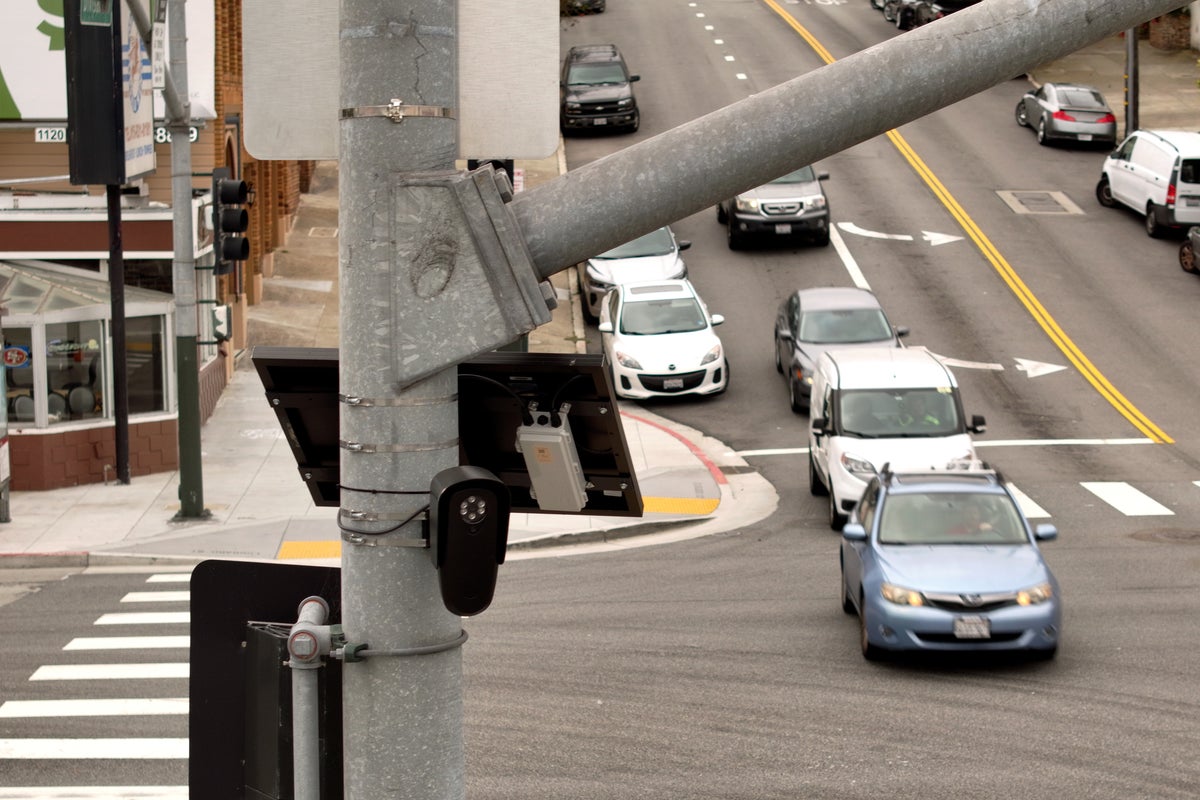
Automated License Plate Readers (ALPRs) are no longer just reading characters on a piece of metal. Over the past few years, the infrastructure mounted on police cruisers, highway overpasses, and neighborhood intersection poles has quietly expanded its sensory reach. Today, a standard roadside surveillance rig does more than snap high-resolution photographs of vehicles; it actively harvests the unique, persistent wireless signatures of the electronics inside them.
Every time a driver or pedestrian passes one of these scanners, their smartphones, smartwatches, wireless earbuds, and vehicle infotainment systems broadcast unique identifiers into the open air. This shift transforms a targeted traffic enforcement tool into a dragnet capable of tracking individuals, whether or not they are inside a registered vehicle. It represents a massive, largely unregulated leap in public surveillance that bypasses traditional legal safeguards.
The Hidden Bluetooth Harvest
The mechanism driving this expansion relies on a fundamental vulnerability in modern consumer electronics. Most portable devices utilize Bluetooth Low Energy (BLE) to communicate with accessories or broadcast their presence to ecosystem networks. To do this, they constantly emit signals containing a Media Access Control (MAC) address.
While device manufacturers have implemented MAC address randomization to prevent tracking, the defense is flawed. Research into wireless protocols demonstrates that many peripherals—particularly wireless headphones and fitness trackers—frequently broadcast static or highly predictable identifiers to maintain stable connections.
[Vehicle Passes Camera]
   ├── Camera captures physical license plate
   └── Sensor captures Bluetooth MAC addresses from:
        ├── Driver's Smartwatch
        ├── Passenger's Wireless Earbuds
        └── Vehicle Infotainment System
Surveillance contractors recognized this window of opportunity early. By integrating specialized radio receivers into existing ALPR housing, vendors created a multi-modal tracking system. When a car drives past a camera, the system logs the license plate, the exact timestamp, the GPS coordinates, and the MAC addresses of every active Bluetooth device within a roughly 30-foot radius.
This creates a dual-layer data point. The physical vehicle identity is married to the digital identities of the occupants.
From Vehicle Tracking to Individual Stalking
This technological shift completely alters the capabilities of local law enforcement and private data brokers. Historically, an ALPR could only track a vehicle. If a suspect parked their car and walked away, the vehicular data trail went cold.
Bluetooth harvesting solves that problem for investigators. Because a person carries their smartwatch and earbuds everywhere, their unique wireless signature remains constant as they transition from a vehicle to a sidewalk, a public park, or a commercial building. If municipal authorities deploy these sensors on streetlights and transit hubs, the system tracks human beings, not just automobiles.
The legal implications are messy. The U.S. Supreme Court ruled in Carpenter v. United States that the government generally needs a warrant to access long-term cell site location information, recognizing that historical location tracking violates a reasonable expectation of privacy. However, the legal framework surrounding Bluetooth broadcasting remains stuck in a gray area.
Defense attorneys argue that broadcasting a signal into public space constitutes a waiver of privacy under the third-party doctrine. Law enforcement agencies lean heavily on this ambiguity. They argue that because the devices freely emit these radio waves into the public square, collecting them does not constitute a search under the Fourth Amendment.
The Commercial Monetization of Public Airwaves
The threat extends far beyond local police departments. A massive ecosystem of private surveillance companies operates these camera networks, selling access to the resulting data pools to corporate clients, repossession companies, insurance firms, and private investigators.
For these private entities, Bluetooth data is pure gold. It allows for unprecedented consumer profiling without relying on mobile advertising IDs, which tech companies have slowly restricted. Consider the commercial utility of this data. A private network provider can verify exactly how many times a specific pair of headphones entered a particular retail district, which vehicle that person drove to get there, and which other devices were in close proximity at the same time.
- Co-Location Analysis: By matching MAC addresses that regularly appear at the same time and place, data brokers map out relationships between individuals without ever needing to know their names.
- Physical-to-Digital Linkage: Correlating a license plate with a Bluetooth address connects a real-world identity and home address to a device that browses the internet.
This monetization occurs completely out of sight of the consumer. There are no terms of service to sign when driving through an intersection, and there is no opt-out mechanism built into public infrastructure.
The Technological Illusion of Randomization
Tech giants often defend their privacy records by pointing to the software updates designed to cycle MAC addresses every few minutes. In practice, this defense is brittle.
Even when a smartphone successfully rotates its MAC address, the vehicle it is riding in often does not. Modern cars equipped with Bluetooth-enabled infotainment systems frequently broadcast a fixed, unchangeable hardware identifier whenever the ignition is on. If a randomized smartphone address is continually captured alongside a static vehicle address, the randomization is rendered useless. Algorithms easily stitch the broken pieces of the digital trail back together based on proximity and timing.
Furthermore, the hardware inside budget electronics rarely prioritizes privacy. Cheap fitness bands, older smartphone models, and generic wireless accessories lack the processing power or firmware updates required to execute proper randomization. They continuously broadcast the exact same digital fingerprint for years.
The Total Absence of Oversight
We are currently living through a gold rush for physical surveillance deployment, completely unburdened by legislative guardrails. While facial recognition technology has faced public backlash and subsequent bans in several progressive cities, Bluetooth and radio-frequency harvesting have slipped under the radar.
Most city councils approving budgets for "smart city" upgrades or traffic-monitoring cameras have no idea what hardware modules are actually packed inside the enclosures they are purchasing. Vendor contracts are frequently buried under vague line items like "advanced traffic analytics" or "multi-sensor environmental nodes."
This lack of transparency makes accountability impossible. When data breaches occur—as they routinely do among third-party surveillance contractors—the compromised databases contain more than just license plates and timestamps. They contain a comprehensive map of the digital devices carried by millions of citizens, complete with historical location logs that expose medical visits, political rallies, and private encounters.
Turning off Bluetooth entirely is the only definitive way to sever the link between your personal devices and this encroaching roadside network, a sacrifice that breaks the core functionality of the modern consumer ecosystem.