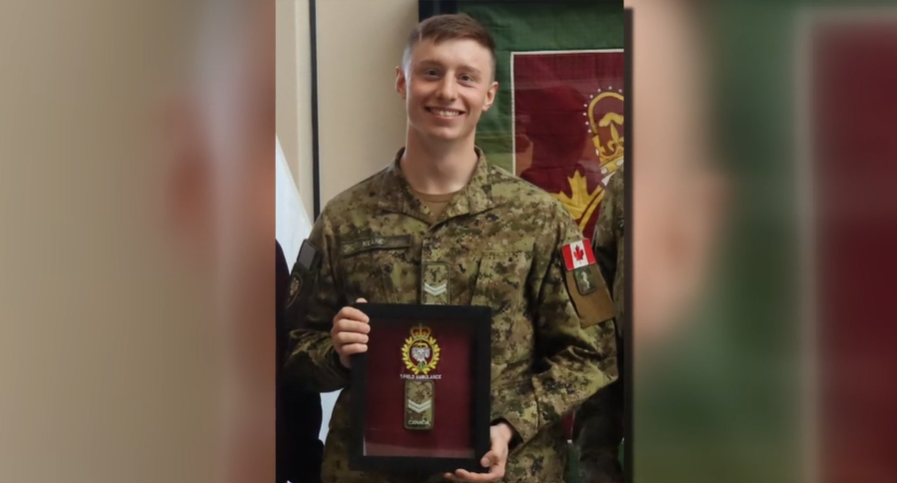
In the middle of a training rotation at Canadian Forces Base Wainwright in Alberta, a routine barracks environment turned into a life-threatening emergency when a fast-moving fire tore through military accommodations, leaving a Canadian Armed Forces medic critically injured after rushing back into the burning structure to pull fellow soldiers out. While initial headlines rightly centered on the individual bravery of a soldier running toward the flames instead of away from them, the deeper story exposes the brutal realities of military garrison safety, the unique hazards of field training infrastructure, and the medical toll exacted by flashover fires and smoke inhalation.
Heroism in uniform is easy to celebrate from a distance. It is much harder to examine the conditions that forced a medic to make a split-second choice between self-preservation and the lives of the troops sleeping down the hall.
What Actually Happens When Fire Hits a Military Barracks
To understand why the CFB Wainwright fire escalated so violently, you have to look at how military training bases operate. Unlike permanent urban residential towers built with modern compartmentalized concrete firebreaks, sprawling training installations rely heavily on legacy barracks, modular housing, and high-density quarters designed to cycle thousands of personnel through short, intense training windows.
CFB Wainwright serves as the primary maneuver training center for the Canadian Army. During major exercises, the base population swells dramatically as infantry, armored, artillery, and support units converge on eastern Alberta for live-fire and brigade-level validation. Troops live in tight quarters, often exhausted from multi-day field evolutions, surrounded by personal kit, synthetic uniforms, rucksacks, and battery-powered electronics.
When a fire ignites in that environment, three factors turn an isolated spark into an immediate crisis.
- Fuel load density. Modern military gear is overwhelmingly synthetic. Nylon webbing, polyester thermal layers, foam sleeping mats, and composite cases ignite rapidly and release dense, toxic black smoke within seconds.
- Acoustic and physical fatigue. Soldiers coming off extended field exercises sleep deeply. Smoke alarms that would immediately wake a rested civilian can fail to penetrate the heavy exhaustion of troops recovering from 72-hour tactical operations.
- Compressed egress routes. Legacy military quarters often feature long central corridors with limited exit points. Once smoke banks down from the ceiling, visibility drops to zero almost instantly, turning familiar hallways into disorienting traps.
In structural firefighting, the window between ignition and flashover—the point at which every combustible surface in a room ignites simultaneously—can be less than three minutes. Anyone entering a structure after that threshold is no longer fighting a localized fire. They are entering an atmosphere of superheated gases capable of searing airways with a single breath.
The Anatomy of a Medic's Split-Second Decision
Combat medical technicians occupy a distinct psychological space inside any armed force. While infantry soldiers are conditioned to close with and destroy an objective, medics are conditioned to move toward trauma regardless of the surrounding threat. That conditioning does not switch off when the uniform comes off in garrison.
Running into a burning building without self-contained breathing apparatus or thermal bunker gear violates every rule of civilian emergency response. Firefighters train for years to avoid freelance rescue attempts precisely because an unprotected rescuer frequently becomes a second casualty, doubling the extraction burden for incoming crews.
Yet military culture operates on an entirely different moral calculus. Unit cohesion is built on the explicit promise that no soldier is left behind, whether under enemy fire in a foreign theater or trapped behind a jammed door in an Alberta barracks. When a medic realizes fellow soldiers are still unaccounted for inside a smoke-filled structure, training takes over before conscious risk assessment can intervene.
The physics of that decision are unforgiving. Standard military fatigue uniforms offer virtually zero thermal protection against radiant heat. Worse, synthetic fabrics can melt against the skin when exposed to extreme temperatures, compounding thermal burns with severe tissue damage. Without compressed air, a rescuer holds their breath until involuntary respiratory reflexes force them to inhale superheated carbon monoxide, hydrogen cyanide, and particulate soot.
The Medical Reality Behind Critical Fire Injuries
Media reports frequently summarize severe fire rescues with a single phrase: critically injured. That clinical shorthand obscures the complex, multi-system trauma that clinicians actually confront when a rescue victim arrives at a burn unit.
Thermal skin burns are only the most visible injury. In enclosed structural fires, inhalation injury is frequently the primary threat to survival. Superheated air damages the upper airway, causing rapid mucosal swelling that can close off the trachea within hours of exposure, even when a patient initially appears able to speak and breathe on their own.
Below the vocal cords, toxic combustion byproducts attack the lungs at the cellular level.
- Carbon monoxide poisoning. Carbon monoxide binds to hemoglobin with roughly 200 times the affinity of oxygen, starving vital organs—particularly the heart and brain—of oxygen even while standard pulse oximeters show deceptively normal readings.
- Cyanide toxicity. Burning plastics, foams, and synthetic textiles release hydrogen cyanide, which halts cellular respiration and forces the body into rapid metabolic acidosis.
- Chemical pneumonitis. Acidic soot particles strip away surfactant in the alveoli, causing the microscopic air sacs of the lungs to collapse and fill with fluid, leading to acute respiratory distress syndrome.
Treating a patient with both extensive external burns and severe inhalation trauma requires immediate intubation, aggressive fluid resuscitation carefully calibrated to prevent pulmonary edema, and specialized burn center care. Recovery is rarely linear. It stretches across months of surgical debridement, skin grafting, respiratory therapy, and painful physical rehabilitation.
The Systemic Blind Spots in Garrison Fire Safety
Whenever a severe fire strikes a military installation, official investigations follow a predictable path. Military police, fire marshals, and boards of inquiry examine the point of origin, test alarm systems, review evacuation logs, and determine whether electrical faults, careless smoking, or unauthorized appliances sparked the blaze.
Those technical investigations are necessary, but they often miss the broader organizational pressures that quietly erode garrison safety over time.
Across North American military bases, infrastructure maintenance budgets routinely compete against operational readiness, equipment procurement, and personnel costs. Legacy buildings constructed during the mid-twentieth century remain in active service decades past their intended lifespans. While fire detection systems are periodically upgraded, aging wiring, overloaded power strips used to charge tactical radios and personal devices, and deferred structural retrofits create persistent baseline risks.
There is also a cultural friction between field discipline and garrison complacency. Soldiers operating in austere field environments enforce strict fire watches, fuel storage protocols, and equipment checks because the consequences of carelessness are immediate and obvious. Once troops return to a permanent base, the psychological assumption of safety sets in. Barracks feel safe. Power outlets get daisy-chained. Hallways temporarily accumulate gear bags during unit move-outs.
Military fire departments on bases like CFB Wainwright are staffed by skilled professionals who drill constantly for both structural fires and range emergencies. However, no fire crew can teleport onto a scene before flashover occurs. Survival during the first 180 seconds of a barracks fire depends entirely on early detection, unobstructed exits, clear accountability protocols, and the structural integrity of the building itself.
Accountability Beyond Applause
Public praise for a wounded medic is automatic and well-earned. Medals, commendations, and unit tributes serve an important function in recognizing extraordinary self-sacrifice. Yet applause can also become a convenient way for institutions to close the book on uncomfortable operational questions.
True accountability requires looking past the individual act of courage to examine the environment that demanded it. Every military installation housing transient training troops faces the exact same set of vulnerabilities: high-density sleeping quarters, exhausted personnel, heavy synthetic fuel loads, and aging infrastructure pushed to capacity during peak training cycles.
Preventing the next catastrophic barracks fire does not require waiting for a multi-year inquiry report. It demands aggressive enforcement of electrical load limits in troop quarters, mandatory fire-watch protocols during peak transient rotations, accelerated replacement of legacy timber-frame accommodations, and honest transparency from defense leadership when safety audits uncover infrastructure deficits. A medic should never have to trade their own lungs and skin to compensate for a building that failed to give soldiers enough time to get out.