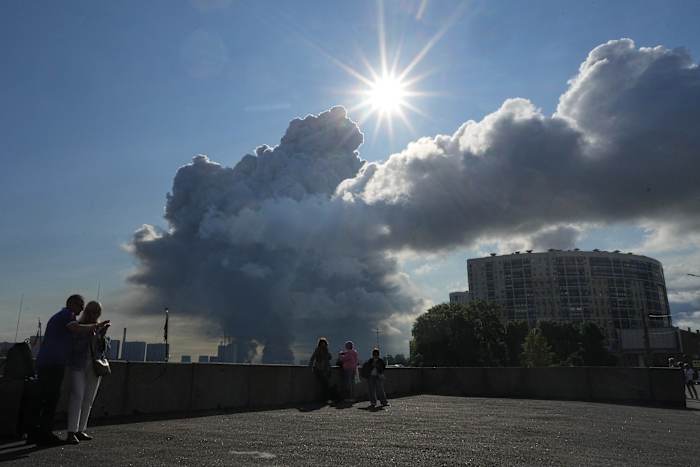
When a Cirrus SR22 goes up in flames midair, the cinematic horror of the scene obscures a far more complex engineering reality. The dramatic imagery of an aircraft engulfed in fire while deploying a ballistic parachute captures public attention instantly. Sensational headlines scream about terrifying midair infernos and desperate last-second escapes. Yet, the viral footage tells only a fraction of the story. Beneath the sensationalism lies a rigorous debate about aviation safety, emergency parachute deployment limits, and the unique physics of inflight structural fires in modern composite aircraft.
Safety boards and aviation analysts view these incidents through a much colder, analytical lens. How does a fire start at three thousand feet? Why did the pilot pull the handle when they did? What are the physical boundaries of the Cirrus Airframe Parachute System when faced with extreme thermal stress?
Understanding these disasters requires stripping away the media hysteria to look directly at the mechanics, the materials, and the human decisions made in the cockpit when survival hangs by a thread.
The Anatomy of an Airborne Fire
Fires in general aviation are notoriously rare, but when they occur, they escalate at a terrifying pace. Unlike commercial airliners equipped with automated fire suppression systems and dedicated flight engineers, a single-pilot light aircraft leaves zero margin for error.
Fuel leaks, electrical shorts behind the instrument panel, or oil spraying onto hot exhaust manifolds represent the primary ignition vectors. In older aluminum aircraft, a cabin fire often burns through control cables or compromises structural integrity before the crew can land. In modern composite aircraft like the SR22, the airframe is constructed primarily of carbon fiber and fiberglass embedded in an epoxy resin matrix.
Resin burns. While manufacturers treat these materials with fire retardants, an uncontained fuel-fed fire reaches temperatures that rapidly overwhelm composite structures. The resin softens, the laminate delaminates, and the structural load-bearing capacity degrades in minutes.
When a pilot smells smoke or sees flames licking past the firewall, panic is an immediate hazard. The standard emergency checklist demands immediate action: shut off the fuel selector, cut the electrical master switch, and point the nose down to blow the flames away from the cabin.
If those steps fail and the fire breaches the cabin interior, the pilot faces an impossible choice. Stay and burn, or punch out with the parachute.
Engineering the Ultimate Safety Net
The introduction of the airframe parachute revolutionized general aviation safety by offering a whole-airframe recovery option where none existed before. Developed by Cirrus Design, the system utilizes a solid-fuel rocket to extract a massive nylon canopy from a compartment in the fuselage spine.
Since its certification, the system has saved hundreds of lives, lowering the fatal accident rate of equipped aircraft significantly compared to legacy fleets.
However, the parachute is not a magic talisman that guarantees survival under every conceivable circumstance. It has strict operational envelopes. Deploying the system outside its certified airspeed limits can tear the parachute risers right off the airframe or over-stress the structure.
More importantly, the parachute system is designed primarily to lower an intact, controllable airplane to the ground safely. It is not engineered as a firefighting tool.
When a fire is raging inside the fuselage, the physics change dramatically. The rocket activation cable runs through the cabin. The deployment harness attaches to structural hard points in the fuselage. If the fire burns through the interior cabin walls or compromises the structural bulkheads holding the harness, the deployment sequence can fail catastrophically.
During a midair fire, the structural integrity of the airframe is actively dissolving while the aircraft is still flying. A pilot pulling the red handle in a burning plane is betting that the parachute can deploy before the heat melts the composite structure anchoring the recovery system.
Human Factors Under Extreme Thermal Stress
The cockpit of a burning aircraft becomes an environmental nightmare within seconds. Dense, toxic smoke fills the space, blinding the pilot and rendering instruments unreadable. Radiant heat blisters skin and melts plastic knobs.
In this sensory overload, cognitive function degrades rapidly. Hypoxia or carbon monoxide poisoning can impair judgment long before the flames reach the flight controls.
Investigating these crashes requires parsing flight data recorder logs and GPS tracks to reconstruct the final minutes of human decision-making. Did the pilot attempt to glide toward an airport, or did they realize too late that the fire had compromised the flight controls?
Often, the deployment happens at a low altitude, leaving the parachute system mere seconds to inflate and decelerate the aircraft before ground impact.
Critics of modern light aviation sometimes point to these dramatic crashes as evidence of inherent flaws in composite manufacturing or emergency parachute reliance. That perspective misses the broader context. Every single-pilot aircraft accident is a complex chain of mechanical, environmental, and physiological failures.
The parachute did not cause the fire. The parachute provided a final, desperate lifeline in a situation that would have been an unmitigated fatality in any traditional aircraft lacking such a system.
The Lingering Questions in General Aviation
As composite airframes continue to dominate the modern private fleet, regulators and manufacturers face mounting pressure to improve onboard fire detection and suppression capabilities. Current light aircraft lack the Halon systems found in commercial jets.
Pilots rely on portable hand-held extinguishers that are nearly useless once a fire establishes itself behind the instrument panel or inside the wing roots.
The debate over training also intensifies after every high-profile incident. Do private pilots receive adequate simulator training for catastrophic inflight emergencies, or does the existence of the ballistic parachute create a false sense of security?
Pulling the handle is easy in concept, but timing it correctly while fighting smoke, disorientation, and structural failure requires cold-blooded discipline.
The fiery descent of a parachute-equipped plane is a jarring spectacle, but viewing it purely as a terrifying anomaly obscures the hard engineering realities of modern flight. Aviation has never been about eliminating risk entirely. It is about managing it until the margins finally run out.