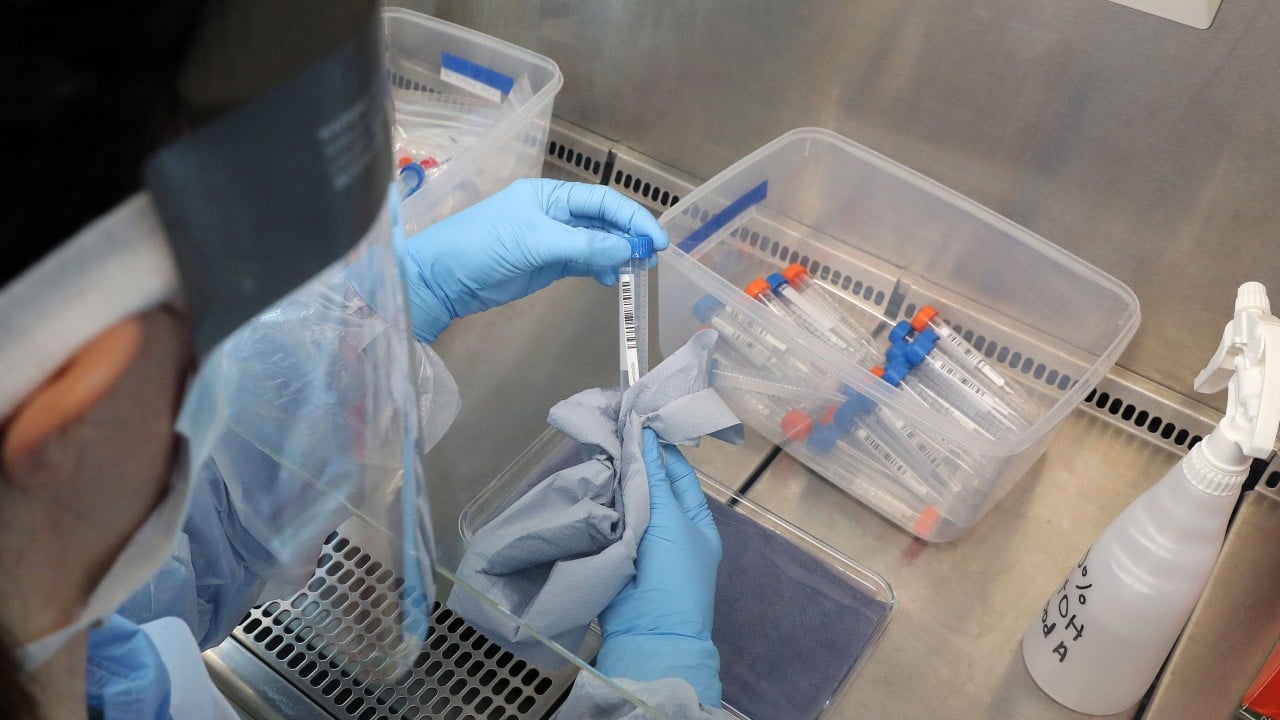
The Bundibugyo Ebola outbreak in the eastern Democratic Republic of the Congo has surged to 1,333 confirmed cases and 399 deaths, signaling a profound collapse in regional containment. Standard media dispatches treat these figures as a routine fluctuation in a volatile region. They are missing the true crisis. The current emergency is not just a rerun of historical epidemics; it is a rapid expansion of a rare virus variant driven by a total absence of approved vaccines, severely underfunded clinical trials, and desperate, unmonitored human flight across provincial borders.
Containment is failing in real-time.
The Illusion of Preparedness and the Bundibugyo Reality
Public health agencies frequently boast about the lessons learned from past West African and Congolese epidemics. Those systems, however, were built largely to combat the Zaire strain of the virus, which benefits from highly effective, stockpiled vaccines like Ervebo. The current crisis involves the Bundibugyo ebolavirus, a distinct lineage for which there is no approved vaccine and no licensed therapeutic protocol.
Health workers are fighting a modern war with empty hands.
The distinction between viral strains is not academic. When an outbreak hits an area like Ituri or North Kivu, communities expect the immediate deployment of ring vaccination teams. They expect the immediate protection that saved thousands of lives in recent years. Instead, they are meeting medical teams who can offer only supportive care and isolation. This absence of an immediate biomedical shield breeds deep local skepticism, making community cooperation exceptionally difficult to secure.
The Fatal Journey Across Three Hundred Kilometers
Statistical tracking obscures the terrifying ground-level mechanics of transmission. Consider a recent, disastrous security breakdown in the Niania health zone within Ituri province. A pregnant woman fell ill in mid-June and subsequently died from what was later confirmed to be Ebola. Rather than receiving an immediate, secure burial by specialized teams, her body was placed on a motorcycle.
It was transported west across multiple health zones for 300 kilometers.
By the time the motorcycle arrived at a morgue in Kisangani, a major urban hub in the neighboring Tshopo province, the corpse was highly infectious. A post-mortem sample confirmed the diagnosis, but the damage was already done. A highly lethal virus traveled completely unhindered down public transit corridors, exposing an untold number of motorists, checkpoint operators, and villagers along the route.
This is how localized outbreaks transform into national disasters.
Simultaneously, the human element of fear continues to undermine contact tracing. Two individuals identified as high-risk contacts in Niania fled their isolation facilities. They crossed into Haut-Uele province, an area that shares porous borders with South Sudan and the Central African Republic. One has already tested positive for the virus. While health authorities claim to have located the individuals, the days they spent traveling on open roads mean the contact tracing map has expanded exponentially beyond the capacity of the current field staff.
The International Funding Deficit
The Africa Centers for Disease Control and Prevention recently issued a blunt plea for international aid, highlighting a massive shortfall in emergency financing. Medical authorities are ready to launch human clinical trials in Bunia to evaluate experimental therapeutics for the Bundibugyo strain. The science is prepared, but the international capital is not.
The trial requires an immediate injection of capital to survive.
While certain mechanisms have successfully financed basic vaccine research, the clinical therapeutic trials have only secured 10 million dollars. An additional 16 million dollars is missing for a post-exposure prophylaxis study, which is essential for protecting the family members and healthcare workers who interact directly with active patients. Another 3 million dollars is urgently required simply to stabilize basic contact tracing infrastructure in the epicenters.
Every single day of delay translates to an unmonitored chain of transmission. Global health donors routinely promise rapid intervention, yet the bureaucratic machinery required to release small-scale emergency funds remains dangerously slow. The current response remains fundamentally below the operational threshold required to halt a fast-moving pathogen.
Economic Deconstruction of a Fractured State
The medical emergency exists inside a fragile economic environment. A new evaluation by the United Nations Development Programme indicates that this epidemic could push nearly one million more Congolese citizens into absolute poverty. The economic fallout is compounded by the long-term instability of the eastern provinces, where armed conflict already limits state authority and disrupts agricultural production.
Isolation wards are hitting absolute saturation point.
When an Ebola outbreak forces the closure of local markets and restricts movement between provinces, the informal economy collapses overnight. Women, who make up the vast majority of cross-border traders and small-scale agricultural vendors, are suffering disproportionate financial ruin. If neighboring countries like Uganda, South Sudan, or the Central African Republic implement hard border closures out of panic, the regional economic shock could exceed three billion dollars.
This is not a hypothetical threat. Uganda has already reported cases linked to travel from the Democratic Republic of the Congo, prompting extreme anxiety along the shared frontier. The closure of these commercial arteries will immediately drive up the cost of basic food items and medical supplies, creating secondary health crises unrelated to the virus itself.
The Operational Failure in the Field
The government states that its contact follow-up rate sits at roughly 82 percent across Ituri, North Kivu, and South Kivu. In public health terms, an 82 percent success rate in an active Ebola zone is actually an admission of vulnerability. It means nearly one in five potentially infected people is completely unmonitored by medical authorities.
That gap is wide enough to sustain the epidemic indefinitely.
Local health facilities lack fundamental infection prevention protocols. Many rural clinics do not have consistent access to running water, reliable electricity, or medical-grade personal protective equipment. When an undiagnosed Ebola patient enters a standard community clinic seeking treatment for a generic fever, that clinic frequently transforms into a super-spreading site, infecting the very nurses and doctors who form the community's first line of defense.
The current approach relies on reacting to numbers after they appear on a government ledger. To halt the Bundibugyo strain, the international community must immediately bridge the financial gap holding back clinical trials in Bunia, establish strict sanitary corridors on major transport routes, and fund direct cash transfers to families in isolation to prevent them from fleeing into neighboring provinces. Waiting for a higher body count before releasing emergency capital is an indefensible strategy that guarantees regional catastrophe.