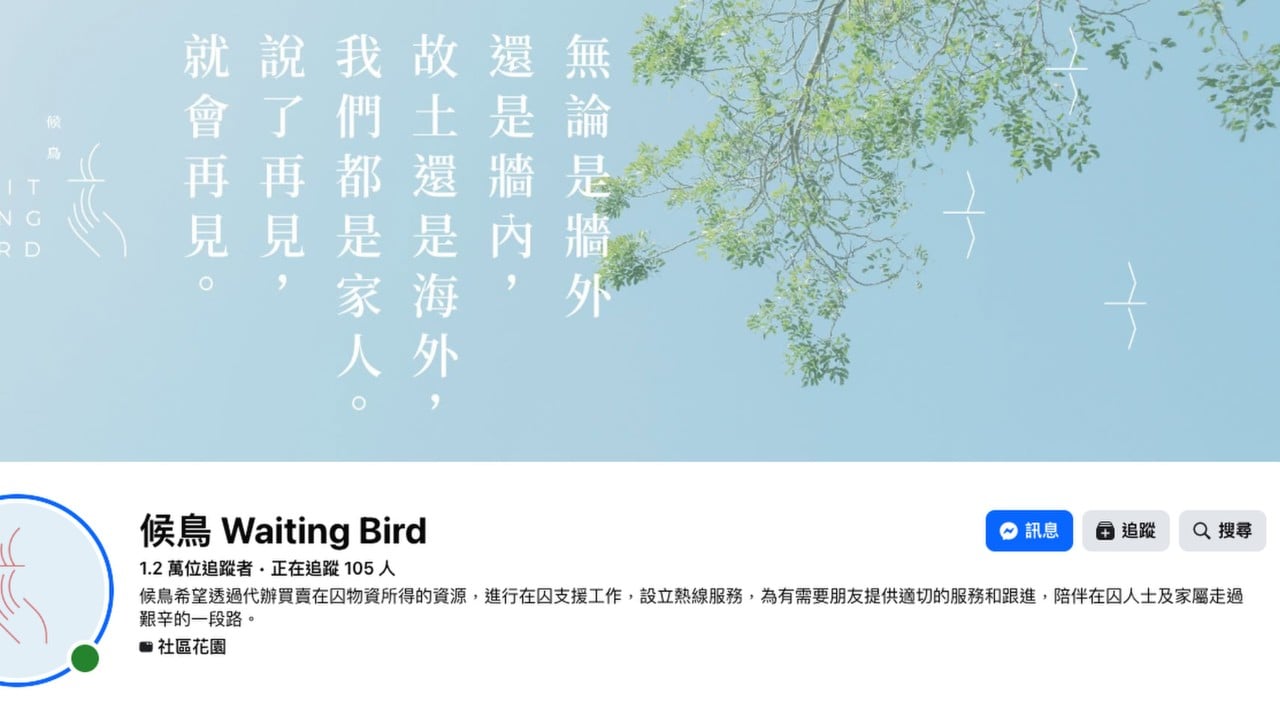
Hong Kong national security police arrested the operator of a local prisoner support group on suspicion of possessing and distributing seditious publications, marking an aggressive expansion of how authorities police printed material inside the city's correctional system. The arrest targets the shrinking network of volunteers and small businesses providing basic supplies, financial aid, and reading material to hundreds of detainees jailed following the 2019 pro-democracy protests. Rather than focusing on street demonstrations or political organizations—which have largely been dismantled—law enforcement is now treating the circulation of unapproved books and prison welfare logistics as direct threats to state security.
To understand why a stack of books inside a detention center triggers a national security operation, you have to look at how the definition of sedition has mutated in Hong Kong over the past five years. When Beijing imposed the National Security Law (NSL) in June 2020, most legal observers expected prosecutions to center on the four explicit offenses written into the statute: secession, subversion, terrorism, and collusion with foreign forces. Instead, prosecutors dusted off a colonial-era sedition ordinance from 1938—a law originally drafted by British administrators to suppress anti-colonial agitation—and turned it into their primary blunt instrument for speech and publishing offenses.
In March 2024, the Hong Kong government went a step further. The Legislative Council passed the Safeguarding National Security Ordinance, locally known as Article 23, which absorbed and supercharged those colonial sedition provisions. Under the updated framework, possessing a publication deemed to have "seditious intention" without a reasonable excuse carries a prison sentence of up to three years, while importing, printing, or distributing such material carries up to seven years. Even more critically, the law removed the requirement for prosecutors to prove that the accused intended to incite violence or public disorder.
The Mechanics of Prison Support and Why Authorities Target It
When thousands of protesters were arrested between 2019 and 2020, an informal ecosystem of mutual aid emerged almost overnight. In Hong Kong, remand prisoners—those awaiting trial, often for years under strict national security bail rules—retain specific rights regarding external supplies. Friends, family members, and registered support groups can deliver approved snacks, hygiene products, stationery, and books to correctional facilities.
For detainees isolated in maximum-security wings like Lai Chi Kok Reception Centre or Stanley Prison, these deliveries serve two purposes. First, they provide basic physical comfort in notoriously austere conditions. Second, they maintain a psychological lifeline to the outside world, signaling to defendants that their cases have not been forgotten while they wait 18 to 36 months for a verdict.
Authorities view this exact dynamic as an unacceptable security risk. From the perspective of the Security Bureau and the Correctional Services Department (CSD), organized prisoner support networks are not charitable operations. Officials have repeatedly framed them as logistical rear-guards that sustain ideological resistance behind bars, boost the morale of high-profile defendants, and preserve the social bonds of the 2019 protest movement.
Over the last three years, the state has systematically dismantled the largest of these groups. 612 Humanitarian Relief Fund, which raised millions to pay legal and medical bills for protesters, disbanded in 2021 after police demanded its donor and beneficiary records. Wall-fare, founded by former lawmaker Shiu Ka-chun to coordinate prison visits, letter-writing campaigns, and supply drops, shut down the same year after authorities accused it of monopolizing prison privileges and building influence inside jails.
The recent arrest of an independent operator shows what happens to the remnants. Once the large NGOs folded, smaller, decentralized groups and solo operators stepped into the gap. They operate out of tiny commercial units in industrial districts like Kwun Tong or San Po Kong, collecting donated books, sorting approved snack items, and running errands for families who cannot take time off work to queue outside prison gates. Because these operators lack institutional backing, they are uniquely exposed when national security officers arrive with a search warrant.
How a Book Becomes a National Security Threat
The legal threshold for declaring a book "seditious" in Hong Kong has dropped so low that publishers, booksellers, and ordinary citizens operate in a permanent fog of ambiguity. There is no official banned-book list published by the Hong Kong government. Authorities insist that freedom of speech and publication remain protected under the Basic Law, the city's mini-constitution, and argue that citizens simply need to avoid crossing the "red lines" of national security.
In practice, the absence of a clear index forces everyone to guess where those lines sit. Consider a hypothetical example of how this plays out at a prison gate. Suppose a volunteer brings five secondhand paperbacks to a reception center for a detainee awaiting trial. One is a textbook on European constitutional history, another is a collection of essays written by an exiled Hong Kong columnist in 2018, and a third is an illustrated children's story about farm animals resisting a wolf. Under current enforcement standards, CSD officers screen every single page of incoming reading material. If an officer flags the essay collection or the children's allegory as fostering "hatred or contempt" toward the central or local government, the screening process stops immediately.
The CSD does not simply reject the book and hand it back to the visitor. Under established inter-departmental protocols, prison intelligence units escalate flagged materials directly to the National Security Department (NSD) of the Hong Kong Police Force.
Once the NSD takes over, the investigation shifts from administrative prison discipline to criminal counter-subversion. Detectives trace the provenance of the book. Where was it stored? Who donated it? Did the support group operator keep extra copies in an office, a storage locker, or a personal apartment? Under Article 23, simply having multiple copies on a shelf can be framed as intent to distribute, while having a single copy without an airtight legal excuse is enough to justify an arrest for possession.
The Precedent of the Sheep Village Trials
This is not theoretical. The legal precedent was locked in during the 2022 prosecution of five speech therapists who published a series of children's picture books about sheep defending their village from wolves. Prosecutors argued the stories were a thinly veiled allegory for Hong Kong's relationship with Beijing and were designed to brainwash young readers into hating the government. All five defendants were convicted of conspiring to print, publish, distribute, display, or reproduce seditious publications and sentenced to 19 months in prison.
Following that verdict, Hong Kong's public libraries purged hundreds of titles from their shelves, removing works by pro-democracy figures, Tiananmen Square historians, and political commentators. Independent bookstores across the city stopped stocking sensitive titles altogether, or moved them into private, invite-only reading rooms. Yet even private spaces are not safe. In multiple cases over the past two years, police have raided independent bookshops and arrested proprietors or customers found with old protest magazines, zines, or out-of-print political histories.
When a prisoner support operator collects donated books from the public to pass along to inmates, they assume massive legal liability for every page inside those boxes. A single donated title printed five years ago—completely legal at the time of publication—can turn a humanitarian volunteer into a national security suspect overnight.
Inside the Correctional Services Department Screening Apparatus
To understand the enforcement side of this story, you have to look inside the Correctional Services Department. Historically, the CSD was viewed as a bureaucratic, inward-looking agency focused on basic custodial management. Since 2020, however, the department has undergone a profound institutional transformation, aligning itself closely with the city's national security apparatus.
The CSD established dedicated intelligence and anti-extremism task forces to monitor political prisoners—a category of inmates the government officially denies exists, even as it subjects them to specialized surveillance and deradicalization programs. Every incoming letter, greeting card, magazine, and book addressed to a protest-related detainee passes through strict censorship protocols.
Prison officers regularly redact letters with black marker or refuse delivery outright if the text contains coded political references, lyrics from banned protest anthems like Glory to Hong Kong, or commentary on ongoing court cases. Books face even tighter scrutiny. Inmates are generally limited to a strict quota of books per month, and every title must be vetted for content that prison authorities claim could "undermine discipline or rehabilitation."
Here is the catch. Rehabilitation inside Hong Kong's prisons now explicitly requires inmates convicted of protest or national security offenses to demonstrate ideological contrition. The CSD runs mandatory psychological and educational programs aimed at instilling national identity and correcting what officials call "distorted values" regarding the rule of law. Allowing detainees to read critical political theory, independent Hong Kong history, or memoirs by former dissidents directly contradicts the state's deradicalization curriculum.
By arresting the outside operators who supply these books, police cut off the supply chain before the material even reaches the prison gate. It is a preventative strike designed to enforce total informational isolation inside detention centers.
The Chilling Effect on Civil Society and Legal Defense
The operational fallout from these arrests extends far beyond the individuals taken into custody. Every time national security police raid a prisoner support office, they seize computers, mobile phones, accounting ledgers, and donor lists.
For years, ordinary Hong Kong residents supported jailed protesters quietly—buying supermarket vouchers, donating secondhand books, or subscribing to Patreon accounts run by former lawmakers and social workers to fund prison canteen deposits. Now, those micro-donors face a stark calculation. If police seize a support group's digital records, every bank transfer, PayMe transaction, and delivery log becomes potential evidence in a broader conspiracy investigation.
This dynamic creates an immediate, self-enforcing paralysis across what remains of Hong Kong's civil society:
- Isolation of Remand Prisoners: Many defendants in major national security trials, such as the Hong Kong 47 subversion case, spent more than three years in pre-trial detention. As support groups shutter or scale back out of fear of arrest, the burden of logistical support falls entirely on elderly parents and immediate relatives, many of whom lack the financial resources or physical stamina to navigate prison bureaucracy every week.
- Self-Censorship Among Independent Bookstores: Small shops that rely on community goodwill and niche cultural events now treat secondhand book donations as toxic waste. Without a clear government list of banned titles, proprietors cannot verify whether an older book contains a passage that a prosecutor might deem seditious under Article 23's broad definitions.
- Erosion of Humanitarian Norms: Under international standards such as the United Nations Nelson Mandela Rules, prisoners should have access to reading materials, regular communication with the outside world, and support from community organizations to preserve their mental health and facilitate eventual reintegration. Criminalizing the volunteers who provide basic books and canteen supplies pushes Hong Kong's penal practices sharply away from established international benchmarks.
The Counter-Argument From Beijing and the Security Bureau
Officials in Hong Kong and Beijing reject the characterization of these arrests as political repression or censorship. Their counter-argument rests on a strict, security-first interpretation of sovereignty and public order.
From the government's viewpoint, the 2019 protests were an existential crisis—a color revolution backed by hostile foreign actors that paralyzed the city, vandalized public infrastructure, and threatened to sever Hong Kong from mainland China. In the official narrative, the violence of 2019 did not emerge out of nowhere; it was incubated over years through "soft resistance"—cultural products, biased textbooks, partisan media, and civil society networks that systematically eroded respect for the state.
Under this doctrine, soft resistance is just as dangerous as street violence. Security Secretary Chris Tang and Chief Executive John Lee have repeatedly warned that national security threats have not vanished; they have simply gone underground, disguised as cultural initiatives, community welfare, or artistic expression. Therefore, officials argue, prosecuting someone for distributing seditious books to inmates is not an attack on reading—it is a necessary measure to prevent radicalization inside prisons and stop banned ideologies from circulating back into society.
The government also points out that arrested suspects retain full due process rights under Hong Kong's common law system. Defendants have access to legal representation, trials are conducted openly before independent judges, and prosecutors must prove their cases beyond a reasonable doubt. Furthermore, officials note that national security laws in Western jurisdictions—including the United Kingdom's National Security Act 2023—also contain broad provisions targeting foreign interference, sabotage, and preparatory acts that threaten state stability.
Why the Legal Reality Differs From Western Comparisons
While Hong Kong officials frequently cite Western security statutes to defend Article 23, legal scholars and human rights monitors point out a critical structural difference. In jurisdictions like the UK or the United States, sedition laws have either been abolished outright or narrowed by decades of constitutional jurisprudence requiring proof of imminent lawless action or direct incitement to violence.
Hong Kong's courts, bound by the text of the NSL and Article 23, operate under a fundamentally different mandate. In several landmark rulings over the past three years, appellate judges have affirmed that national security legislation overrides ordinary common law presumptions regarding bail and freedom of expression when state security is deemed to be at stake. Because prosecutors no longer need to prove an intent to incite violence, the boundary between peaceful political criticism and criminal sedition rests almost entirely on prosecutorial discretion and judicial interpretation of whether a text causes "hatred or disaffection."
When that standard is applied to prisoner support groups, the margin for error disappears entirely. A volunteer handing over a box of donated books cannot rely on the defense that they never read every volume, nor can they argue that the books advocate no violence. Under the current statutory framework, the mere presence of forbidden ideas on paper is enough to trigger handcuffs, asset freezes, and years of pre-trial detention.
For the hundreds of detainees still working their way through Hong Kong's courts, the message delivered by this latest arrest is unmistakable: the state controls not only their physical confinement, but every word allowed to cross the prison threshold.