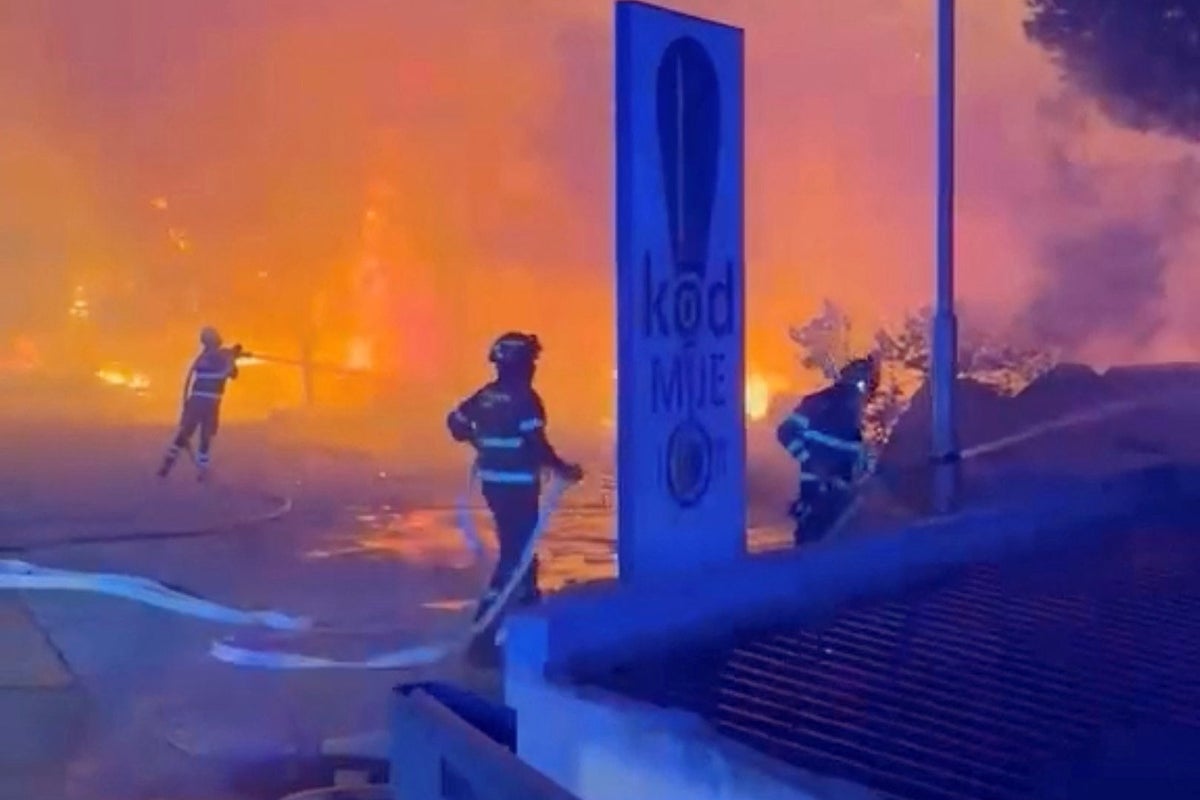
When a wall of fire races down the rocky cliffs of the Dalmatian coast, vacation itineraries evaporate instantly. A massive wildfire descending from Lokva Rogoznica into the historic tourist hub of Omiš forced the emergency evacuation of roughly 1,000 residents and travelers. The night sky turned a bruised, apocalyptic red as unpredictable winds pushed flames past protective ridges and directly into residential neighborhoods. For anyone watching from the safety of a screen, it looks like a sudden act of random weather. For those on the ground scrambling for a route out, it represents a systemic collision between hyper-dense Mediterranean tourism and an escalating climate emergency that coastal infrastructure is structurally unprepared to handle.
Fierce, erratic winds fueled the blaze as it tracked northwest toward the center of Omiš. By dawn, dozens of individuals required medical attention for smoke inhalation and burns, while critical transport links along the Adriatic highway ground to a halt. Local emergency services transformed the Ribnjak sports hall into a makeshift triage and shelter center. While headline writers frame these events as isolated tragedies catching visitors by surprise, the reality is far more structural. Southern Europe is locked into a dangerous cycle where dry scrublands, decades of shifting rural land use, and peak summer visitor density collide with terrifying predictability. Discover more on a similar issue: this related article.
The Geography of Vulnerability Along the Adriatic
Omiš sits in a geological bottleneck. Towering limestone cliffs plunge abruptly toward the Cetina River and the Adriatic Sea, leaving very little horizontal breathing room. This dramatic topography is precisely what draws millions of tourists to Croatia every year. It is also an absolute nightmare during a fire emergency.
When a front erupts in the rugged hinterlands, narrow coastal canyons act as natural wind tunnels. They accelerate draft speeds and funnel flames directly toward densely populated seafronts. Traditional escape routes are severely limited. The Adriatic Highway, known locally as the Jadranska Magistrala, is essentially a single arterial vein running parallel to the water. When that highway shuts down due to encroaching fire or smoke, the escape options narrow to the sea or local footpaths. More reporting by National Geographic Travel explores similar perspectives on this issue.
Town planners decades ago never anticipated the sheer volume of modern vehicular traffic or the rapid fuel accumulation left behind as traditional hill farming vanished. For generations, local populations grazed goats and cleared underbrush on the slopes above Omiš. That active land management kept combustible brush under control. As rural depopulation emptied the interior hills, dense pine thickets and dry macchia spread unchecked right up to the edges of coastal settlements. Every unmanaged acre acts as a fuse waiting for a spark.
The Human Cost and Emergency Response Realities
Behind the dramatic photographs of red horizons lie complex operational hurdles for emergency personnel. More than 150 firefighters, backed by dozens of heavy vehicles and reinforcements from across the country, fought through the night to protect structures. Water-bombing planes play a vital role during daylight hours, but nightfall grounds them entirely. When a major front descends after dark, ground crews are left to fight the elements manually while navigating zero-visibility conditions and sudden power outages.
Hospitality infrastructure faces a difficult reckoning. Tourism boards market the Dalmatian coast as an effortless Mediterranean paradise. Brochures rarely feature evacuation protocols or emergency assembly points. When sirens blare at midnight, hotels and rental owners are often left scrambling to guide confused foreign visitors who do not speak the local language and have no familiarity with regional geography.
Coordination between municipal authorities, civil protection units, and private property owners remains uneven. While emergency commanders managed to orchestrate a massive sheltering operation using local sports facilities and naval support options, the margin for error was razor-thin. A few shifts in wind velocity could have turned a chaotic evacuation into a catastrophic containment failure.
Beyond the Heatwave Narrative
Media coverage typically blames these disasters entirely on the immediate seasonal heatwave. Extended droughts and record-breaking summer temperatures certainly dry out vegetation until it behaves like tinder. Yet pointing solely to the weather ignores the human decisions that exacerbate natural hazards.
Consider how regional development policies continue to prioritize high-density coastal expansion over fire-buffer zoning. New holiday homes, apartment blocks, and tourist amenities creep higher up the slopes into high-risk vegetative zones. Building permits rarely require mandatory defensive space clearances, non-flammable roofing materials, or independent water reservoirs for sprinkler systems.
Furthermore, regional emergency response funding tends to react to crises rather than preempting them. Nations across southern Europe spend vast sums on suppression—deploying aircraft, trucks, and overtime pay—while preventative measures like controlled burns, targeted grazing subsidies, and automated early-warning sensor networks remain underfunded.
What Travelers and Planners Must Face Now
The Omiš fire is not an anomaly. It is part of a broader, brutal baseline for Mediterranean travel during the peak summer months. Visitors booking coastal getaways can no longer assume that infrastructure will remain insulated from environmental shocks.
Regional authorities face difficult choices. Implementing strict restrictions on vulnerable coastal access during extreme fire risk days would alienate the tourism industry, which forms the bedrock of the local economy. Yet maintaining the status quo invites repeating these midnight evacuations on an increasingly frequent scale.
The path forward requires a fundamental shift in how coastal towns design their public spaces and manage their hinterlands. Until local governments enforce strict defensive perimeters and modernize escape infrastructure, every dry summer will bring the same tense vigil along the Adriatic edge, where paradise and peril share the exact same view.


